Why per-seat pricing breaks down when agents do the work
By Agentic Design
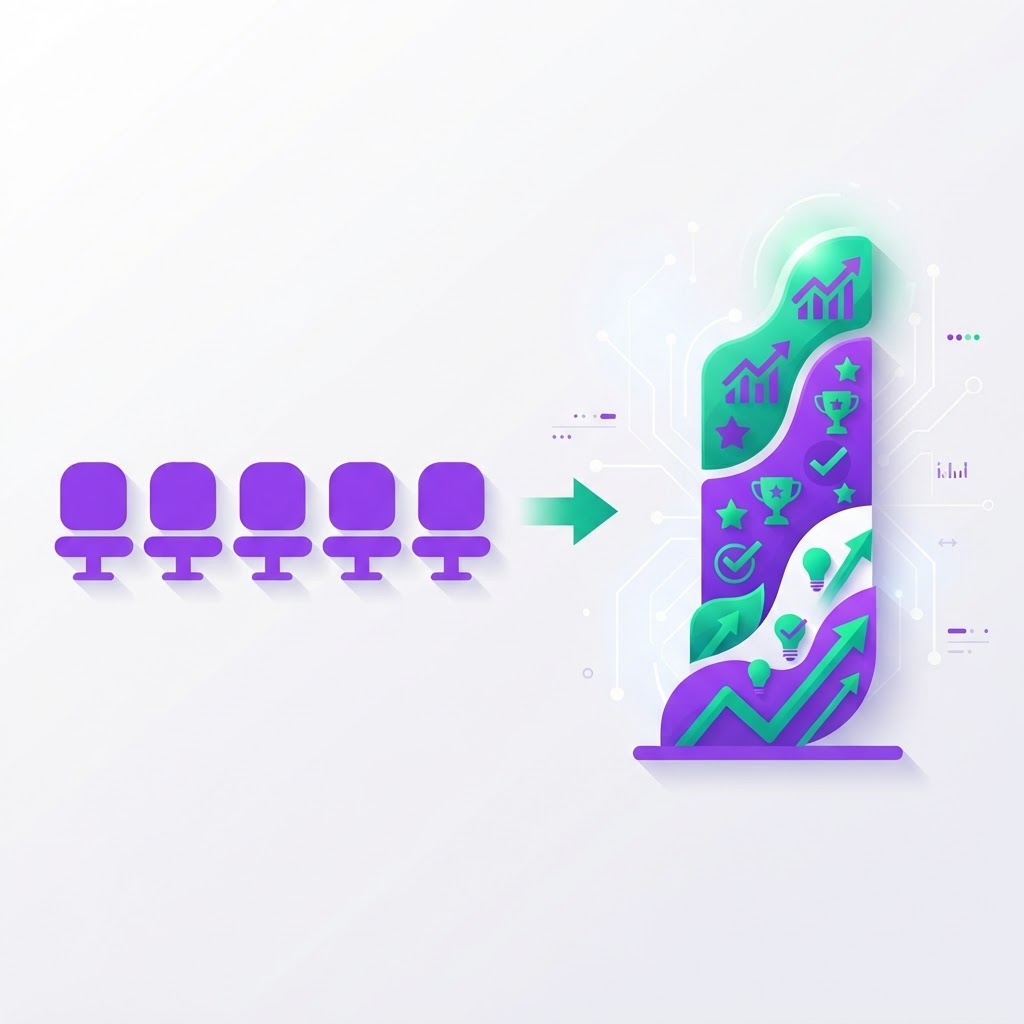
For decades, software companies have priced their products based on the number of people sitting in chairs. If you have ten employees using a CRM or an accounting platform, you pay for ten licences. This 'per-seat' model made sense when software was merely a tool that amplified human output. However, as agentic platforms take over repetitive tasks across your existing systems, this traditional economic model is beginning to fail. In the world of agentic design, the software is no longer just a passive tool; it is the worker itself.
The fundamental shift in software economics
When you implement an agentic layer—a platform that connects your CRM, ERP, and inventory systems via APIs—you are essentially hiring a digital employee that never sleeps. This agent can reconcile invoices, update customer records, and flag inventory shortages across multiple platforms simultaneously. If you continue to pay for this under a per-seat model, you encounter a paradox. You are introducing technology to reduce manual labour, but your software costs remain tied to the headcount you are trying to augment.
Consider an Australian wholesale business managing orders across Shopify, Xero, and a custom logistics portal. Traditionally, a staff member might spend three hours a day manually reconciling these data points. If you bring in an agentic platform to automate this, the agent is performing the work of a staff member. If your software vendor charges you based on the number of 'users' accessing the system, you aren't capturing the economic value of that efficiency. You are merely moving costs from payroll to overhead, often without seeing a drop in your total operational expenditure.
Why per-seat pricing misaligns incentives
Per-seat pricing creates a perverse incentive for both the vendor and the customer. For the vendor, the goal is to get as many people logged into the platform as possible, regardless of whether those people are actually being productive. For the customer, every new hire becomes an immediate hit to the software budget, which discourages the scaling of teams that actually add value to the business. When agents are involved, this misalignment becomes even more pronounced.
- Your agentic platform acts as a bridge between your existing systems like Salesforce, Xero, and inventory databases.
- Agents do not require a login in the traditional sense; they operate through API keys and backend logic.
- Billing per user prevents you from scaling your automation because you are forced to pay for a 'seat' that an agent does not actually occupy.
By moving away from per-seat pricing, you align your costs with the actual output generated by your systems. If your agent is processing five hundred invoices a month, you should pay for the successful completion of those five hundred transactions, not for the server-side capacity that makes it possible. This model transforms your software expenditure from a fixed cost into a variable cost that tracks directly with your revenue-generating activities.
Moving toward outcome-based billing
In our experience with SMEs across Australia, the most successful implementations are those that shift toward a cost-per-transaction or cost-per-outcome model. Instead of paying for a licence, you pay for the successful execution of a specific business objective. For example, if an agent successfully manages a customer refund request from the initial ticket through to the bank reconciliation, that is a discrete 'outcome'.
This approach provides three significant benefits to your business:
- Total predictability: You can accurately model the cost of scaling your operations because you know exactly what each transaction costs you.
- No wasted spend: You are no longer paying for idle accounts or software licences assigned to staff who don't log in often enough to justify the price.
- Performance accountability: When a vendor charges by outcome, they have a vested interest in ensuring your automation is efficient and reliable.
This shift allows your agentic platform to exist as a horizontal layer across your business. Because it doesn't replace your CRM or ERP—it merely interacts with them via APIs—you maintain your historical data and workflows while adding a high-efficiency processing layer on top. This is the difference between buying a new expensive software suite and simply making the systems you already own significantly more effective.
Integrating at the speed of business
Many SME owners worry that moving to an agentic model will require a months-long overhaul of their IT infrastructure. This is a misconception. Because agentic layers work with your existing tools, they can be deployed in weeks rather than months. We simply connect to the existing APIs of the platforms you already rely on, define the logic for your business processes, and monitor the results.
When we deploy these solutions, the goal is to make the technology invisible. If an agent completes a task, the result should simply appear in your ERP as if it had been handled by a highly efficient employee. By decoupling your costs from human headcount, you gain the agility to scale your processes during busy trading periods without worrying about rising software subscription fees. You retain the human talent for high-value tasks—like client relationship management and strategy—while your digital agents handle the heavy lifting of data orchestration.
Where to start
- Audit your current manual data entry points; list every time a staff member manually copies data from one system, such as a spreadsheet, into another, such as Xero.
- Calculate the 'cost per task' by taking the average hourly wage of your staff and multiplying it by the time spent on those repetitive chores.
- Identify one high-volume, low-complexity process—such as order entry or reconciliation—and reach out to discuss how an agentic layer can automate that specific workflow in under four weeks.