What agents should never do in your business
By Agentic Design
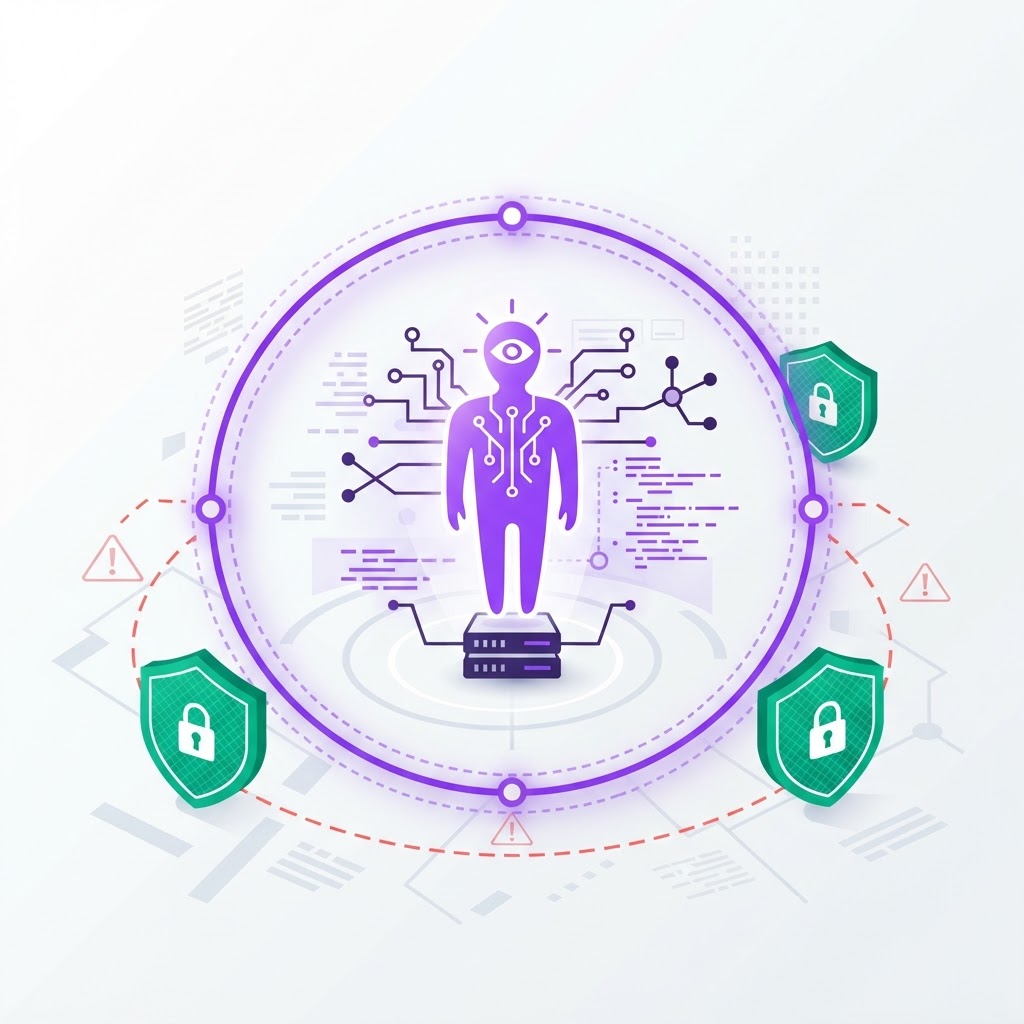
Integrating an agentic AI layer into your existing tech stack—connecting your CRM, ERP, and accounting software—is the fastest way to automate growth. However, autonomous agents are only as valuable as their guardrails. If you treat an agent like a human employee without clear policies, you risk operational chaos. An effective agentic architecture acts as a bridge between systems, executing tasks across your software suite. But some actions must remain strictly manual to ensure your business remains compliant and secure.
The danger of irreversible actions
The most critical boundary for any AI agent is the 'point of no return.' An agent that can delete customer databases or purge historical inventory records is an existential threat. You must technically restrict agent access to 'write' or 'delete' permissions in sensitive tables. Instead of allowing an agent to delete an entry, force it to flag items for manual review or archive them in a staging database. If an agent executes a command that cannot be undone, your entire operational integrity is at risk.
Financial authority and money movement
Automating administrative tasks is smart; delegating financial authority to an agent is a gamble. Never allow an agent to initiate bank transfers or approve invoices over a certain dollar threshold without human intervention. In a typical SME, an agent should be able to draft payment files or flag anomalies in accounts receivable. It should never have the cryptographic keys to authorize a payment gateway or execute a bank transfer independently.
- Implement a strict hard-cap for automated payments, such as $500.
- Require multi-factor approval for any disbursement exceeding that limit.
- Ensure the agent creates a reconciliation log that a human accountant reviews weekly.
The legal and clinical disclaimer
AI agents are excellent at synthesising information, but they are not qualified professionals. If your business operates in professional services, healthcare, or trades, your agents must never provide binding legal, medical, or building-code advice. An agent can summarise local government guidelines, but it must be programmed to direct users to a human expert. Providing 'hallucinated' advice can lead to professional liability claims that your insurance might not cover. Always append a clear disclosure to every output generated by the AI agent.
Sensitive personal data management
Under Australian privacy laws, your business is responsible for the data your agents touch. An agent should never be permitted to export bulk lists of customer PII (Personally Identifiable Information) to unsecured channels. By building an agentic layer that operates via APIs, you can ensure the AI only accesses the specific data fields required for the immediate task. Never grant the AI blanket access to the 'master' database containing sensitive health or financial records.
Promises to customers
An agent is designed to be helpful, which can lead to it over-promising on delivery dates or stock availability. If your agent is communicating with customers, it must operate within strict rule-based constraints. It should never have the authority to issue refunds, discounts, or extended warranties without matching those requests against your actual inventory or cash flow data. If an agent promises a customer a product you do not have, the cost of that error is not just monetary; it is the reputational damage to your brand.
Technical enforcement mechanisms
To ensure these boundaries stick, you must move beyond verbal agreements. Use the following technical strategies to enforce your rules:
- Scope-limited API keys: Grant the agent access tokens that only allow 'read' or 'append' operations, never 'delete' or 'admin'.
- Human-in-the-loop triggers: Program the agent to stop and send a notification when an action involves a high-risk parameter, such as a large refund.
- Audit trails: Log every instruction an agent sends to an external system, creating a searchable, time-stamped history of all decisions.
By layering these controls into your platform, you get the efficiency of automation without the risk of rogue behaviour. You maintain the strategic oversight of your business while the agent handles the heavy lifting of data entry and cross-system syncs. This is the difference between a tool that builds your business and a liability that threatens it. Start small, verify the output, and tighten the constraints as the agent gains proficiency.
Where to start
- Conduct a risk audit by listing every system your agent will touch and identifying which actions are irreversible.
- Create a 'human-approval' queue in your dashboard for any action involving money or client-facing promises.
- Configure your API permissions to follow the principle of least privilege, giving the agent only the absolute minimum access required to complete its tasks.