Travel and tourism operators: agents for bookings, changes and guest comms
By Agentic Design
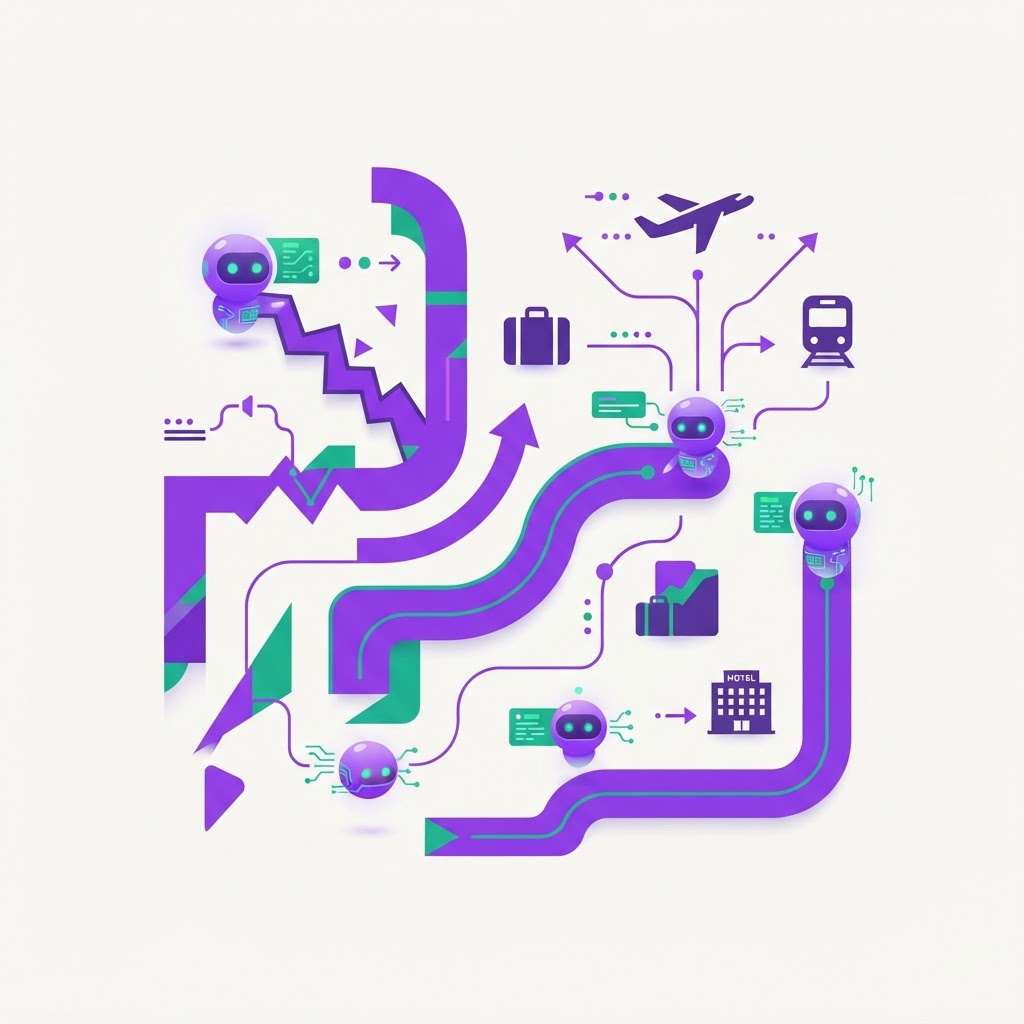
For Australian travel and tourism operators, the business day is often defined by a fragmented ecosystem of software. Your CRM holds customer data, your booking engine manages live inventory, your finance software tracks payments, and your email inbox is a chaotic mix of supplier confirmations and urgent guest queries. When a customer wants to make a change to an existing itinerary, your staff must manually cross-reference these systems, leading to delays and potential errors. This is where an agentic AI layer changes the game. Unlike a simple chatbot or a basic integration, an agentic system acts as a digital worker that reads and writes across your existing tech stack through APIs, ensuring your systems remain the single source of truth without requiring a full software overhaul.
Solving the conversion bottleneck
Most tour operators lose potential bookings because the time between an initial email enquiry and a confirmed deposit is too long. When a high-intent customer emails about a multi-day hike or a bespoke reef tour, they are likely emailing three other operators at the same time. An agentic platform can monitor your incoming enquiries in real-time, cross-reference your current tour availability and pricing, and draft a hyper-personalised quote immediately. It does not just send a templated response; it pulls the specific itinerary components from your inventory system to ensure the information is accurate. By reducing the response time from hours to seconds, you drastically increase your chances of capturing the booking before the customer moves on to a competitor.
The reality of itinerary changes
Itinerary changes are the primary source of operational drag for travel SMEs. Whether it is a late-arriving flight causing a missed transfer or a client requesting a dietary adjustment two days before departure, these tasks are labour-intensive and prone to human error. With an agentic layer, you can automate the complex "if-then" logic required for these updates. When a client requests a change, the agentic platform checks the availability of the new preferred tour, calculates the price difference, updates your CRM, and triggers a confirmation email to the guest. It then automatically notifies your transport and accommodation suppliers of the shift. This level of automation means your team spends less time updating spreadsheets and more time crafting the experiences that earn you five-star reviews.
Streamlining supplier confirmations
Supplier management often involves a mountain of confirmation emails, PDF vouchers, and manual reconciliation tasks. Operators frequently spend hours every week chasing down confirmations for hotel bookings or transport slots to ensure everything aligns with the guest's itinerary. An agentic system can be programmed to proactively "chase" these confirmations by reading incoming emails and updating your central booking database directly. If a supplier fails to confirm by a set deadline, the agent flags the issue for human intervention, meaning you only ever deal with the exceptions that truly require your attention. By automating the mundane back-and-forth, you remove the risk of "silent failures" where a gap in your bookings goes unnoticed until the guest arrives on-site.
- Automate the cross-checking of supplier booking references against your master itinerary.
- Trigger automated alerts for pending supplier actions to ensure no logistical gap exists.
- Sync payment status updates from your finance platform back to the guest's digital itinerary.
Mastering pre-trip and post-trip communications
Personalised communication is the hallmark of a premium tourism business, but it is also the first thing to be neglected during the busy season. An agentic layer excels at managing the "touchpoints" that turn a standard guest into a repeat customer. Two weeks before a trip, the agent can send a tailored email with packing tips specific to the local weather at the destination. Three days after the trip, it can send a request for feedback, linked directly to your preferred review platform. Because these communications are triggered by real data from your bookings system, they feel authentic and timely rather than like generic marketing spam.
Why you don't need a total system replacement
One of the biggest misconceptions in digital transformation is the belief that you must replace your legacy software to achieve automation. Replacing a CRM or a finance package is costly, disruptive, and often results in significant data loss or downtime. An agentic approach is different because it functions as an overlay. It sits above your existing tools, using your existing APIs to "see" and "act" across them as a human operator would. This approach allows you to retain the systems that work while adding a powerful layer of intelligence that connects them. Implementation is often measured in weeks, not months, because we are not rebuilding your database; we are simply giving your existing database a set of hands to perform manual tasks.
- Identify the top three manual tasks currently eating your team's time each week.
- Review your current tech stack for existing API access capabilities.
- Define the 'happy path' for your booking and change-request workflows.
The impact on your bottom line
Consider an operator handling 500 bookings a year. If each booking requires 30 minutes of administrative work for confirmations, changes, and follow-ups, that is 250 hours of labour. At an average cost of $40 per hour, you are spending $10,000 annually on pure administrative overhead. By automating 80% of these tasks with an agentic platform, you recover 200 hours of time and save $8,000 in operational costs, while simultaneously reducing the risk of errors that could lead to negative guest experiences. This is not about cutting staff; it is about freeing your staff to solve complex problems and provide the high-touch service that defines great Australian tourism.
Where to start
- Audit your most time-consuming manual workflows by tracking where your team spends their time for one full week.
- Verify the API capabilities of your current booking, finance, and CRM platforms to ensure they can talk to an agentic layer.
- Run a pilot project focusing on a single, high-frequency task, such as automated supplier confirmations, to measure the efficiency gain before scaling to complex itinerary changes.