The 'Judgment Gap': Why Your Agentic Stack Needs Human-in-the-Loop Design for Complex SME Workflows
By Agentic Design
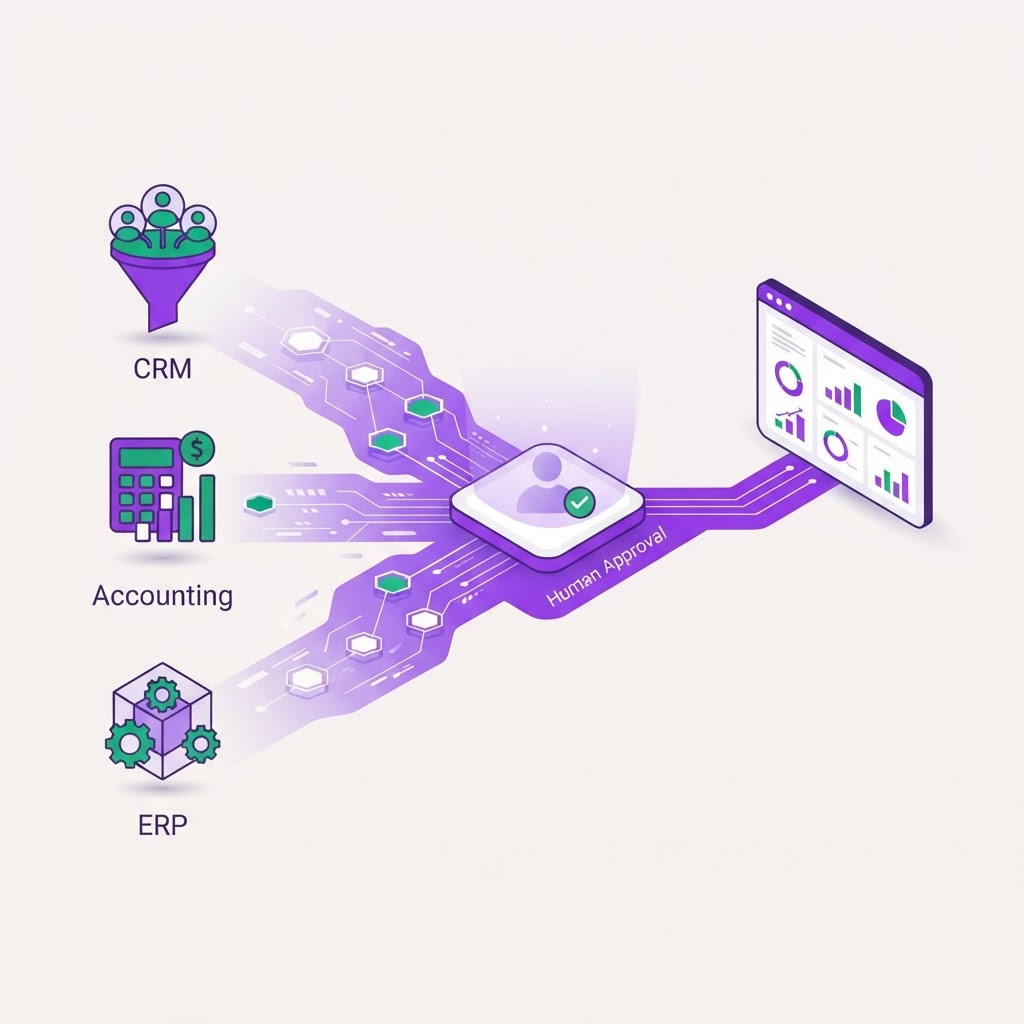
As an Australian founder or leader, you have likely seen the promise of autonomous agents. They are brilliant at crunching data, drafting routine correspondence, and automating basic admin. Yet, when we move into complex subject matter expert workflows—like legal analysis, tax compliance, or architectural planning—the cracks start to appear. This is where we encounter the 'Judgment Gap'.
The reality of the Judgment Gap
AI excels at pattern recognition, but it lacks the contextual nuance that defines expert professional service. An agent might pull the correct legislation for a client, but it cannot weigh the subtle social or political implications of how that law is applied in a specific boardroom scenario. It operates on statistical probability, not lived experience or strategic intuition.
When you hand over high-stakes tasks entirely to an agent, you aren't just risking errors; you are risking the relationship with your client. If a report goes out with a fundamental misunderstanding of a business's local context, the damage to your brand reputation can be permanent. This is why a 'human-in-the-loop' design is not just a safety net; it is a competitive advantage.
Designing for collaboration, not replacement
The goal is to build an agentic stack that augments your staff rather than replacing them. Think of your agents as highly efficient researchers and summarisers, and your team as the architects of the final strategy. You need to create deliberate touchpoints where an expert must review, refine, or approve the output before it hits a client's desk.
To bridge the gap effectively, consider these three design principles:
- Establish clear thresholds where AI work must pause for human verification.
- Maintain a simple 'explainability' log that shows the logic behind the AI's suggestions.
- Create a feedback loop where expert corrections retrain the team's internal knowledge base.
Why this matters for Australian firms
Our market is relationship-driven. Clients in Sydney, Melbourne, or Perth value direct communication and bespoke problem-solving. By using AI to handle the heavy lifting of data processing, your team gains back the hours required to do what they do best: talk to clients, understand their pain points, and provide genuine counsel.
When you integrate humans into the loop, you shift your firm’s focus from mere output to high-value advice. You stop being a commodity provider and start being a trusted partner. This is the only way to scale complex professional services in a way that remains sustainable and defensible.
Moving forward with confidence
Start small. Identify a specific, repetitive, but high-impact process within your firm. Introduce an agent to assist with the draft, but ensure a senior expert remains the final 'approver' in the chain. This fosters a culture of technology adoption where your staff feels empowered by AI rather than threatened by it.
Building an agentic stack is not about chasing the latest shiny tool; it is about building a better, more efficient machine for your people to work within. Keep the human at the centre, and the technology will do exactly what it was designed for: making your firm sharper, faster, and more reliable.