The hidden cost of doing nothing about agentic AI
By Agentic Design
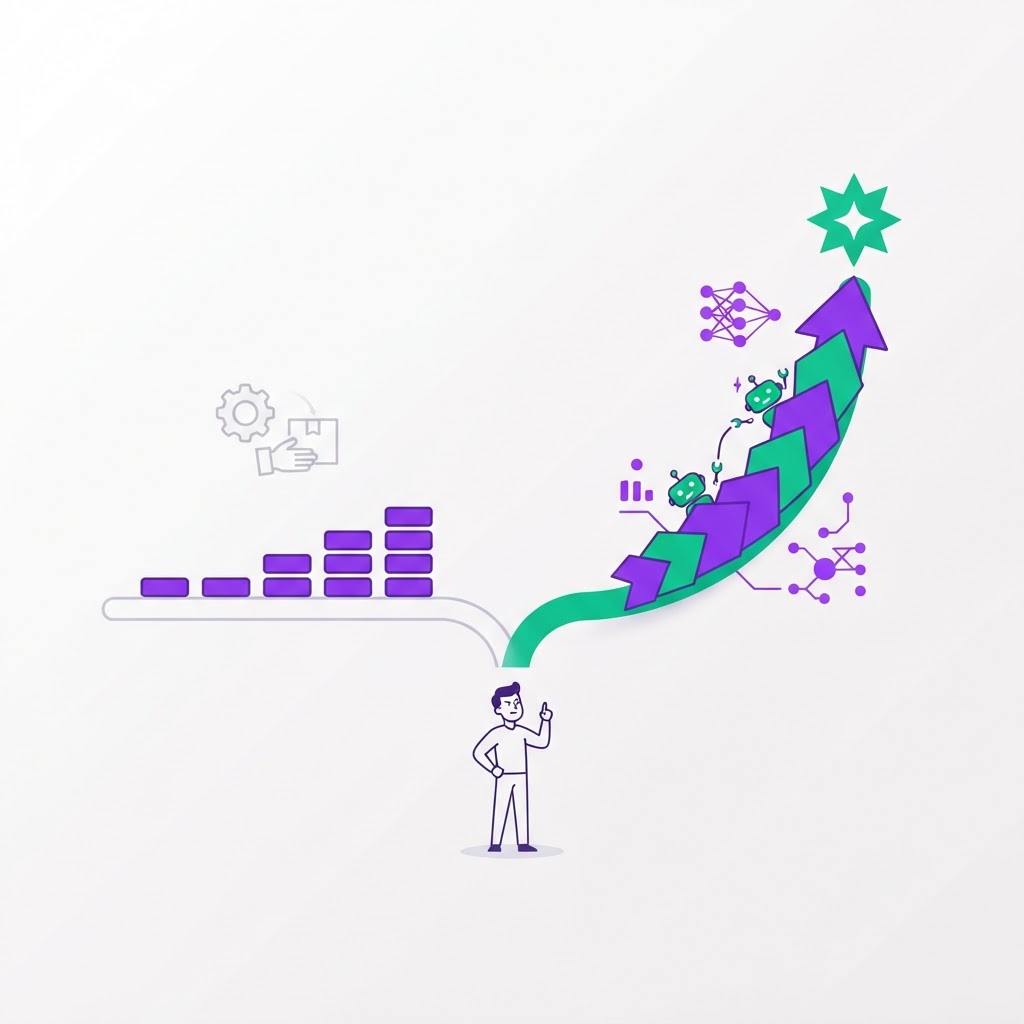
For Australian small and medium enterprises, the decision to delay the adoption of agentic AI is often framed as a prudent "wait and see" approach. Business owners are bombarded with technological promises, and it is natural to want to avoid the risks associated with early adoption. However, this inertia carries a silent, compounding cost that manifests long before a competitor gains a public advantage. In the Australian market, where labour costs are high and talent is difficult to retain, the cost of doing nothing is not just a missed opportunity; it is a direct erosion of your operating margins.
The reality of competitive drift
Competitive drift occurs when your operational efficiency remains static while the standard for service delivery rises. If your competitors begin automating cross-departmental workflows—such as syncing stock levels in your ERP with customer inquiries in your CRM—they are not just saving time. They are lowering their cost-to-serve, which gives them the flexibility to lower prices or invest more heavily in marketing and product quality. When you continue to manage these processes manually, you are essentially paying a premium for human intervention in tasks that provide no strategic value.
Many SMEs currently rely on a patchwork of disconnected systems. You might have a finance team manually reconciling invoices from an accounting package, while your sales team spends hours updating a separate CRM. Agentic AI acts as an agentic layer that sits across these existing platforms, using APIs to bridge the gaps without requiring you to rip out and replace the software you already use. Waiting to implement this layer means continuing to pay for human 'glue' to hold your fragmented systems together, a cost that your more agile competitors are already eliminating.
Wage pressures and the productivity ceiling
Australia faces a unique challenge regarding wage costs. With high minimum wages and a competitive talent market, the ability to scale your output without scaling your headcount is the primary lever for sustained growth. If your operational capacity is tied to the manual hours your team can put in, you are trapped by a productivity ceiling. You are essentially forced to choose between capping your growth or risking your margins by hiring more staff to manage administrative overhead.
An agentic layer changes this dynamic by handling high-volume, repeatable tasks across your existing infrastructure. Consider the following common bottlenecks where manual effort is currently subsidised by your bottom line:
- Reconciling customer support tickets with inventory status updates.
- Manually transferring data between external supplier portals and internal procurement platforms.
- Monitoring financial dashboards for anomalies that require immediate cross-departmental communication.
- Aggregating reports from multiple software tools to prepare for monthly board or management meetings.
By delegating these repetitive duties to an agentic system, you free up your existing staff to focus on high-value client relationships and strategic problem-solving. This isn't about replacing people; it's about shifting the nature of their work so that your wage expenditure produces a higher return on investment.
Margin erosion and service expectations
Customer expectations are being reset by the broader market. When a client expects a quote within an hour, or a real-time update on a complex order, they do not care about the internal manual processes of your team. If your competitors meet these expectations through automated, agentic-driven workflows, your inability to do so becomes a glaring point of differentiation. This leads to customer churn and a gradual decline in your market positioning, which is often far more expensive to reverse than the cost of implementing a smarter workflow today.
Furthermore, the margin erosion caused by inefficiency is often hidden in the 'incidental' hours of your staff. If a senior staff member spends two hours a day manually checking statuses or copy-pasting data, that is effectively twenty percent of their salary wasted on low-value data shuffling. Over a year, for a team of ten, this can represent hundreds of thousands of dollars in lost potential. When you factor in the rising cost of compliance and operational complexity, the case for doing nothing becomes increasingly indefensible.
A practical path forward
Implementing agentic AI is not a multi-year IT transformation project. Because an agentic layer connects to your current systems—your spreadsheets, CRMs, and accounting platforms—the integration is often measured in weeks, not months. You do not need to pause your operations or retrain your entire workforce. You start by identifying the most painful, manual connection between two of your systems and allow an agent to bridge that gap. The goal is to move from manual intervention to active oversight.
By targeting these small but frequent operational frictions, you can see immediate improvements in turnaround times and data accuracy. The benefits include:
- Reduced error rates from manual data entry and transfer.
- Faster response times for critical client requests.
- Increased bandwidth for your team to handle complex, non-standard enquiries.
- Greater visibility into cross-system operations for management reporting.
Where to start
- Audit your team's weekly manual 'copy-paste' tasks: Ask your department heads to list the three tasks that require moving data between two different software platforms.
- Calculate the 'human cost' of those tasks: Multiply the hours spent on those tasks by your average hourly wage to see exactly what you are paying in hidden overhead.
- Identify one high-impact pilot project: Select one workflow where a 50 percent reduction in manual effort would noticeably improve client satisfaction or team morale, and implement an agentic layer specifically for that connection.