The 'Agentic Bill Shock' Audit: How to Predict and Control Costs in Your Agentic Stack
By Agentic Design
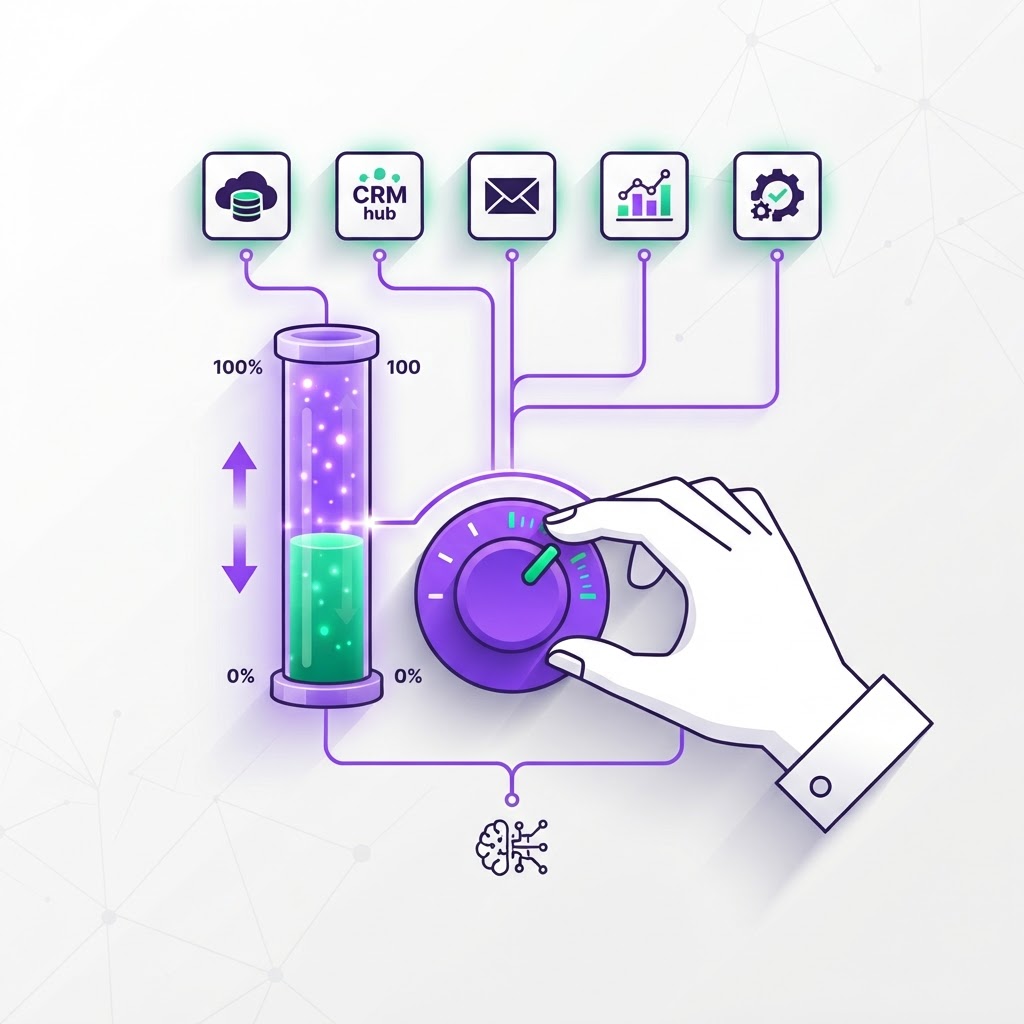
As more Australian businesses move from basic chatbots to autonomous agentic workflows, a silent challenge is emerging: the 'Agentic Bill Shock'. Unlike traditional software subscriptions with fixed monthly fees, agentic stacks are driven by usage-based pricing models where every token, API call, and reasoning step counts towards your final invoice. Without proactive management, a minor loop in an agent’s logic can quickly scale from cents to hundreds of dollars overnight.
Map your dependency chain
To control your costs, you first need to see the entire landscape of your AI architecture. Most businesses rely on a complex mix of LLM providers, embedding services, and vector database queries that operate in the background. Start by documenting exactly which models your agents are calling for each task.
- Identify which agents trigger high-latency, high-cost models like GPT-4o or Claude 3.5 Sonnet.
- Determine if your junior-level tasks are being unnecessarily routed to 'frontier' models that cost significantly more than smaller, distilled versions.
- Audit your retrieval-augmented generation (RAG) pipelines to ensure you aren't sending massive, irrelevant data chunks to the LLM on every query.
Implement hard circuit breakers
Hope is not a strategy when it comes to cloud infrastructure bills. Most major AI platforms now offer budget alerts, but you should move beyond mere notifications by implementing hard 'circuit breakers'. Set these limits within your API developer dashboard to automatically shut down or throttle traffic once a specific spend threshold is reached.
It is far better to have a service temporarily go offline during a weekend than to wake up on Monday morning to a four-figure bill. Consider this a standard governance practice similar to setting spending caps on corporate credit cards.
Optimise your agentic logic
Agentic systems can get caught in 'reasoning loops' where they repeatedly query the model to solve a problem that could have been handled with a standard piece of code or a simple database lookup. This is the biggest hidden drain on your budget. Review your agentic prompts and tool definitions regularly.
If an agent is calling an LLM to perform basic math or formatting that a standard Python function can handle, move that logic into the toolset. You should also evaluate your token window usage; trim back the 'system prompt' or context history if your agents are processing thousands of tokens of redundant information in every conversation turn.
Establish a regular review rhythm
Managing AI costs is not a 'set and forget' task. Appoint a lead in your team to review the consumption metrics at the end of each fortnight. By keeping a close eye on the correlation between agent performance and spend, you can identify which tools are providing genuine value versus those that are just burning through your budget.
Treat these costs with the same rigour as any other operational expense. With the right guardrails in place, you can confidently scale your agentic stack without the fear of an unpredictable bottom line.