Software and tech SMEs: agents for support, onboarding and churn signals
By Agentic Design
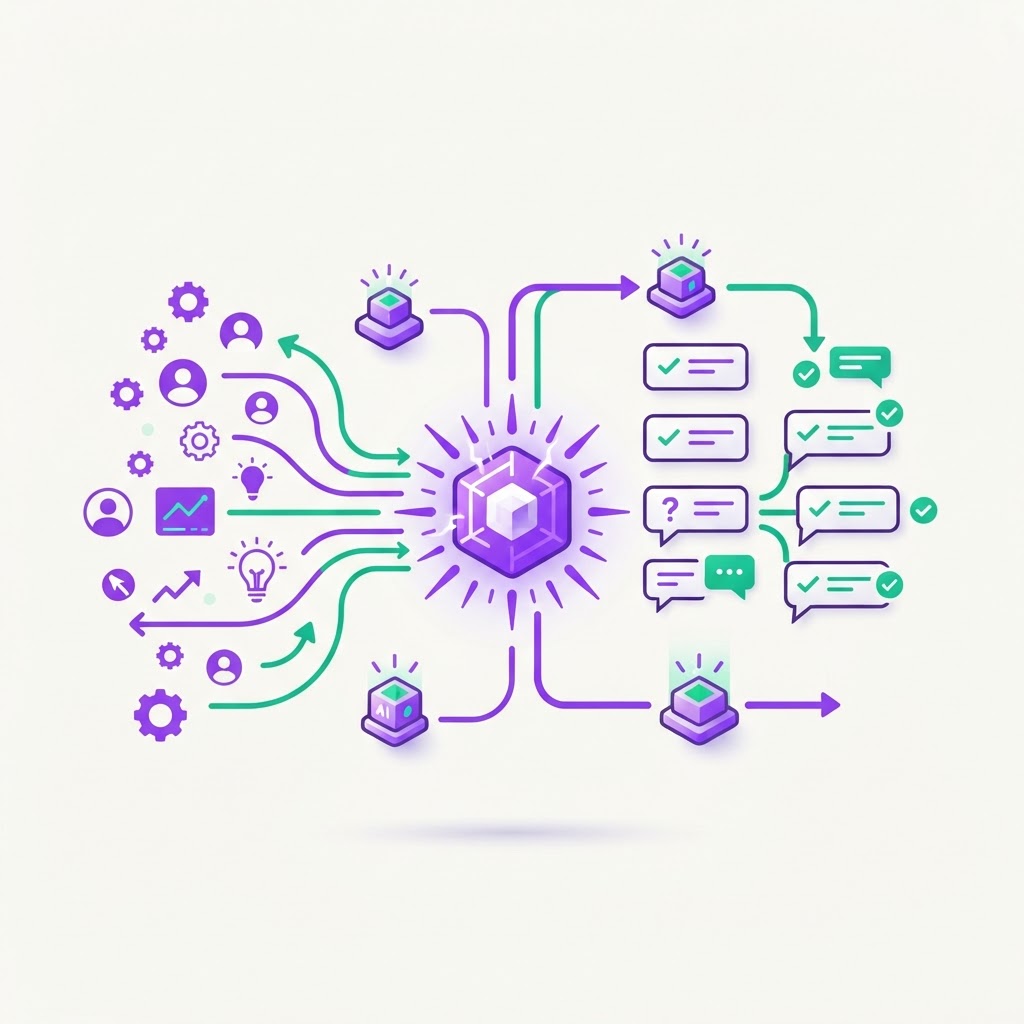
For Australian small and medium enterprises, the tech stack is often a fragmented landscape. You likely have a CRM for sales, a cloud accounting package for finance, and a ticketing system for support. These systems hold immense amounts of data, but they rarely speak to each other in a way that provides actionable intelligence. This is where an agentic platform changes the game. Unlike a standalone chatbot or a basic automation tool, an agentic layer sits across your existing infrastructure. It uses APIs to read, synthesise, and execute tasks across your entire software ecosystem without requiring you to replace the tools you already rely on.
The shift to agentic support
Most SMEs manage tier-one support via manual triage. A customer emails with a query about an invoice or a feature, and a staff member spends ten minutes hunting through the CRM and finance records to provide an answer. An agentic platform treats this process differently. It can access the customer’s history in the CRM, check their payment status in your accounting software, and look up the relevant technical documentation simultaneously. Instead of a human spending hours on repetitive queries, the agent drafts the response or resolves the issue instantly. This isn't about replacing your support team; it is about removing the administrative friction that prevents them from solving complex customer problems.
Streamlining the onboarding experience
Onboarding is the most critical phase for customer retention, yet it is often the most neglected due to resource constraints. When a new client signs on, they need specific instructions based on their subscription tier and industry. An agentic platform automates this by monitoring triggers within your systems. When a new deal is marked as 'won' in your CRM, the agent kicks off a bespoke onboarding workflow. It can generate welcome documentation, set up account access, and send tailored 'getting started' guides based on the user's specific purchase profile. By ensuring every client receives a consistent, high-touch experience from day one, you reduce the 'time-to-value' metric, which is the strongest predictor of long-term contract renewal.
Proactive churn signals
Churn is rarely a surprise; it is a process that leaves digital breadcrumbs. For many Australian SMEs, these signals are hidden across disconnected spreadsheets and usage dashboards. An agentic layer monitors these metrics in real-time. It can flag patterns that precede a cancellation, such as a drop in login frequency or a support ticket regarding a recurring billing error. By aggregating this data, the agent can alert your account management team before the client even considers leaving. Consider a scenario where a client’s usage has dropped by 30% over the last fortnight. The agent identifies this, checks the support logs, and notifies a manager to reach out with a personal check-in. This proactive intervention often saves accounts that would have otherwise slipped through the cracks.
Drafting documentation and release notes
Technical communication is a common bottleneck for software SMEs. Developers prefer to build, while managers often lack the technical depth to translate updates into plain English for the end-user. An agentic platform can bridge this gap. By accessing your commit logs and Jira tickets, the agent can draft clear, concise release notes automatically. It understands the context of a bug fix or a new feature and formats it into documentation that your marketing or support team can publish immediately. This ensures your customers stay informed about the value you are adding, without placing a heavy administrative burden on your engineering team.
Why an agentic layer matters now
Implementing this technology does not require a six-month migration project. Because an agentic layer is designed to function as an orchestrator, it connects to your existing APIs in a matter of weeks. You keep your accounting software, your CRM, and your project management tools. You simply add a layer of intelligence that enables those tools to exchange information and perform actions autonomously. For an Australian SME operating with a lean team, this capability is a significant competitive advantage. It turns your tech stack from a collection of silos into a unified operation.
- Automate tier-one support by pulling data from multiple sources to provide instant, accurate answers.
- Detect usage patterns across your software stack to identify and mitigate churn before it happens.
- Trigger custom onboarding workflows as soon as a new client is signed in the CRM.
- Translate complex technical changes into readable, professional release notes without manual writing.
Measuring the impact
The value proposition of an agentic platform is measured in time saved and revenue protected. If your support team spends 15 hours a week on manual triage, an agentic layer that resolves 60% of those tickets allows you to redirect that labour to high-value projects. Similarly, a 5% reduction in churn for an SME with a recurring revenue model can result in a significant uplift in annual profit. These systems are not about hype; they are about applying logic and data to the gaps in your daily operations. The technology is mature enough to be implemented reliably, and the APIs are ready to be connected.
Where to start
- Audit your manual workflows: Identify three tasks, such as responding to support tickets or syncing client data, that consume the most time for your team each week.
- Assess your API connectivity: Verify that your core software tools (CRM, accounting, ticketing) offer open APIs, which is standard for most modern cloud platforms used in Australia.
- Run a focused pilot: Choose one high-impact area, such as onboarding, and deploy an agentic layer to handle that single process for 30 days to measure efficiency gains.