Security for agentic systems: least privilege, secrets and audit trails
By Agentic Design
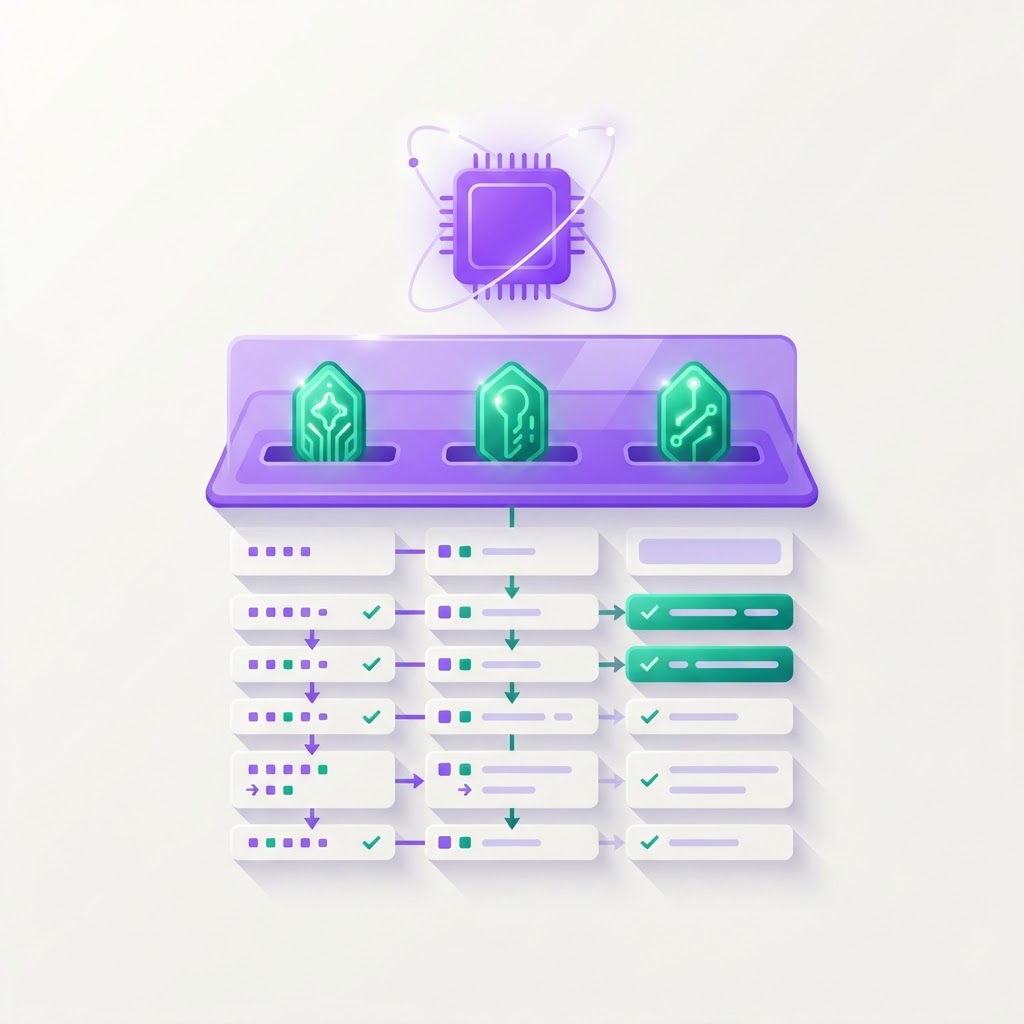
Integrating an agentic layer into your SME allows you to connect your CRM, inventory management, and finance systems without replacing the software you already rely on. While this creates massive efficiency gains by automating workflows across platforms, it introduces new security requirements. You are effectively granting a digital employee the ability to interact with your most critical data. When managed correctly, this provides a powerful competitive advantage; when managed poorly, it creates unnecessary risk. This guide breaks down the practical steps to secure these systems without stalling your progress.
The principle of least privilege
The most dangerous setting in any system is administrative access. When setting up an agent to handle invoice processing or customer data retrieval, you must ensure the agent possesses the absolute minimum access required to perform its specific task. If an agent only needs to read inventory levels, it should not have permission to delete stock entries or change pricing logic. By using granular scoped credentials, you ensure that even if an agent behaves unexpectedly or is compromised, the blast radius of that incident remains confined to a tiny, non-critical silo.
Secrets management and API keys
Many businesses make the mistake of hardcoding API keys directly into their scripts or configuration files. This is a primary security failure. If that code is ever shared or version-controlled in an accessible repository, your keys are exposed to the world. Instead, use a dedicated vault or environment-based secret manager to inject credentials at runtime. This practice ensures that sensitive keys are never stored in plaintext and can be rotated easily if a breach is suspected. For an Australian SME, this is the digital equivalent of using a secure safe rather than leaving your office keys on the reception desk.
Network boundaries and isolation
An agent should not have free reign to access your entire internal network. By implementing network-level boundaries, you can restrict the agent’s reach to specific API endpoints. You should configure your firewall or cloud security group to allow the agent to communicate only with the systems it explicitly needs to reach. If your agentic layer is hosted in the cloud, ensure there is a clear, encrypted tunnel or VPC connection to your on-premises or private cloud systems. This limits the ability of external actors to probe your internal infrastructure through an agentic doorway.
Audit trails and logging
Visibility is the foundation of security. If your agent is performing actions across your CRM and accounting software, you need a comprehensive audit trail that logs every intent, action, and outcome. These logs must be immutable; they should record exactly what the agent attempted to do, what data it read, and what changes it committed to your systems. Reviewing these logs weekly is a mandatory operational rhythm. If you see an agent suddenly attempting to access files outside of its normal scope, you can pause the service immediately before any meaningful damage occurs.
Reviewing agent actions
While we aim for full automation, the most effective security strategy for SMEs involves a 'human-in-the-loop' verification process for high-value tasks. You should configure your system to require manual approval for specific thresholds, such as payments over $5,000 or significant changes to customer records. Think of this as a dual-signing requirement for your business bank account. You retain the velocity of automation while maintaining the final word on critical operations.
Vendor due diligence
When evaluating a provider to build your agentic layer, you must move past the sales pitch and ask rigorous technical questions. A provider should be able to articulate their security posture clearly. Consider asking these questions during your discovery phase:
- How is my data encrypted both in transit and at rest within your platform?
- Do you store my API keys, and if so, how are they protected against internal and external threats?
- Can you provide a detailed report or dashboard that logs every API call made by my agents?
- What is your standard procedure for responding to a suspected security breach involving an agent?
If a vendor cannot provide clear, non-evasive answers to these questions, they are not ready to manage your infrastructure. You need a partner that treats your operational security with the same gravity as you do. Security should be a foundational component of the architecture, not an afterthought or a bolt-on feature. By establishing these boundaries now, you ensure that your agentic systems scale reliably, safely, and without compromise.
Where to start
- Audit your current system integrations and identify exactly which credentials are being shared across your platforms.
- Implement a dedicated secrets management tool to replace any hardcoded API keys currently in use.
- Configure your logging to send alerts to a central dashboard for any API calls that fall outside of your agent's predefined operational profile.