Retail and e-commerce: agentic product support and order handling that never sleeps
By Agentic Design
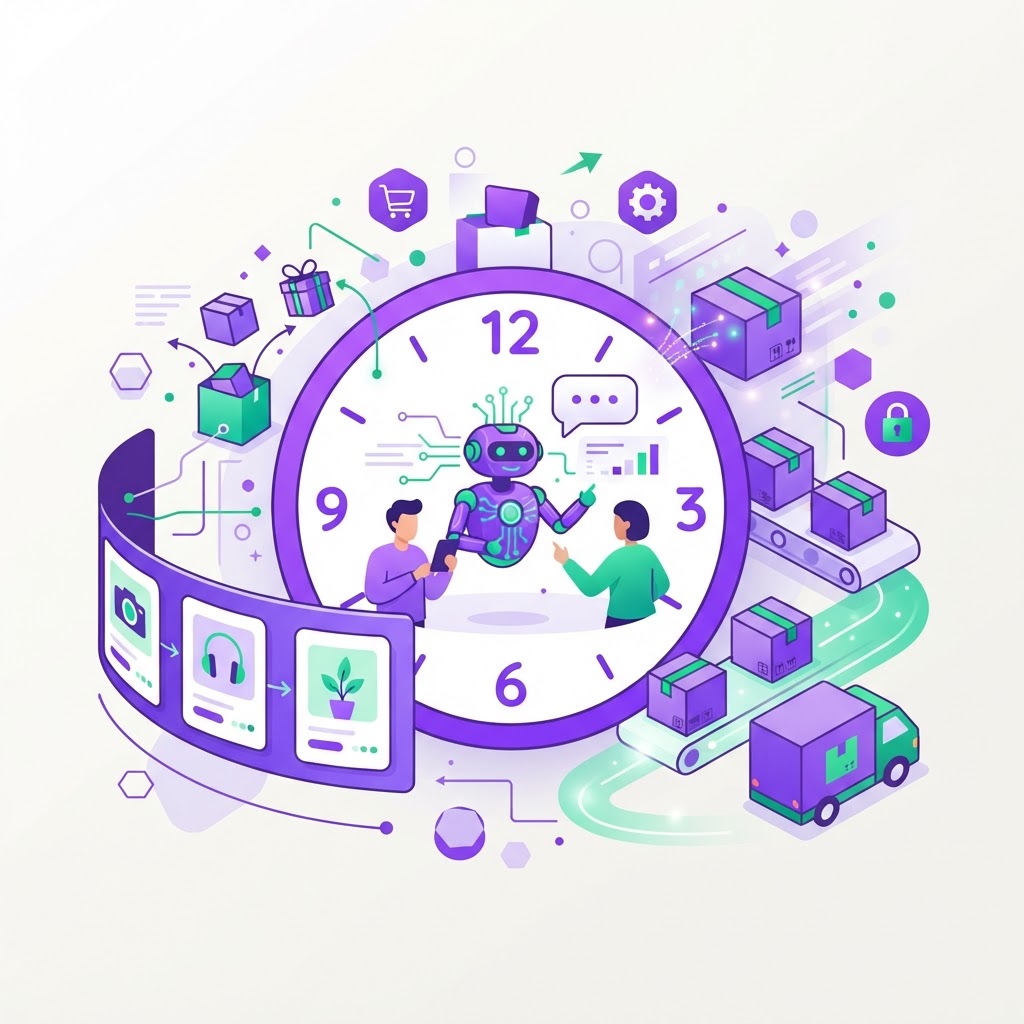
For many Australian retail and e-commerce SMEs, the bottleneck to scaling is the manual cost of human interaction. Every query about order status or product fit consumes valuable time that could be spent on merchandising or business strategy. Agentic AI platforms offer a way to solve this without ripping out your existing tech stack.
Unlike traditional chatbots that simply offer scripted responses to static questions, an agentic layer is designed to take action. It connects to your CRM, ERP, and inventory systems via APIs to execute tasks autonomously. It does not replace your systems; it acts as an intelligent bridge that connects them to perform complex workflows while you focus on the bigger picture.
Solving the pre-purchase conversion gap
One of the biggest leaks in e-commerce revenue is the unanswered customer query during the shopping journey. Customers who have to wait for an email reply often move to a competitor who provides an instant answer. An agentic agent can act as a digital shop assistant by querying your product database in real-time.
For example, if a customer asks whether a specific item will fit or if it is suitable for a particular application, the agent doesn't just guess. It pulls technical specifications, cross-references recent customer reviews, and checks current inventory levels to provide a confident recommendation. This capability directly impacts your conversion rate by reducing friction at the critical point of interest.
- Real-time answers based on live stock availability.
- Personalized guidance using historical purchase data.
- Immediate escalation to human staff if the query requires complex judgement.
Automating the support lifecycle
Post-purchase support often feels like a constant drain on resources. Between order status updates and processing returns, your support team likely spends 70% of their day performing repetitive data entry tasks. An agentic platform manages these interactions by talking directly to your order management and shipping platforms.
When a customer asks where their order is, the agent retrieves the current status from your courier’s API and provides a precise update. If a customer needs to initiate a return, the agent handles the process according to your specific business rules, updating your inventory count in the ERP simultaneously. By shifting these tasks to an agentic layer, you can reduce your cost per order by up to 40% while maintaining a high standard of service.
Merchandising and inventory insight
Beyond customer service, an agentic layer excels at turning the raw data sitting in your spreadsheets and finance systems into actionable insights. Managing inventory for an SME can be a guessing game, especially when balancing cash flow against supply chain lead times. An agentic platform can monitor your sales velocity and notify you when specific SKUs are trending downwards.
It can also perform a basic audit of your product descriptions, comparing them against return reasons to identify where customers might be misled by your website copy. This proactive approach turns your support history into a roadmap for merchandising improvements. You no longer have to wait for an end-of-month report to understand why certain items aren't moving.
- Automatic notification when safety stock thresholds are breached.
- Correlation of return data with specific product batches to identify defects.
- Daily briefings on margin performance across product categories.
A practical approach to integration
Many business owners fear that implementing AI means months of development or switching to expensive new enterprise software. The reality is that an agentic layer is built to work with the tools you already have. Because it communicates through APIs, it can pull data from a Shopify store, read a balance sheet from Xero, and update an inventory tracker in real-time.
The deployment process focuses on mapping these existing workflows rather than building new ones. You start by identifying the most time-consuming task in your daily operation—such as answering "Where is my order?"—and setting the agent to handle that specific flow. Within weeks, the system is live, reducing the load on your staff and providing a 24/7 service window that never sleeps.
This methodology ensures your investment is locked into tangible results rather than speculative technology projects. By automating the high-volume, low-complexity tasks, you free your team to focus on brand building and customer experience. The result is a more resilient business that can scale without a linear increase in support costs.
Where to start
- Audit your top 10 support queries from the last month and categorize them by the data source required to solve them.
- Identify which of your existing systems—such as your ERP or CRM—contain the "source of truth" for those queries and confirm they have accessible API endpoints.
- Select a single, high-frequency task to automate first, such as order status lookup, to validate the integration and ROI within a 4-week window.