Quoting agents: faster, more consistent quotes without cutting margin
By Agentic Design
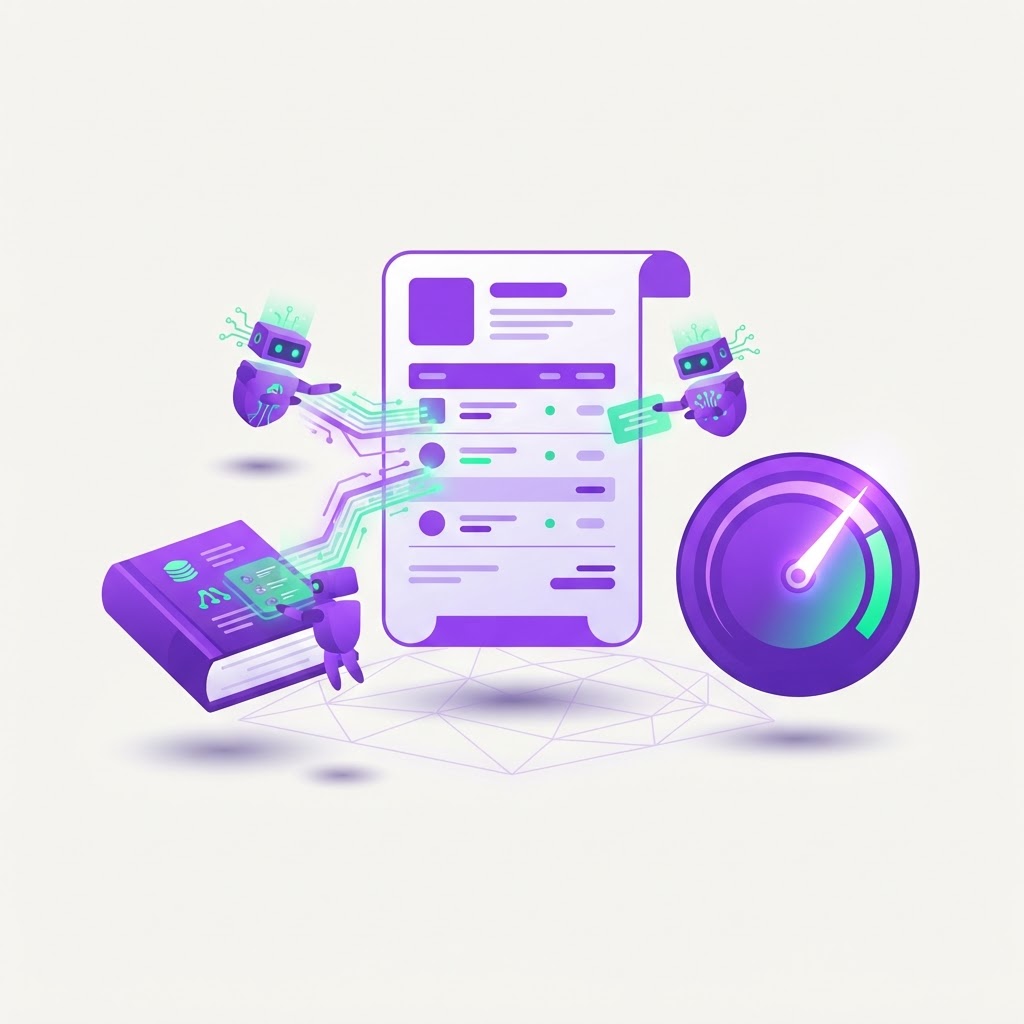
For many Australian small-to-medium enterprises, the quoting process is the silent killer of productivity and profitability. Your sales team is often caught between slow manual calculations and the pressure to send a quote out the door before a competitor beats them to it. When humans rush, mistakes happen: miscalculated labour costs, forgotten delivery fees, or outdated product prices lead to eroded margins. An agentic quoting platform changes this dynamic by acting as an intelligent layer that sits across your existing infrastructure. It does not replace your CRM or your accounting software; it connects them.
How an agentic quoting layer works
Unlike traditional automation that follows rigid, linear scripts, an agentic quoting agent operates with a degree of autonomy governed by your business rules. It pulls live data from your inventory system, checks current labour rates in your payroll file, and validates pricing against your master price book. By using APIs to talk to your CRM, ERP, and finance systems, the agent creates a bridge that allows data to flow seamlessly. If you are an electrical contractor, for instance, the agent knows that cable prices fluctuate and automatically pulls the latest purchase price rather than using an outdated estimate from a spreadsheet.
Because the agent resides in the middle of your tech stack, it can handle complexity that simple automations cannot. It understands dependencies, such as the fact that a specific hardware kit requires a two-person installation team, and it adjusts the labour margin accordingly. It processes these requirements in seconds, ensuring the final output is accurate and consistent every single time. This means your sales staff spends less time typing data and more time building relationships.
Protecting your margins with dynamic rules
Margin erosion often happens at the edges of a quote. A salesperson might offer a quick discount to win a deal, unaware that the specific combination of materials requested actually pushes the project into the red. An agentic quoting system enforces your 'guardrails' by applying hard logic to every quote generated. You define the minimum margin percentage and the agent rejects any quote that falls below that threshold, or flags it for an immediate review by a manager.
- Minimum margin enforcement on all line items.
- Automatic adjustment for site-specific delivery surcharges.
- Tiered discount limits based on volume or historical client profitability.
- Real-time calculation of tax and GST requirements for Australian compliance.
By codifying your pricing strategy into the agent, you remove the emotional element from discounting. If a client demands a lower price, the agent can simulate the impact on the bottom line instantly. This transparency allows your team to negotiate with confidence, knowing exactly how much room they have to move without compromising the company's financial health.
Handling complex variations
Most SMEs deal with clients who request changes mid-process, which is where manual quotes often unravel. If you are a custom furniture manufacturer, a client changing their wood choice can trigger a cascade of changes in material costs, manufacturing time, and shipping logistics. An agentic platform treats these changes as variables within a logic model. When a change is requested, the agent recalculates the entire scope based on your rules, ensuring that new costs are factored in immediately.
This is significantly faster than having an engineer or lead hand manually recalculate a project scope. The agent ensures that the variation quote remains profitable by applying the same rules and mark-ups used in the original project. This consistency not only protects your margin but also builds trust with your clients, who receive accurate, professional updates without the usual delays associated with back-office calculations.
The review and approval workflow
Total automation is rarely the goal; controlled delegation is. An agentic system includes an intelligent review and approval workflow that escalates issues only when necessary. For standard quotes that stay within your predefined 'green zone,' the agent can generate and send the document directly to the client. For high-value quotes or those involving non-standard terms, the agent pushes a summary to a manager’s dashboard.
- Automated summary of profit margins for every high-value quote.
- One-click approval or rejection sent via mobile notifications.
- Audit logs that capture every change made during the drafting process.
- Ability to route specific projects to designated senior estimators.
By focusing human attention only on the 'red flag' items, you reduce the bottleneck in your sales cycle. A manager can approve a quote in ten seconds while on the road, rather than waiting until they are back at their desk to review a complex spreadsheet. This keeps the momentum of the sales process moving forward at all times.
Speeding up win rates
Speed is a significant competitive advantage in the Australian SME market. Customers are often waiting on three different quotes, and the first company to provide a comprehensive, accurate, and professional document is statistically the most likely to win the project. An agentic quoting agent cuts the turnaround time from days to minutes. This responsiveness creates a perception of professionalism and capability that sets your business apart from competitors who are still struggling with manual data entry and slow internal communication.
When your quoting process is fast, your sales team can handle a higher volume of enquiries without an increase in administrative staff. They can focus on being consultative rather than being data processors. As a result, you win more work, and the work you do win is guaranteed to align with your profit targets. This is not about cutting corners; it is about working smarter by leveraging technology that understands the logic of your specific business.
Where to start
Deploying an agentic layer does not require a year-long digital transformation project. Because these agents connect via existing APIs, they can be implemented in a matter of weeks. Start by auditing your current data sources, identifying which systems hold your pricing and cost information, and defining the specific rules that keep your margins protected. Once those guardrails are clear, an agentic partner can build the integration layer that connects these disparate systems into a single, high-speed quoting engine.