Privacy and Australian Privacy Principles for agentic AI
By Agentic Design
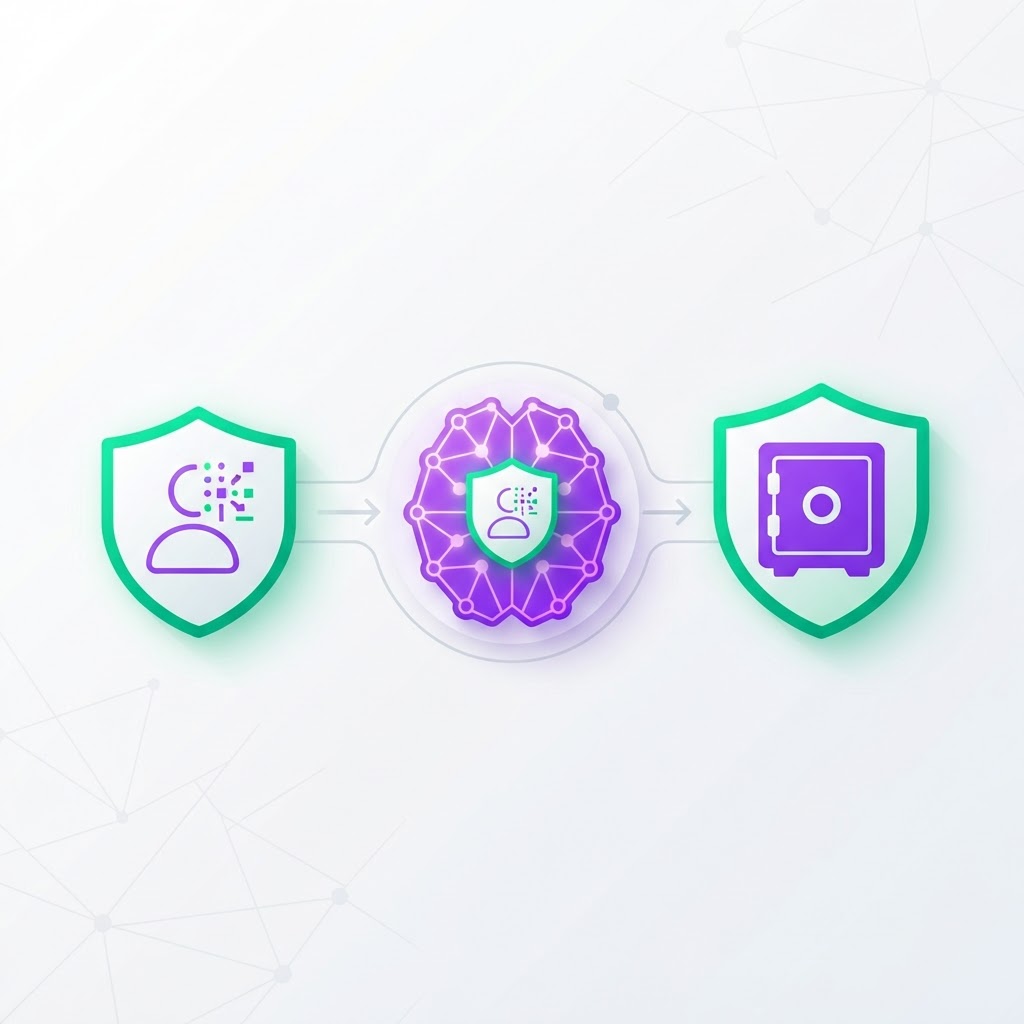
For Australian small and medium enterprises, agentic AI represents a fundamental shift in productivity. Rather than replacing your current tech stack, an agentic layer connects your existing CRM, ERP, and finance systems, allowing autonomous agents to execute complex workflows across silos. However, this convenience brings significant data governance responsibilities. When your agents start reading customer records or updating inventory ledgers, they fall squarely under the scope of the Australian Privacy Principles (APPs). If you operate a business with an annual turnover exceeding $3 million, or handle health information, these principles are mandatory. Even for smaller entities, building with privacy in mind is a competitive advantage that builds long-term customer trust.
Collection limits and purpose limitation
The most common mistake in AI implementation is a 'grab everything' approach to data. APP 3 dictates that you should only collect personal information that is reasonably necessary for your functions. When configuring your agent, define its scope strictly. If your agent is designed to manage customer support tickets, ensure it does not access the payroll history stored in your accounting software.
- Configure API scopes to read-only where write access is not strictly required.
- Audit the data fields your agent fetches from your CRM to ensure every field serves a clear purpose.
- Mask sensitive fields, such as bank account numbers or private mobile numbers, before they reach the agent's logic layer.
By restricting what the agent sees, you naturally comply with the principle of purpose limitation. If the agent does not 'know' the sensitive data, it cannot misuse or store it in ways that deviate from its primary function.
Data quality and transparency
APP 10 requires that you take reasonable steps to ensure the personal information you hold is accurate, up-to-date, and complete. When an agent interacts with your ERP or inventory system, it must rely on current data to make decisions. If your agent makes an automated decision based on stale data, you are potentially in breach of this principle. Ensure your system includes automated 'handshakes' that verify data integrity before an agent proceeds with a multi-step task.
Transparency is equally critical under APP 5. You must notify individuals about why you are collecting their information and how it will be used. If an AI agent is performing a task that involves personal data, your privacy policy should explicitly mention that automated systems assist in processing this information. Clear, plain-language notices on your website or at the point of data entry satisfy this requirement without scaring away your customers.
Disclosure and offshore processing
Australian SMEs frequently use global cloud platforms like AWS or Azure. APP 8 imposes accountability for the disclosure of personal information to overseas recipients. If your agentic layer processes data through a large language model (LLM) hosted in a US-based data centre, you are effectively transferring that data offshore.
To manage this risk, ensure your vendor contracts include robust data processing agreements. Check whether your specific AI model provider uses your input data for training purposes. Reputable enterprise platforms allow you to opt-out of model training, ensuring your customer data remains your own and is not leaked into the public domain. This is not just a privacy requirement; it is a fundamental business security measure.
Consent and system configuration
Under APP 6, you must only use information for the primary purpose for which it was collected. If your agentic platform is designed to cross-reference data between your marketing CRM and your financial system, you need to ensure the customer originally consented to that type of information flow. If they did not, the agent should be configured to ignore that specific data set, regardless of how much 'better' the analysis might be.
Configuring your agents involves setting 'guardrails'—predetermined rules that prevent the AI from executing unauthorized actions. For example, an agent tasked with scheduling client meetings should never have permission to view credit card statements. By building these permissions into the API layer that connects your software, you create a defensible and auditable trail of how data is handled.
- Set hard constraints in your agent's system prompt to ignore certain data categories.
- Use logging tools to track when an agent accesses personal information.
- Conduct a monthly review of agent logs to ensure there are no 'over-reach' incidents.
Security and destruction of data
APP 11 mandates that you protect personal information from misuse, interference, and loss. Because agentic systems are designed to bridge different databases, they effectively increase your attack surface. If a user credentials leak, that user’s agent could potentially access everything they have permission to see. Adopt a principle of least privilege, ensuring the agent uses its own, scoped API credentials rather than those of a human administrator.
Furthermore, ensure you have a data retention policy. If your agent creates temporary files or logs during its decision-making process, those files must be purged regularly. An agent that stores customer data indefinitely in a temporary log folder is a liability. Your infrastructure should automatically rotate and delete these logs every 30 to 90 days.
Where to start
Begin your compliance journey by conducting a simple Data Mapping Exercise. Document which systems your agent touches and what information it pulls from each. Second, review your current privacy policy and update it to explicitly include language regarding automated systems and AI-driven processing. Third, implement an audit log for your agentic platform that records the 'reasoning' and 'source' for every major action the agent takes, ensuring you can explain its behaviour if a customer or regulator asks.