Pharmacies and health retail: agents for scripts, stock and customer questions
By Agentic Design
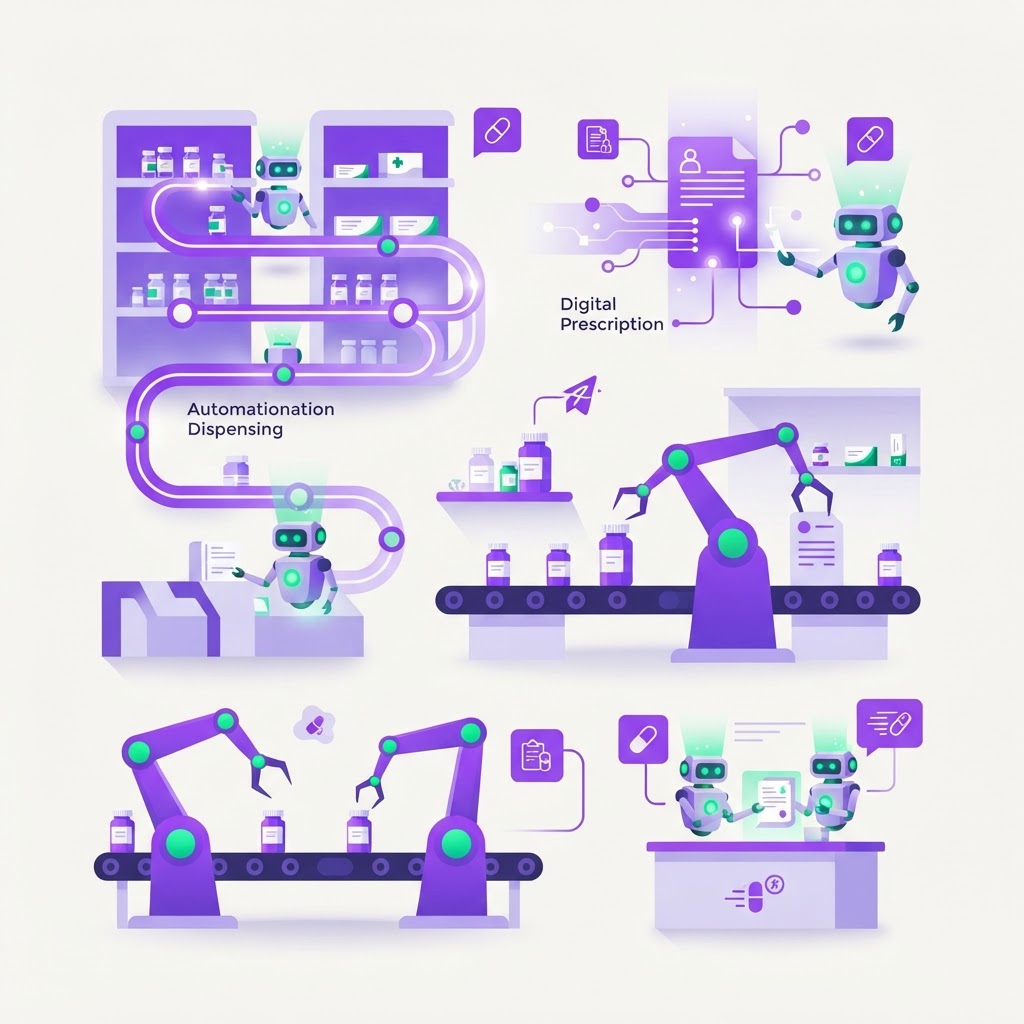
For many Australian pharmacy owners, the modern dispensary is a balancing act between patient care and operational friction. You have a pharmacy management system (PMS) for scripts, an ERP for retail inventory, a POS for transactions, and potentially separate platforms for loyalty programs and staff scheduling. None of these systems talk to each other effectively, forcing your team to swivel-chair between screens to answer basic patient questions. An agentic AI layer changes this dynamic by acting as a connective tissue across these existing platforms, rather than forcing a costly and risky "rip and replace" of your core software.
Automating the script lifecycle
The most time-consuming task for pharmacy staff is managing the manual back-and-forth regarding script status and repeats. Patients frequently call to ask if a script is ready or when their next repeat is due, forcing staff to stop clinical work to query the PMS. An agentic platform integrates directly with your PMS via API to provide real-time updates without human intervention. When a script is processed, the agent can trigger an automated, secure notification via SMS or email to the patient.
This approach reduces incoming "status check" calls by up to 60 per cent, allowing pharmacists to focus on consultations rather than customer service logistics. If a patient is overdue for a repeat, the agent calculates the timeline based on the last dispensing date and sends a proactive reminder. These reminders can include a call to action, such as a secure link to request a refill, which then logs directly back into your PMS for the pharmacist to review and approve.
Intelligent stock and supply alerts
Supply chain volatility is a constant headache for Australian pharmacies, particularly with ongoing medication shortages. Managing stock isn't just about ordering; it is about knowing exactly what is on the shelf and what is currently flagged as "out of stock" at the wholesaler level. An agentic layer sits across your ERP and inventory systems to track stock levels in real-time. If a specific medication is unavailable, the agent can alert staff immediately and, crucially, cross-reference available therapeutic alternatives.
When a customer asks for a product that is currently unavailable, the agent can present the pharmacist with a list of clinically equivalent substitutes based on current PBS guidelines. This avoids the manual searching process that eats into dispensary efficiency. Furthermore, when high-demand items arrive from the wholesaler, the agent can automatically notify the patients who have had backorders for those specific items, transforming a reactive "we don't have it" response into a proactive service experience.
- Real-time monitoring of SKU levels across multiple categories.
- Automated cross-referencing of PBS-approved therapeutic substitutes.
- Triggered alerts for staff when critical medication stock reaches minimum reorder points.
- Instant generation of backorder lists for customer communication.
Handling customer queries within clinical boundaries
Retail pharmacy customers often have questions that fall into a grey area: they are not quite medical emergencies, but they require more than a generic retail response. Building an agentic layer that handles these queries requires clear clinical boundaries. By training the AI on your specific business rules and standard operating procedures, you ensure the agent never provides medical advice, but instead facilitates information gathering. If a query reaches a threshold of complexity, the agent is programmed to immediately escalate the conversation to a registered pharmacist.
- Filtering general questions about opening hours, services, or product pricing.
- Gathering patient details and symptoms to pre-populate charts before a consultation.
- Explaining general storage requirements or dosage instructions from the PIL (Patient Information Leaflet).
- Alerting staff to triage patients who require urgent intervention.
By handling the "top-of-funnel" queries, the agent ensures that when a patient speaks to a human, the pharmacist already has the relevant history, the script status, and the inventory data visible on their screen. This isn't about replacing the pharmacist’s expertise; it is about stripping away the administrative layers that prevent the pharmacist from actually practising pharmacy. Because this technology connects to your current systems via existing APIs, the implementation time is measured in weeks, not years. You gain the agility of a modern digital business without the complexity of migrating your core databases.
Where to start
To begin integrating agentic technology into your pharmacy operations, follow these three steps. First, map your current data silos to identify which system houses your inventory, patient scripts, and customer contact details. Second, isolate the top three high-volume, low-value queries your staff handle daily, such as script status checks or repeat reminders. Third, engage a provider to build a pilot agent that connects exclusively to the PMS API to automate those specific tasks, proving the efficiency gains before scaling to inventory or retail management. This iterative approach allows you to see immediate ROI while maintaining full control over your clinical data and patient privacy.