Owning your agentic layer: avoiding a new kind of vendor lock-in
By Agentic Design
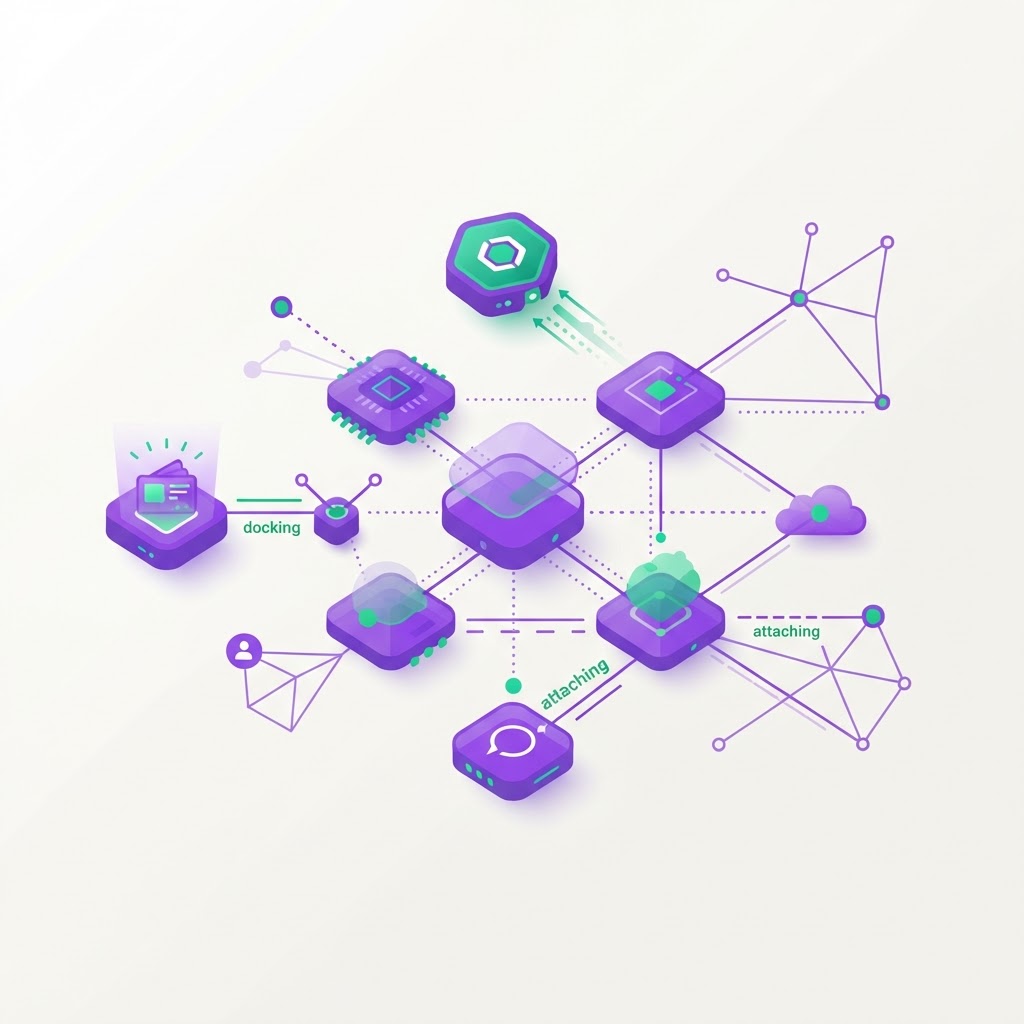
For many Australian small-to-medium enterprise owners, the current rush to adopt AI feels like a race to replace expensive legacy systems. You are being told that a new all-in-one platform will automate your sales, manage your inventory, and balance your books if you simply port everything over. This is a trap. When you migrate your core business logic into a single vendor's black box, you are not buying productivity; you are buying a new, more dangerous form of vendor lock-in. Instead of abandoning your existing CRM, ERP, or accounting software, you should be building an agentic layer that sits across these systems, functioning as a digital workforce that bridges the gaps between your current tools.
The fallacy of the all-in-one platform
Many vendors pitch "AI-native" platforms that promise to handle everything from lead generation to final invoice reconciliation. If you rely on these tools, you are tethered to their pricing, their feature roadmap, and their proprietary data models. If they raise their subscription costs by 40% next year, or if their service fails to meet your specific compliance requirements, you cannot simply leave. Your business processes, your logic, and your historic customer data are woven into their architecture. Replacing those systems again would be as costly as the initial migration.
True agentic design treats your existing systems as the source of truth for your data, while your AI agents act as the connective tissue. By using APIs to talk to your existing finance or CRM software, an agentic layer keeps your data where it belongs—in your own environment. If an AI provider underperforms, you swap the intelligence engine while keeping your business logic intact. This modular approach ensures that your operations remain robust, flexible, and entirely yours.
What you must own to stay in control
To avoid lock-in, you must maintain ownership of four critical assets. If your vendor controls these, you are effectively a renter in your own business. First, your data. You should always have direct access to your telemetry and performance data without needing to export it through a slow, proprietary pipeline. Second, your prompts and logic. These are your standard operating procedures, codified. If you cannot extract your agentic instructions in a readable format, you do not own your processes.
Third, your integrations. These are the pathways between your agentic layer and your ERP or inventory systems. They should be built on standard protocols that allow you to switch out the AI model or the interface at any time. Finally, you need your own evaluation sets. These are the benchmarks you use to measure whether your agents are actually performing correctly. If the vendor defines what "success" looks like, they will always frame their own product as successful.
- Your data: Keep raw business information in your own databases, not in the vendor's black-box storage.
- Your logic: Use version-controlled repositories for your agent prompts and decision trees.
- Your evaluation sets: Maintain a "gold standard" dataset of inputs and expected outputs to audit agent accuracy independently.
Model portability and contractual safeguards
Technology moves faster than corporate lawyers, but your contracts need to catch up. When engaging an AI platform provider, you should demand model portability. This means your system should be architected to allow you to swap the underlying large language model (LLM). Today, you might use a high-end model for complex reasoning, but in six months, a smaller, cheaper, and faster model might be better suited for your specific task. If your vendor has hard-coded a specific model into their platform, you are stuck with their performance profile and their pricing.
When reviewing contracts, look for clauses regarding data egress and IP ownership. Ensure that you retain full ownership of the refined prompts, fine-tuning data, and integration code produced during the engagement. A good partner will be transparent about these terms. If a vendor insists that they own the "model output" or the "configurations" created for your business, walk away. You are paying them to build a solution for your benefit, not to build a product they can sell to your competitors.
Real-world outcomes through modularity
Imagine an Australian wholesaler with an inventory system that doesn't talk to their accounting software. A typical "integrated" solution might take six months and $100,000 to overhaul the entire tech stack. In contrast, an agentic layer can be built in weeks. An agent is deployed to monitor the inventory levels in the warehouse system, trigger a draft purchase order in the accounting software when stock dips below a threshold, and email the warehouse manager for approval.
Because this agentic layer uses standard API calls, it doesn't matter if the wholesaler decides to move from one accounting package to another. The agent logic remains the same; only the destination of the API call changes. This modularity turns an expensive, multi-year IT transformation project into a series of small, manageable, and highly portable operational upgrades. It limits your risk and allows you to test AI agents for specific tasks—such as automated invoice chasing or lead qualifying—without risking your entire business operation.
Where to start
- Audit your current bottlenecks: Identify one high-volume, low-value task where data moves between two systems manually.
- Build a pilot agent: Create an independent agentic module for that specific process rather than attempting a company-wide AI overhaul.
- Verify data ownership: Ask your provider for a simple document outlining where your logs, prompts, and integration logic are stored and how you can export them.