NDIS and care providers: agents for intake, rostering and reporting
By Agentic Design
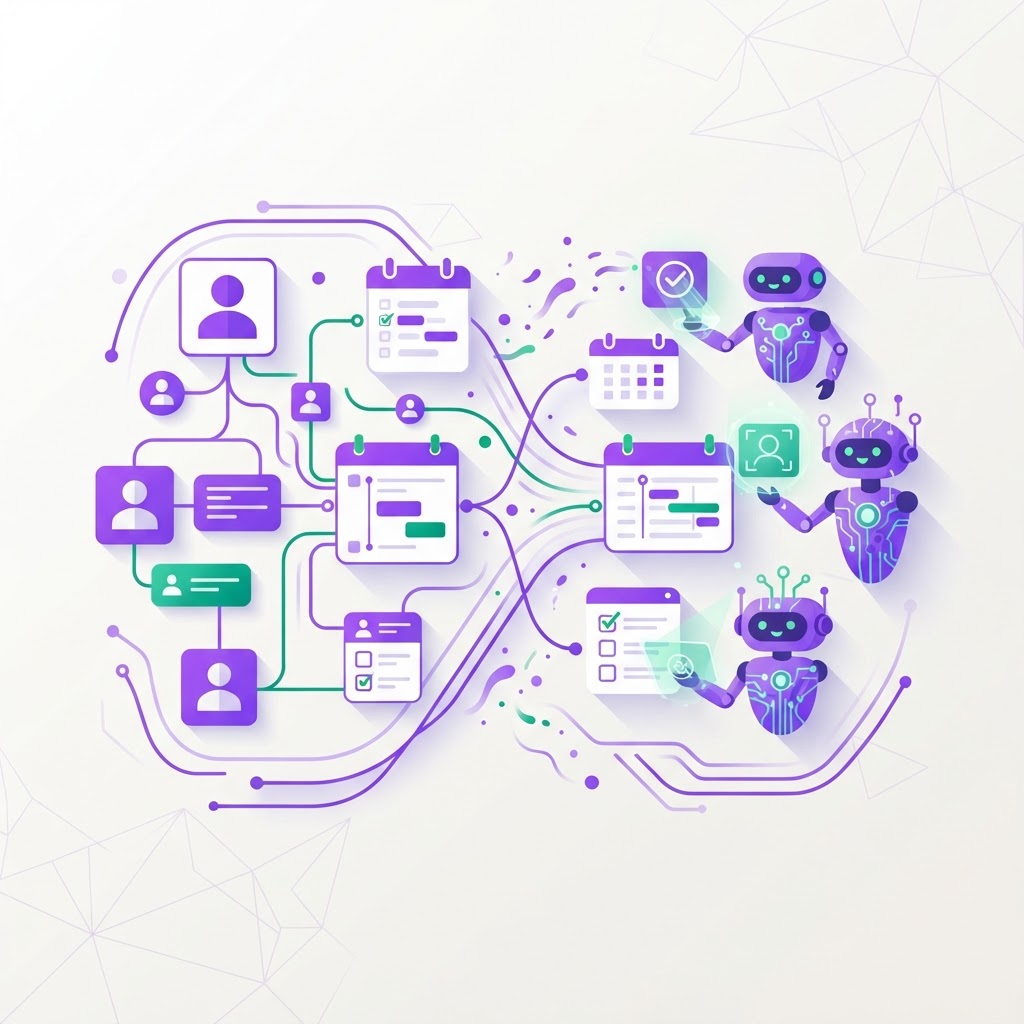
The National Disability Insurance Scheme (NDIS) landscape is defined by a relentless pressure to balance high-quality participant outcomes with extreme administrative complexity. For many Australian SME providers, this manifests as a fractured operational environment where staff switch between CRMs, rostering software, and accounting platforms just to complete a single shift record. An agentic AI platform acts as an intelligent overlay that connects these siloed systems, executing tasks across them rather than forcing you to migrate your existing tech stack. By sitting on top of your existing APIs, these agents perform work that previously consumed hours of manual labour, allowing your coordinators and support workers to focus on what actually matters: care.
Transforming participant intake and onboarding
Intake is often a bottleneck that costs providers thousands in lost revenue and potential client frustration. When a referral arrives, the process typically involves manual data entry across multiple intake forms, risk assessment templates, and funding verification checks. An agentic system can ingest an incoming email or PDF referral, extract the participant's NDIS plan details, and cross-reference them against your current capacity and funding categories. It can draft a service agreement and schedule the initial meet-and-greet, all while ensuring that the participant's data remains within your sovereign Australian database environment.
- Automated verification of funding categories against service types.
- Instant drafting of personalised service agreements from standard templates.
- Real-time updates to your CRM as the participant progresses through the onboarding funnel.
By automating the mundane aspects of intake, you reduce the time from 'initial enquiry' to 'service commencement' from weeks to days. This agility is a significant competitive advantage in a market where participants often choose the provider that responds with the most clarity and speed.
Intelligent rostering and worker matching
Matching the right support worker to a participant is more than a logistical puzzle; it is fundamental to the dignity and safety of the NDIS participant. Traditional rostering software often lacks the context to understand complex worker requirements, such as specific skill sets, language abilities, or the rapport required for long-term care. An agentic layer reads your worker database and rostering system to propose matches that actually work, considering travel time, mandatory training currency, and participant preferences.
Consider an SME with 50 support workers and 100 participants. The manual effort to account for a worker's sickness, a participant's change in schedule, and the subsequent travel time adjustments is a daily crisis. An agentic platform identifies these clashes immediately and suggests three optimal alternatives. It then sends notifications to the relevant staff, updates the roster in your central system, and logs the change for audit purposes. You are not replacing your rostering software; you are empowering it with a decision-support layer that operates 24/7.
Streamlining progress notes and compliance
Progress note writing is the single biggest point of friction for support workers. It is frequently the last task performed after a long shift, leading to generic entries that fail to capture the nuance of care or the evidence needed for plan reviews. Agents can facilitate 'voice-to-note' workflows, where a support worker narrates their observations, which are then processed into professional, structured notes. The agent ensures these notes adhere to your internal compliance standards and flags any incidents that require immediate management review.
This technology provides an essential compliance layer by linking shift notes directly to NDIS line items. If a note lacks the detail required for a specific support category, the system prompts the worker for clarification before the shift is closed. This level of rigor ensures that your claiming process is audit-ready at all times. When it comes time for a plan review or a financial audit, you have a cohesive, accurate record that proves the support was delivered exactly as funded.
- Standardised structure for clinical notes to ensure quality and consistency.
- Automated flagging of missed service requirements for immediate remediation.
- Secure archival of all notes with comprehensive access logs for privacy compliance.
The architecture of agency: bridging, not replacing
Many providers are wary of 'AI' because they associate it with costly migrations or unproven, black-box software replacements. Agentic design is the opposite approach; it respects the work you have already put into your existing infrastructure. By using secure API connections, your agentic platform reads and writes to your current tools, such as Xero, Carelink, or Lumary. This means you do not lose your historical data or force your staff through a jarring, months-long software transition.
Because these systems operate on your existing APIs, they are inherently transparent. Every action taken by the agent is logged, creating a perfect audit trail. This is not just a benefit for productivity; it is a fundamental requirement for NDIS compliance. You retain complete control over the 'guardrails' of your agents, defining exactly what they can and cannot do. In an industry where privacy and dignity are paramount, this level of technical oversight is non-negotiable.
Where to start
- Audit your most repetitive digital task, such as copying data between your rostering system and your finance software, and calculate the total weekly hours spent on it.
- Identify the specific API endpoints available in your current software suite to ensure they support secure, external data exchange.
- Run a two-week pilot project focusing on a single, low-risk workflow like 'automated meeting scheduling' to demonstrate the agent's efficacy before scaling to more complex clinical reporting.