Local councils and public sector teams: agents for request handling and reporting
By Agentic Design
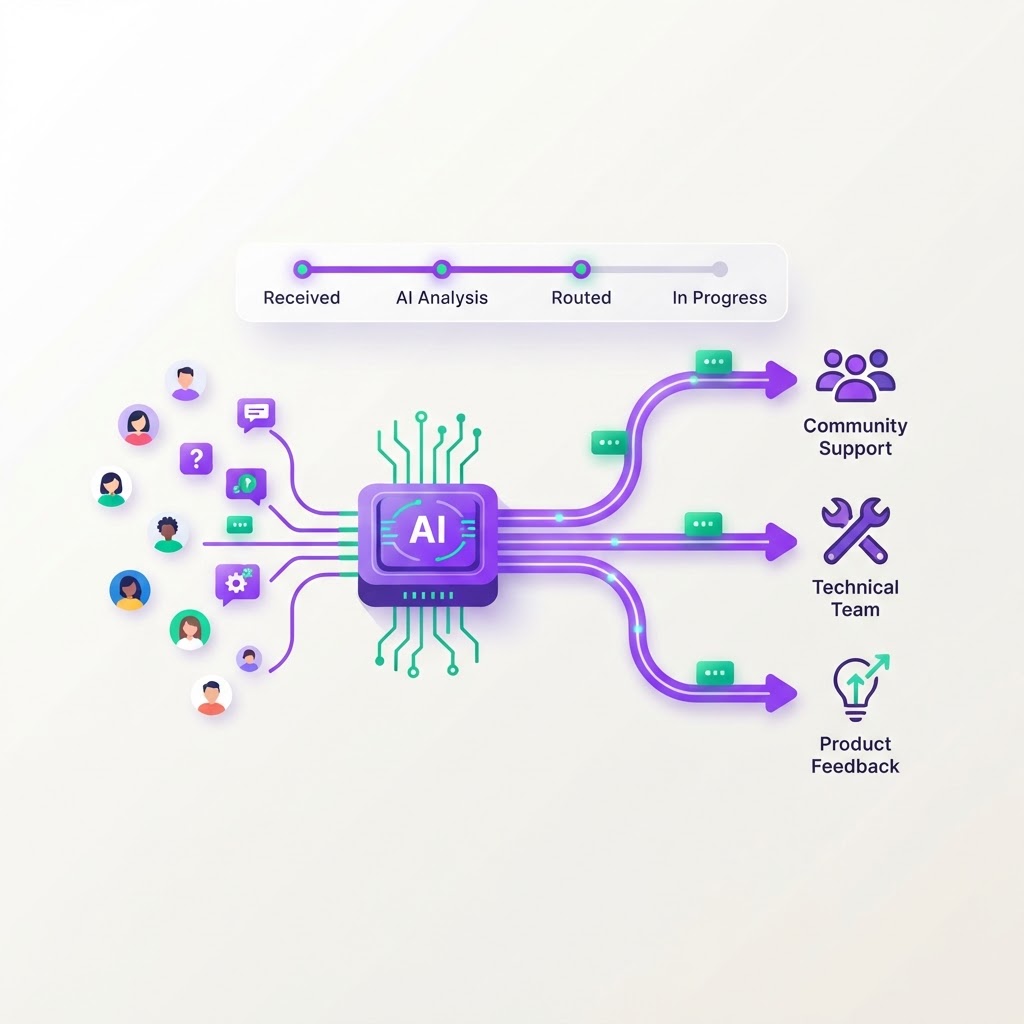
For Australian local councils and public sector operational teams, the core challenge is rarely a lack of data but rather a friction-heavy environment where information remains siloed in disconnected systems. Whether it is a resident reporting a damaged road or an internal team preparing for a Freedom of Information (FOI) request, the process usually involves a human bridge moving data between a CRM, an ERP, and a series of fragmented spreadsheets. Agentic AI platforms change this dynamic by acting as a connective tissue that operates across your existing tech stack without requiring a total digital overhaul.
The agentic operational layer
Unlike traditional automation that relies on brittle, linear rules, an agentic layer functions as a digital orchestrator. It sits atop your existing investments—your finance system, your asset management portal, and your document repositories—and executes tasks using the same interfaces your staff use. Crucially, this does not mean replacing your current software. Instead, the agent uses APIs to read, write, and verify data in real-time, effectively automating the manual "copy-paste" labour that consumes thousands of hours annually in local government.
Transforming request intake and routing
Every day, councils receive hundreds of requests via email, web forms, and phone calls. In a standard workflow, a customer service officer manually assesses the request, tags it, and assigns it to a field team. This is prone to human error and significant delays. An agentic platform can monitor incoming channels, classify the intent, and route the ticket to the correct department based on asset location and team availability.
- Automated classification of requests based on sentiment, urgency, and asset type.
- Dynamic routing that considers current staff workloads and geographic location.
- Automatic updates to the resident via their preferred channel without human intervention.
By ensuring that a request for a pothole repair is routed instantly to the specific works depot responsible for that street, you reduce internal processing time by an estimated 60% and provide the resident with a predictable resolution timeline.
Transparency and status reporting
Resident frustration often stems from the "black box" of council operations. When a resident lodges a report, they want to know the status, not just receive a reference number. Agentic systems can pull status updates directly from field mobility tools and update the central CRM, triggering an automated communication to the resident. This removes the need for administrative staff to act as middle-men between residents and maintenance crews.
This shift in transparency significantly lowers call volumes to your contact centre, allowing staff to focus on complex, sensitive enquiries that actually require human empathy and judgment. When the data is synchronized across systems, your reporting becomes a live reflection of reality rather than a snapshot captured weeks late.
FOI and complex reporting preparation
Freedom of Information (FOI) requests are notoriously resource-intensive. They require teams to traverse disparate databases, emails, and file shares to locate relevant documents. An agentic layer can perform this discovery across all integrated systems simultaneously. By applying strict governance rules, the agent can index and retrieve information while flagging sensitive data that must be redacted before disclosure.
- Rapid discovery of documentation across siloed legacy databases.
- Consistent application of redaction policies based on pre-defined governance models.
- Audit-ready trails that log every search and retrieval step for compliance purposes.
This reduces the administrative burden of FOI preparation by weeks. Instead of spending 40 hours manually compiling records, a team leader can review the agent-compiled report in a fraction of the time, ensuring total compliance with privacy obligations.
Streamlining contractor coordination
Local councils rely heavily on external contractors for civil works and facility maintenance. Managing these relationships usually involves manual invoice reconciliation and verifying that work was completed according to specifications. An agentic platform can bridge this gap by integrating with contractor portals.
If a contractor uploads a site inspection report, the agent can automatically compare the findings against the original work order. If the job is marked as complete, the agent can trigger an invoice approval workflow in your finance system, provided all compliance documentation is attached. This level of automation prevents payment errors and ensures that records are always up-to-date and audit-ready, satisfying both internal procurement standards and external accountability requirements.
Governance, security, and record-keeping
In the public sector, governance is non-negotiable. Many SME owners worry that AI is too unpredictable for a council environment. However, an agentic layer is governed by strict, programmable constraints. Every action taken by the agent is logged, creating an immutable audit trail. Unlike a human, the agent follows the exact policy parameters set by your team every single time, without drift or fatigue. By centralising control, you ensure that record-keeping remains consistent across every department, regardless of the volume of requests being handled.
Where to start
To begin deploying an agentic layer, you do not need a multi-year project or a massive budget. Focus on high-frequency, low-complexity tasks where errors are most costly. Here are three concrete steps to get started:
- Identify one manual workflow, such as "intake to work order," that spans at least two separate software systems.
- Audit the documentation and policy rules currently guiding that workflow to ensure they are digitized and clear.
- Run a targeted pilot project focused on automating that single process, measuring the reduction in manual data entry time over a four-week period.