Legal and finance practices: safe, light-touch agents for drafting, review and intake
By Agentic Design
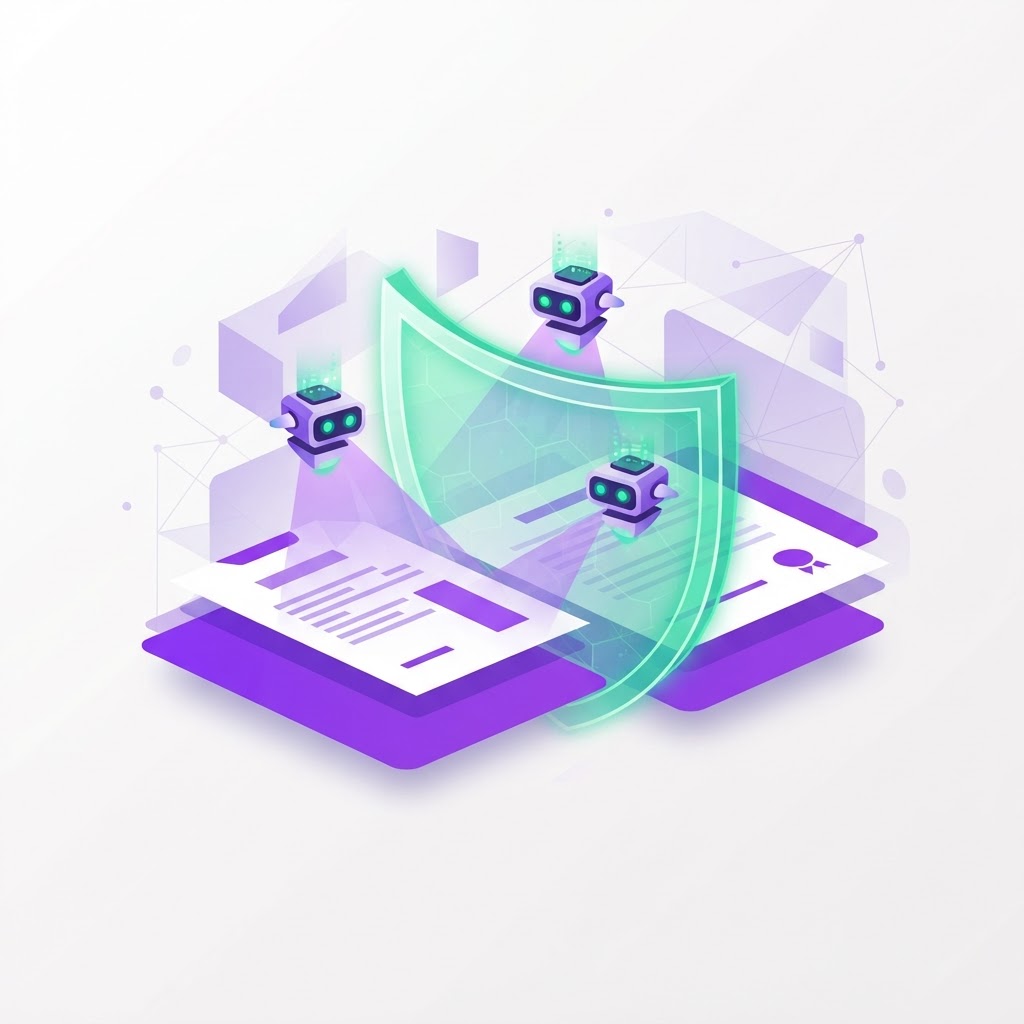
For Australian SME owners in legal and accounting, the administrative burden of running a practice often outweighs the time spent on high-value client advisory work. Many practices are trapped in a cycle of manual data entry, repetitive document drafting, and exhaustive internal reviews. You do not need to overhaul your entire technology stack or migrate to expensive new platforms to address this. The solution lies in agentic layers—software that operates across your existing CRM, ERP, and document management systems to automate routine tasks while keeping humans firmly in control. By deploying targeted agents, you can reclaim hours of billable time each week without introducing unnecessary risk. These agents act as digital assistants that bridge the gap between your disparate software tools, ensuring data flows correctly between them via secure API connections. Unlike legacy automation which is often brittle and requires constant maintenance, an agentic layer is designed to be flexible, adaptable, and deployed in a matter of weeks rather than months. For a practice handling high volumes of paperwork, this represents a shift from reactive manual processing to proactive, automated oversight. When implemented correctly, these tools do not just save time; they enhance the quality of your output by reducing human error. ## Streamlining matter intake and compliance The most immediate opportunity for a legal or finance practice is automating the front end of your operations. Matter intake is notoriously tedious, involving repetitive data collection, identity verification, and conflict checking. An agentic platform can monitor your incoming email or web form submissions to trigger an immediate, standardised intake process. Once a request hits your inbox, the agent extracts key client information, parses the relevant details into your CRM, and cross-references them against your existing client databases for potential conflicts. If a conflict is found, the agent flags it instantly for human review, stopping the process before work begins. If the intake is clear, the agent proceeds to generate the standard engagement letter and client onboarding package. This removes the two-to-three-day lag often associated with manual onboarding. Your staff then only need to review the final summary and sign off on the process, shifting their role from data entry to quality assurance. ## Drafting and reviewing with precision Document drafting and review are high-stakes, time-intensive processes where even minor errors can have significant financial consequences. By leveraging an agentic layer, you can create a system that drafts documents based on your firm’s approved precedents, using the specific data extracted during the intake phase. Whether it is a standard service agreement for a legal firm or a tax filing summary for an accounting practice, these agents ensure consistency across every output. After the agent produces a first draft, the document is saved back into your document management system with an audit trail that shows exactly what source data was used. The review process is equally important, as AI agents are excellent at flagging discrepancies, missing clauses, or inconsistent figures in long-form documents. By cross-checking the drafted document against the source information held in your finance or CRM systems, the agent identifies potential errors that a human might easily overlook during a late-night drafting session. * Automatically extract client data from email enquiries to populate CRM records. * Generate initial drafts of engagement letters using firm-approved templates. * Compare financial schedules against source ledger entries to identify arithmetic discrepancies. * Log every modification and agent action in a centralised, read-only audit trail for compliance. ## Prioritising safety and control In an industry where trust and privacy are the primary currencies, the security of your data is non-negotiable. Agentic platforms for SMEs are built on the principle of human-in-the-loop sign-off, meaning the agent never executes a final action—like sending a contract or filing a tax return—without a human clicking 'approve'. The audit trail is a critical component of this setup, documenting who authorised each action and what version of the document was reviewed. Because the agentic layer operates across your current systems via APIs, you maintain full sovereignty over your data and retain your existing software as the system of record. You are not handing your data to a black-box service; you are using an orchestration layer that speaks to your current systems. This approach ensures that you avoid vendor lock-in and keep your operational 'source of truth' intact. Furthermore, by keeping the scope of agents limited to specific, repetitive tasks, you reduce the risk of erratic behaviour associated with more generalised AI applications. ## The financial case for lean automation For a typical mid-sized firm, the cost of manual processing is often hidden in the form of high payroll overheads and slower turnaround times. Implementing an agentic layer can save an average practice roughly 10 to 15 hours of administrative time per week per fee-earner. If your billable rate is $300 per hour, the potential recovery or redeployment of that time is significant. More importantly, the reduction in 'time-to-turnaround' improves client satisfaction, as they receive their documents and onboarding materials within hours rather than days. * Identify the top three most repetitive document types your team drafts. * Audit the time spent on manual data entry across CRM and finance software. * Calculate the cost of 'dead time' spent correcting drafting errors per quarter. By focusing on these specific high-volume bottlenecks, you can achieve a return on investment within the first quarter of deployment. ## Where to start 1. Map your workflow: Identify one specific process, such as 'client intake', and map every step from initial enquiry to final document generation. 2. Verify your data connectivity: Ensure your current software providers offer API access, as this is the engine that allows your new agents to read and write data. 3. Run a pilot: Select one low-risk, high-frequency process for a 30-day trial to demonstrate the efficiency gains to your team before scaling the technology to other areas of the practice.