Knowledge agents: turning tribal knowledge into something the whole team can use
By Agentic Design
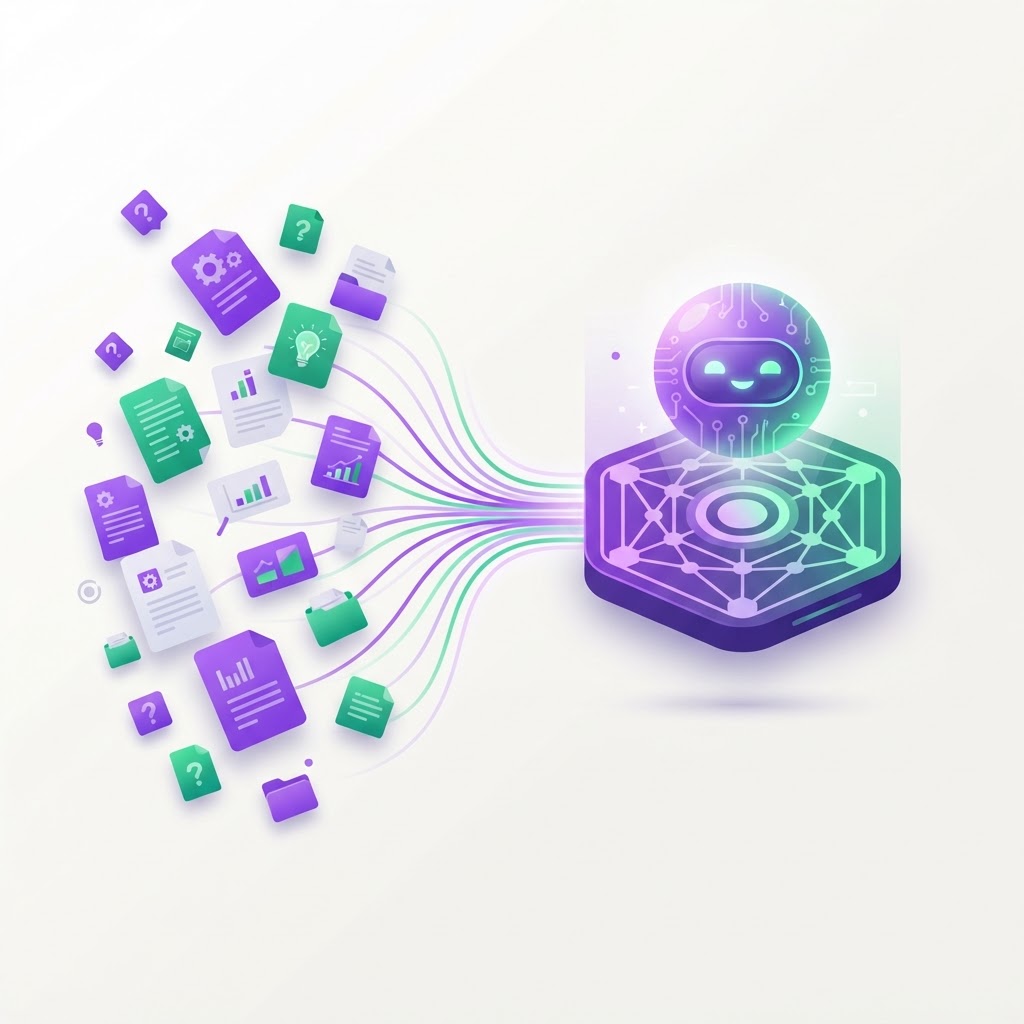
In many Australian SMEs, critical business intelligence doesn't live in the ERP or the CRM. It lives in Sarah’s head, in a messy spreadsheet on Dave’s desktop, or hidden in a series of email threads from three years ago. This is known as tribal knowledge, and while it is often the engine room of a growing business, it is also a massive operational risk. When a key employee leaves or takes leave, the business processes they held together often grind to a halt.
At Agentic Design, we help businesses transition from this fragile state to a more resilient model by implementing an agentic layer. This is not about replacing your existing software stack or undergoing a multi-year digital transformation. Instead, we build a bridge that connects your CRM, inventory, finance, and logistics systems, allowing an AI agent to read, synthesize, and apply your specific company knowledge in real-time.
The cost of inconsistent answers
Think about the last time you saw a customer receive two different quotes for the same service because two different team members interpreted your pricing rules differently. Or perhaps a staff member promised a shipping timeline that your inventory system couldn't actually support. These errors occur because your team lacks a single, authoritative source of truth that accounts for the nuances of your business.
When a human staff member tries to answer a query, they have to juggle their memory, a search through an outdated PDF, and manual checks in a CRM. This is prone to human error and inconsistency. An agentic platform, by contrast, sits across your existing tools and executes the same logic every single time, based on the specific parameters you define.
Capturing the tribal knowledge
Before you can automate knowledge, you must extract it from the people who hold it. We recommend a structured approach that moves away from vague 'company culture' documents and toward concrete logic gates. Start by identifying your top three repetitive tasks where the 'rules' feel more like an art than a science.
For example, if you have a pricing model that includes volume discounts, seasonal variations, and specific freight costs, document these as a clear flowchart. The goal is to move from 'what we usually do' to 'what the rule is.' Once these rules are documented in a machine-readable format, an agent can be trained to look at the same data points your manager does before approving a price.
- Create a 'decision log' where managers record the reasoning behind specific exceptions to standard policies.
- Map out the dependencies between systems, such as when a sale in the CRM must trigger a stock check in the inventory software.
- Conduct a 'shadow session' where you record a top performer explaining exactly how they verify a client’s account status.
Building the agentic layer
The beauty of an agentic layer is its ability to sit between your systems without needing to replace them. Many SME owners worry that they need to migrate their data to a new 'all-in-one' platform, which is costly, risky, and disruptive. With our approach, we use API connections to read from your existing Xero, HubSpot, or bespoke database.
The agent acts as a supervisor, querying your systems to ensure that any output—such as a drafted contract or a customer response—is compliant with your internal logic. If the agent notices that a client's credit limit is nearing its end, it doesn't just guess; it pulls the live balance from your accounting software and applies the policy you set. This takes the cognitive load off your team and ensures that the business is protected from oversight errors.
Maintenance and ownership
An agentic system is not 'set and forget.' If your business changes its service fees or adds a new warehouse, your agents need to know. The most successful SMEs we work with treat their agentic layer as a living member of the team that requires regular onboarding and quarterly 'performance reviews.'
Ownership is key. You should not be reliant on a vendor to change a simple pricing rule. We prioritize building systems where management can update the knowledge base—often through a simple interface—without needing to write a line of code. This ensures that the intelligence stays within your company, rather than being locked away in a black-box system managed by consultants.
- Establish a quarterly audit of the agent’s logic to ensure it reflects current pricing and operational policies.
- Assign a 'knowledge owner' within your team who is responsible for updating the agent’s instructions whenever a company policy changes.
- Implement a human-in-the-loop override for high-value transactions to ensure the AI remains aligned with high-level business strategy.
The reality of implementation
For most SMEs, an agentic layer can be prototyped and deployed in a matter of weeks, not months. We start by identifying a single high-impact area—perhaps order processing or customer service tiering—and connect the agent to those specific systems. By starting small, you see immediate returns on productivity while building the confidence to expand the agent's responsibilities.
When your team doesn't have to spend three hours a day checking if an order is valid against current inventory and discount codes, they regain time for high-value work like account management and business development. You are not automating jobs away; you are automating the drudgery of data retrieval and rule-checking so your staff can focus on the human side of the business.
Where to start
- List your most common 'rule-based' customer enquiries and audit where the staff currently go to find the answer.
- Choose one single process that relies on at least two different software systems and document the exact 'if this, then that' logic your team uses.
- Identify the specific data fields in your current CRM or ERP that define these rules and ensure they are clean, updated, and accessible via API.