Hospitality and local business: bookings, ordering and service that runs itself
By Agentic Design
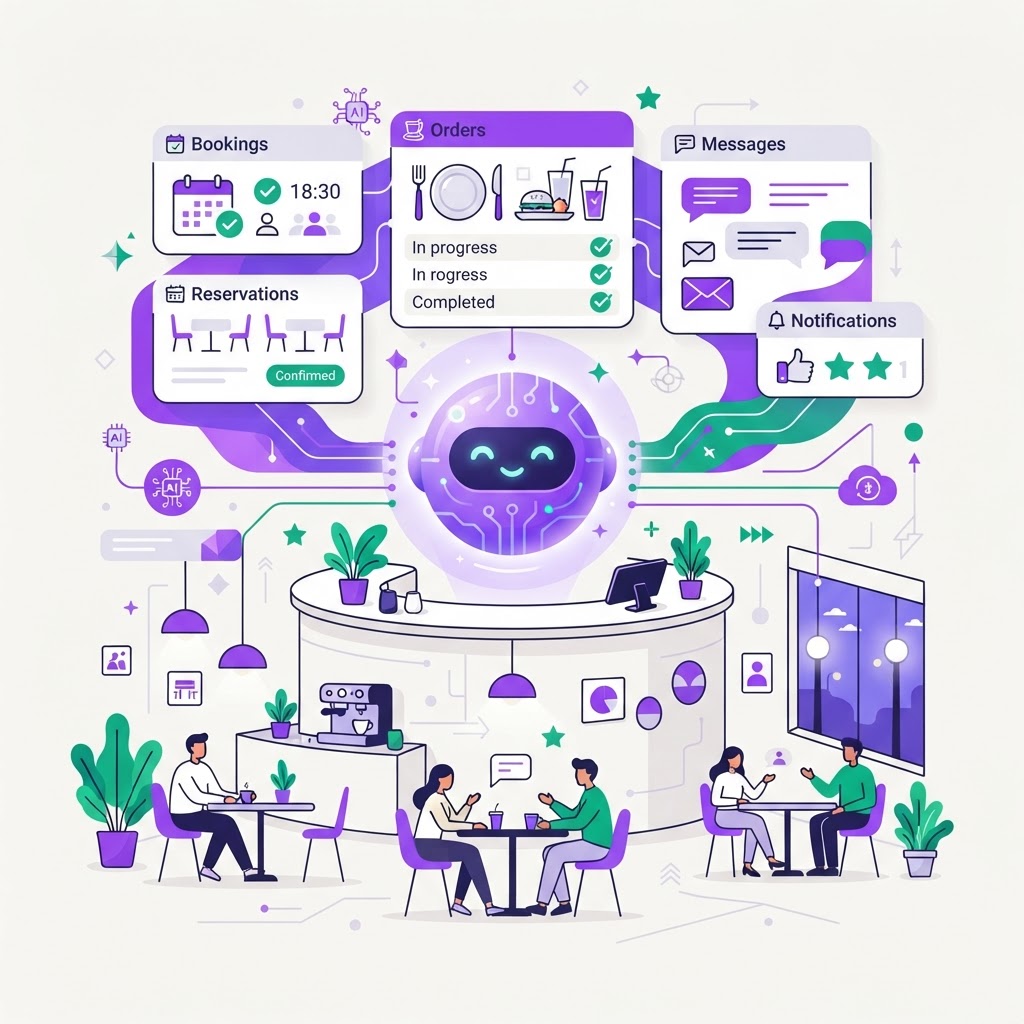
For many Australian hospitality and local business owners, the current operational model is trapped in a cycle of manual input and reactive management. You are likely juggling a reservation system, an accounting platform, an inventory spreadsheet, and a staff rostering app—none of which talk to each other effectively. This leads to a 'swivel-chair' problem where staff spend more time copying data between systems than serving customers. An agentic platform solves this by sitting as an intelligent layer across your existing software, executing tasks without needing you to press the button.
Solving the booking and waitlist bottleneck
Booking management is often the first point of failure for a venue. When a phone call comes in during a lunch rush, the chances of a missed enquiry or an incorrectly recorded time are high. An agentic system connects directly to your reservation software and acts as an autonomous front-of-house coordinator.
It handles inbound calls or messages, checks real-time availability across your booking engine, and confirms reservations without human intervention. If a customer wants to move a booking, the agent reconciles the change against your current capacity and automatically updates the table plan. This removes the administrative burden and ensures you never lose a booking to a busy signal or a missed notification.
Ordering, upselling and the bottom line
Direct ordering is another area where human error and missed opportunities hurt your margins. A busy waiter might forget to ask about side dishes or premium drink pairings, whereas an agentic ordering layer is programmed to never miss a sales trigger. By linking your POS data with your inventory, the agent can offer personalised recommendations based on what is currently in stock.
- Triggering a specific wine suggestion based on the menu items selected.
- Alerting staff to low-stock specials to push them before they expire.
- Automatically recalculating table spends to identify high-value customer segments.
When these suggestions are presented digitally, customers are often more likely to add small items to their order. For a venue doing 500 covers a week, adding just $3 per head through automated, consistent upselling results in an additional $78,000 in annual revenue without increasing your staffing costs.
Managing reviews and enquiries
Reputation management is critical for local businesses, but drafting thoughtful responses to dozens of Google reviews takes time that owners rarely have. An agentic layer can monitor your review platforms and draft responses based on your business tone of voice and internal policy. It does not just copy-paste templates; it reads the specific feedback, checks the relevant date in your CRM, and proposes a tailored response for you to review.
This same logic applies to email enquiries about functions, dietary requirements, or private hire. Instead of a 24-hour turnaround, the agent pulls information from your event calendar and availability spreadsheets to provide an immediate, accurate response. By reducing the response time, you drastically increase your conversion rate for high-value group bookings.
Optimising the roster and labour costs
Labour is your largest controllable expense in hospitality. Rostering is often done based on 'gut feeling' or historical habit rather than precise demand forecasting. An agentic platform links your booking data and revenue trends to your rostering software to ensure you are never overstaffed during quiet periods or understaffed during a surge.
- Adjusting start times by 30 minutes to align with peak arrival windows.
- Automatically suggesting roster changes based on predicted revenue for the shift.
- Sending automated shift confirmations and reminders to staff via SMS.
If the booking volume for a Friday night suddenly drops due to weather or local events, the agent can identify the projected shift in covers and suggest a revised staffing level. This keeps your labour percentage within the target range, directly protecting your profit margin on every single shift.
Integrating with your current stack
The biggest misconception about agentic AI is that it requires you to rip and replace your current software. That approach is costly, disruptive, and rarely achieves the promised results. Instead, our platform uses APIs to act as a bridge between your disparate systems. It pulls data from your accounting software, pushes updates to your booking engine, and reads from your inventory spreadsheet.
Because it does not replace your core tools, the implementation timeline is measured in weeks rather than months. You retain the interfaces your staff already know, while the agentic layer handles the 'drudgery' in the background. It is about making your current setup smarter, faster, and more integrated, ensuring that your systems finally start working for you rather than you working for them.
Where to start
- Audit your most repetitive tasks by listing every process where your staff currently copy data from one screen to another.
- Identify your highest-leverage touchpoint, such as booking enquiries or food ordering, where a small increase in speed could yield an immediate increase in covers.
- Connect your primary system (like your POS or Booking tool) to a sandbox agentic environment to test automated response times for a single, low-risk process.