Fleet operators: agents for compliance, servicing and utilisation
By Agentic Design
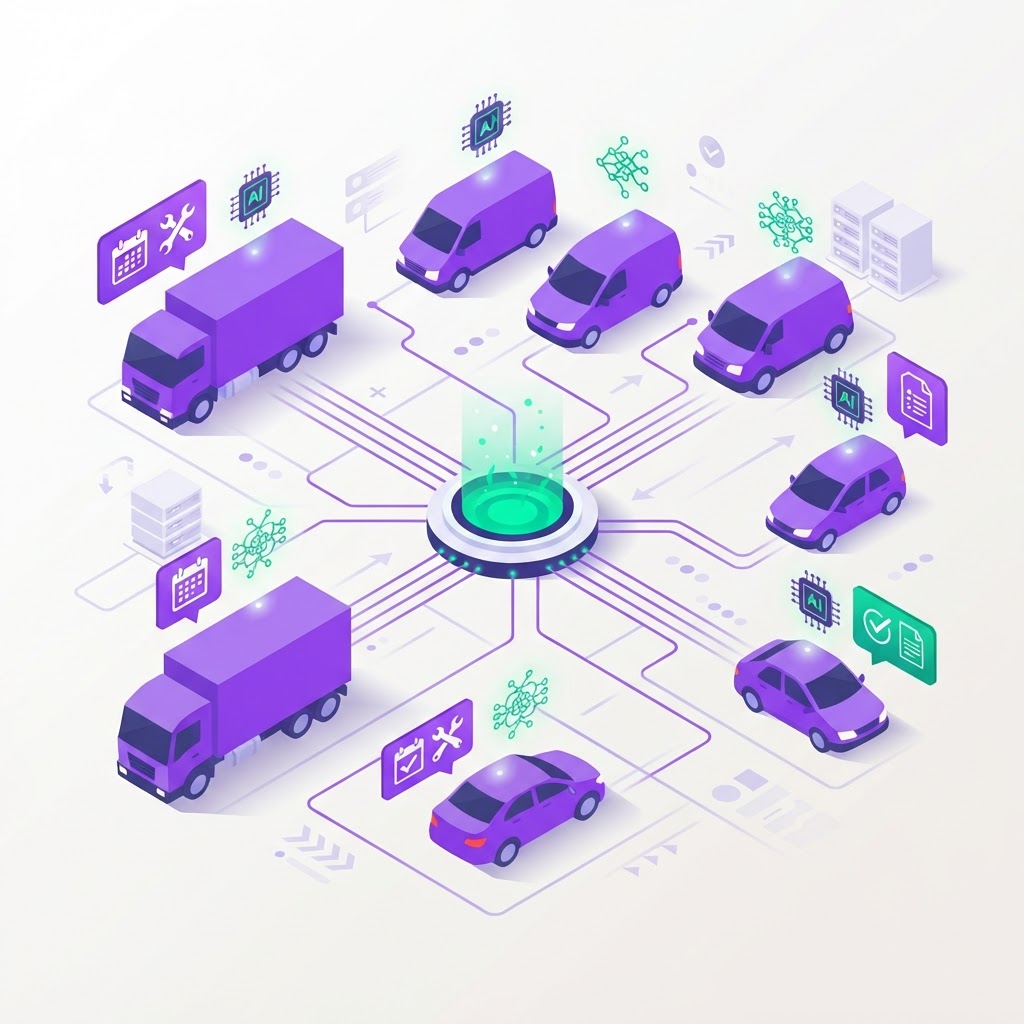
For Australian SME fleet operators, the daily grind is often a race against administrative friction. Whether you manage a fleet of five delivery vans or fifty heavy-duty trucks, the challenge remains the same: your data lives in a dozen different places. You have a maintenance schedule in a spreadsheet, fuel cards in a dashboard portal, and driver fatigue logs in a folder on a tablet. Connecting these dots is typically a manual, time-consuming task that keeps you tied to a desk instead of managing your business. Our approach to agentic AI changes this by creating a layer that sits above your existing software to perform the work for you.
The agentic shift in fleet management
Unlike traditional automation that merely follows rigid 'if-then' rules, an agentic system is designed to handle complex, multi-step workflows across your existing platforms. It acts as a digital worker that has permission to interact with your ERP, CRM, and accounting software through secure API connections. This means the system does not require you to rip out your current investment in technology. Instead, it acts as a connective tissue that reads, writes, and reconciles data between your existing tools, allowing for real-time adjustments without human intervention.
Automated servicing and defect management
Maintenance scheduling is a common pain point where downtime often spikes due to missed intervals. An agentic platform monitors your telematics data and compares it against service requirements stored in your ERP. When a vehicle approaches a specific kilometer threshold, the agent automatically drafts a booking request with your preferred service centre, checks your workshop calendar, and sends a notification to the driver. If a driver identifies a defect during their pre-start inspection via a mobile app, the agent immediately logs the fault, alerts the workshop manager, and creates a priority work order in your finance system for budget approval.
Compliance and fatigue monitoring
In Australia, National Heavy Vehicle Regulator (NHVR) compliance and fatigue management are non-negotiable. Manually checking driver logs against shift schedules is error-prone and invites regulatory risk. Our agents continuously cross-reference electronic work diaries with your rostering system to flag potential breaches before they happen. If a driver is approaching their maximum driving hours, the agent automatically triggers an alert to dispatch, suggesting a rest period or a driver swap. This proactive stance keeps your operations compliant and drastically reduces the potential for costly safety incidents.
Optimising utilisation and fuel efficiency
Under-utilised assets are a silent drain on your cash flow. An agentic platform aggregates data from your GPS telematics and your sales CRM to calculate exactly which vehicles are delivering the highest return on investment. If a specific vehicle shows consistent fuel consumption anomalies, the agent cross-references this with maintenance history to determine if it is a performance issue or a maintenance requirement. You receive a report that highlights exactly where your costs are spiking, rather than having to manually query multiple databases to find the source of the waste.
- Real-time monitoring of fuel card spend against planned route distances.
- Automated alerts for unauthorized vehicle use outside of designated hours.
- Synchronisation of driver hours with actual route completion times.
- Instant generation of vehicle performance reports for monthly reviews.
Breaking down the integration barrier
Many operators fear that integrating new technology will take months and cause significant disruption. The beauty of an agentic layer is its modularity and speed of deployment. Because the system interfaces with your existing APIs, we do not need to rebuild your infrastructure. We typically deploy and train these agents to understand your specific operational parameters within a few weeks. This allows you to see tangible improvements in efficiency long before a traditional software implementation would have even finished the planning stage.
The reality of cost and performance
Consider an SME operator spending $2,000 per month on ad-hoc repairs and $500 on administrative salary time spent reconciling fuel invoices. By deploying an agentic layer to reconcile fuel data in real-time and schedule preventative maintenance, operators often identify 10-15% in recoverable savings. This isn't about replacing your fleet managers; it is about liberating them from data entry. When your managers spend less time typing and more time making strategic decisions, the entire business becomes more agile and profitable.
- Identify and flag fuel card transactions that don't match vehicle capacity.
- Streamline pre-start inspection reports by auto-populating common data fields.
- Trigger automatic insurance renewal reminders linked to vehicle registration dates.
- Consolidate disparate telematics reports into a single, actionable dashboard.
Where to start
Do not attempt to digitise everything at once. Start by identifying the single most repetitive task that costs you the most time or money. Once that is under control, you can expand the agent's reach to more complex compliance workflows. Follow these three steps to begin:
- Audit your current software: Make a list of every system currently storing fleet data, including spreadsheets, and note which ones have open API access.
- Quantify your downtime: Track the time spent by your team on manual reporting, reconciliation, and administrative follow-ups for one full week.
- Identify the high-risk gap: Select one critical area, such as maintenance tracking or fatigue management, where a single human error could lead to significant financial loss or regulatory non-compliance.