Finance and accounting: agents that chase, reconcile and explain the numbers
By Agentic Design
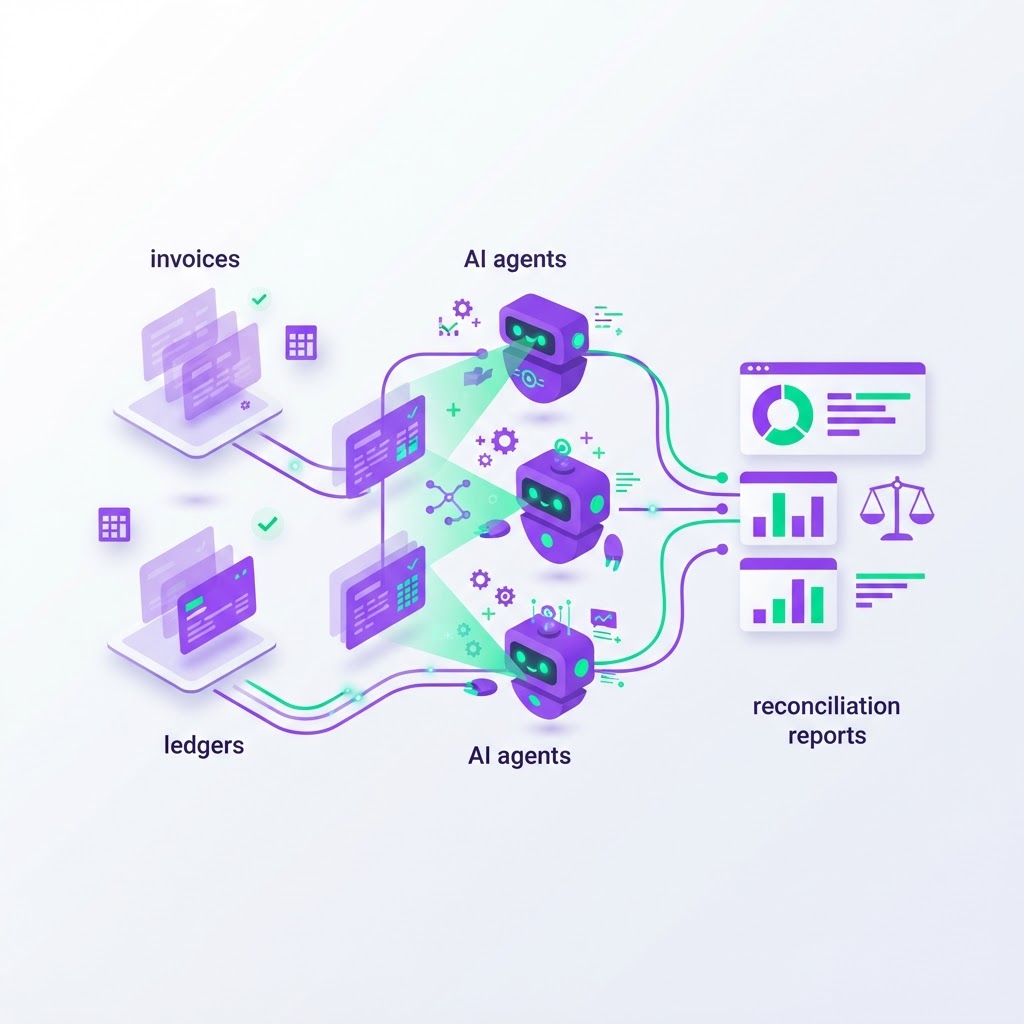
For most Australian small to medium enterprise owners, the monthly finance cycle is a burden of manual repetition. You are likely juggling Xero or MYOB with a messy inbox of invoices, a CRM that does not talk to your inventory, and a spreadsheet that you pray is still calculating correctly. This is not just a productivity drain; it is a visibility gap. When your data is siloed and your manual processes are heavy, you are always looking at the rear-view mirror rather than the road ahead.
At Agentic Design, we see this friction every day. The solution is not to rip out your existing software stack or spend months migrating to a complex new ERP. Instead, we build an agentic layer that sits on top of your existing systems. It uses APIs to talk to your accounting package, your CRM, and your email, acting as an autonomous workforce that performs the repetitive tasks you currently handle manually. This is not about automation scripts that break when a field changes; it is about intelligent agents that chase, reconcile, and explain your numbers.
The agentic layer: How it works across your stack
Your existing software platforms were designed to store data, not to interpret or act on it. An agentic layer connects these islands of data. It pulls information from your email to capture an invoice, pushes the coding to your accounting ledger, and simultaneously checks your CRM to see if the purchase order matches the original quote. Because it works through APIs, it functions as a bridge that keeps your current stack intact while automating the movement and verification of data between them.
Imagine a system that does not just store numbers, but actively manages them. For an SME processing 200 invoices a month, our agents can categorise expenses based on historical patterns, flag discrepancies against standard costings, and draft approvals for your sign-off. The key is that the platform operates in the background, requiring human intervention only when a threshold is breached or a decision is required. This is the difference between a static software tool and an agent that actively works for you.
Automating the finance cycle
Finance is often seen as a series of distinct tasks, but it is actually a continuous flow of information. The most time-consuming elements are usually the ones that require manual follow-up or forensic investigation. We focus on the high-value areas where agents can save dozens of hours every month:
- Invoice capture and automated coding: The agent extracts data from incoming emails, maps it to the correct chart of accounts, and applies the necessary tax codes.
- Proactive debtor follow-up: Instead of waiting for an overdue notice, the agent checks the status of invoices against payment terms and sends polite, personalised reminders to slow-paying clients.
- Bank reconciliation preparation: The agent matches bank transactions against open invoices, identifies discrepancies, and drafts the necessary adjustments for your review.
- Variance explanations: By comparing actual spend against your budget, the agent highlights line items that have exceeded set tolerances, providing a summary of the 'why' behind the variance.
By handling these tasks, the agentic layer ensures that when it is time for your month-end pack, the heavy lifting is already complete. You are not starting from scratch; you are reviewing a pre-verified set of figures and a draft commentary that the agent has generated based on the actual transactional data.
Controls and approvals in an automated world
We understand that for an SME owner, trust is the currency of finance. You cannot afford to automate processes if it introduces risk or removes your oversight. Our approach integrates rigorous controls and approvals directly into the workflow. If an invoice exceeds a certain dollar value, the agent stops and sends a notification to your mobile device for a one-click approval. If a vendor's bank account details change, the system halts the payment process and triggers a verification task.
These guardrails are built into the agentic workflow. You are always in control of the final decision, but you are freed from the process of gathering the information required to make that decision. The agent does the legwork of verifying the numbers, checking for duplicate entries, and ensuring compliance, so your time is spent on high-level strategic review rather than manual data entry.
The reality of implementation
Many businesses fear that adding 'AI' means a six-month project with consultants and massive disruption. Our experience suggests the opposite. Because we work across your existing systems via APIs, we can typically deploy a pilot agentic layer in two to four weeks. We start with the highest-friction pain point, such as accounts payable or debtor management, and build out from there. It is a modular approach that delivers immediate ROI without the need for a full-scale digital transformation project.
Where to start
If you want to move from manual finance management to an agentic approach, follow these three steps to build momentum.
- Identify your top three manual 'bottleneck' tasks that occur every single week, such as chasing unpaid invoices or manually inputting supply costs.
- Audit your current software to ensure you have API access enabled for your finance and CRM platforms, as this is the engine room for any agentic layer.
- Select one discrete process to automate for a 30-day pilot to measure the time saved and the accuracy of the outputs against your historical manual data.