Document agents: intake, extraction and review for paperwork-heavy businesses
By Agentic Design
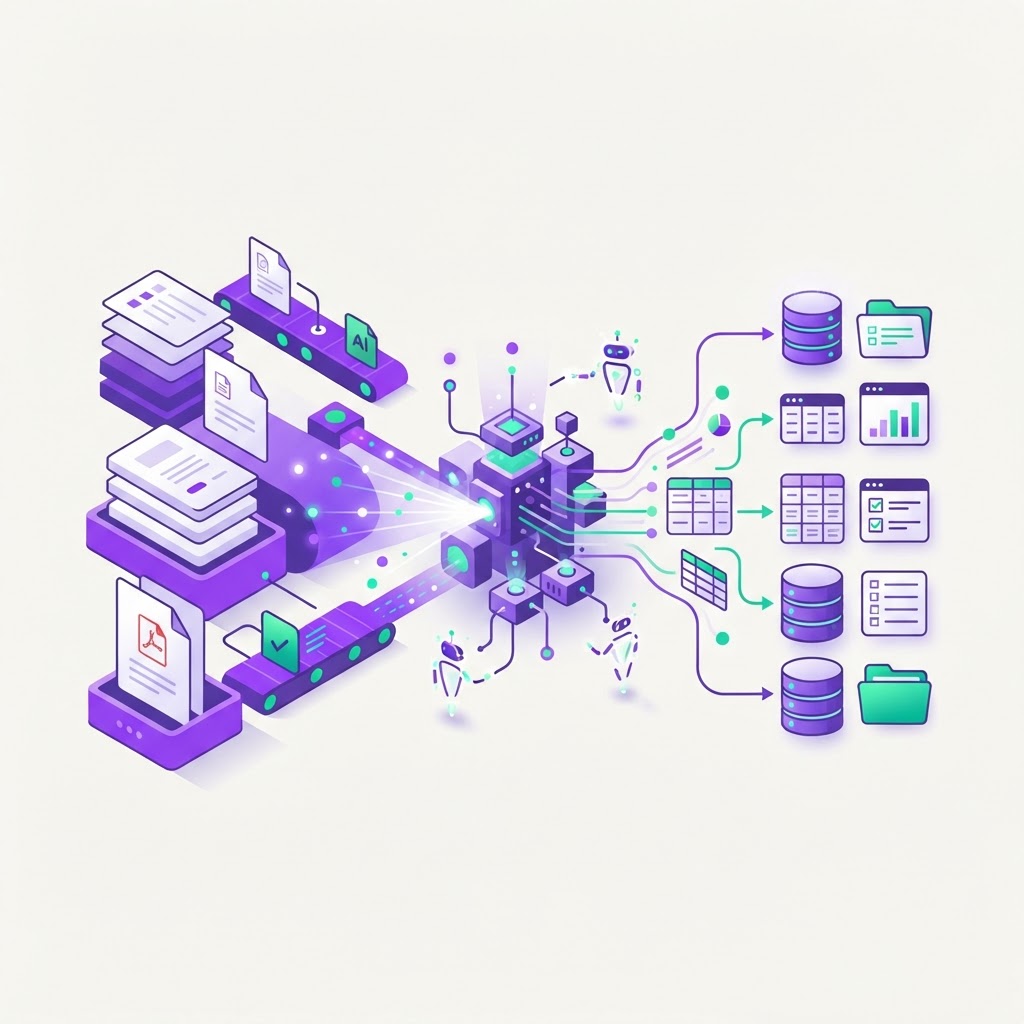
For Australian SME operators, the daily volume of paperwork—invoices, certificates of currency, and signed contracts—is often the primary bottleneck to scaling operations. Most businesses rely on a patchwork of software including accounting packages like Xero, CRMs like Salesforce or HubSpot, and various spreadsheets. The problem is not that these systems lack data; it is that the data is trapped in unstructured documents that someone must manually type into the system. An agentic platform solves this by acting as a connective, autonomous layer that interacts with these systems via their existing APIs.
The architecture of document agents
Unlike standard optical character recognition (OCR) tools that simply turn images into text, an agentic platform understands context. When a document arrives, the agent identifies the document type, extracts specific fields, and performs logical checks against your current data. It doesn't just read an invoice; it checks if the purchase order number exists in your ERP and if the line items match the pre-approved budget.
This agentic layer sits across your infrastructure. It doesn't replace your CRM or your accounting software; it uses them as the source of truth. When the agent processes a document, it queries your API to confirm whether a supplier is active or a project is open, then pushes the validated data directly into the relevant record. This eliminates the swivel-chair effect where staff switch between five different browser tabs just to log one transaction.
Handling extraction and confidence thresholds
Automation is dangerous if it lacks quality control. Our agents utilise configurable confidence thresholds to manage risk. When an agent extracts data from a document, it assigns a confidence score to each field. If the agent is 99% certain of a supplier name and total amount, it can proceed with an automated entry into your finance system without intervention.
However, when the agent encounters an ambiguous document or an unexpected change in format, it triggers a human-in-the-loop workflow. The document is pushed to a dedicated review queue, highlighting exactly which fields require verification. This ensures that your staff only spend time on the 5-10% of documents that actually require professional judgement, rather than wasting hours on routine data entry.
- Confidence scores allow you to set strict rules for high-value transactions.
- Human review queues provide a single interface for clearing exceptions.
- Automated audit trails ensure every field extraction is traceable for tax compliance.
Real-world impact on operations
Consider a construction firm managing 50 subcontractors. Each month, the firm receives hundreds of invoices and expiring insurance certificates. A manual process requires an administrator to open an email, download the PDF, compare it to the original job quote in the ERP, and manually update the expiry date in a spreadsheet.
With an agentic platform, this is resolved in minutes rather than days. The agent scans the incoming email, identifies the invoice, validates the cost against the job quote, and checks the insurance certificate expiry date. If all fields are clear, it marks the invoice as ready for payment in the accounting system. If the certificate is expired, it automatically flags the record and notifies the project manager. The operational cost of this processing drops by roughly 70%, and human error is virtually eliminated.
- Automating invoice-to-ERP reconciliation saves approximately 15-20 hours per week for mid-sized SMEs.
- Reducing human touchpoints significantly lowers the risk of duplicate payments or missed compliance deadlines.
- APIs allow the agent to update inventory levels or project budgets in real-time as documents are processed.
Implementation timelines and integration
We often hear from SMEs that they fear long, expensive digital transformations. Unlike legacy software implementations, agentic layers are designed for modular, rapid deployment. Because the agent interacts with existing APIs, you do not need to migrate your data or change your business processes to suit the software.
An agentic platform can typically be operational within three to six weeks. The process begins by mapping your high-frequency document types and identifying the specific endpoints in your CRM or ERP that need to be updated. Once the agent is configured to "speak" to your existing tools, it begins learning from your current data patterns. This approach allows businesses to see a return on investment almost immediately, rather than waiting months for a complex software rollout.
Where to start
- Audit your top three document-heavy processes and record the time spent on manual data entry per week.
- Identify the APIs available for your primary software tools to ensure your systems are accessible for integration.
- Contact an agentic design specialist to run a pilot project focusing on a single, high-volume document type, such as vendor invoices.