Debtor follow-up agents: getting paid faster without nagging your customers
By Agentic Design
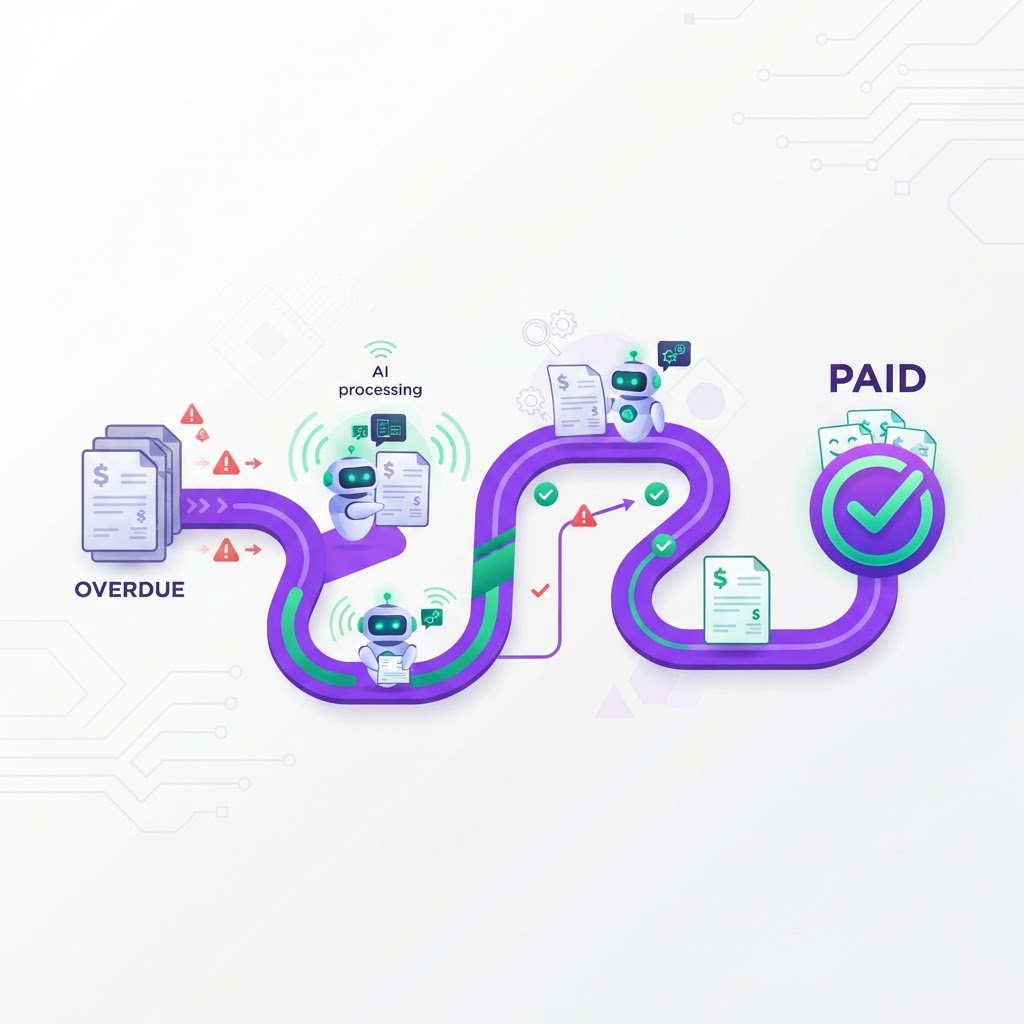
For many Australian business owners, the gap between issuing an invoice and seeing the cash hit the bank account is the most stressful part of the monthly cycle. We often call it 'debtor management,' but in practice, it usually feels like 'chasing money.' This manual, repetitive task drains administrative hours and often strains the relationship between you and your customers. When you rely on spreadsheets and manual emails, your follow-ups tend to happen in bursts, usually only when you or your finance person finds the time. This inconsistency is exactly what kills your cash flow and extends your Days Sales Outstanding (DSO).
An agentic AI approach shifts the paradigm from 'manually chasing' to 'systemic resolution.' Instead of replacing your existing accounting software like Xero or MYOB, an agentic platform sits as a coordination layer. It uses APIs to talk to your finance system, your CRM, and even your email logs simultaneously. It understands that invoice #1042 is overdue, checks if a dispute has been flagged in your CRM, and decides whether to send a gentle nudge or trigger a human-led intervention. It acts as an autonomous digital employee that never forgets, never gets flustered, and never sends an aggressive email to a client who actually has a genuine reason for delay.
The hidden cost of manual follow-up
Every day an invoice sits unpaid beyond its terms, your DSO increases. For an Australian SME with a $2 million turnover, reducing your DSO by just ten days can unlock significant working capital—often enough to fund new inventory, hire staff, or clear high-interest debt. When follow-ups are manual, you aren't just losing interest; you are losing the psychological advantage of being 'top of mind.' If your communication is infrequent, your invoice slides to the bottom of your customer’s 'to-pay' pile, behind the supplier who is actively checking in.
Automation through agentic AI ensures your business is the most professional and consistent entity your customer deals with. The benefit isn't just about speed; it is about predictability. When the follow-up cadence is automated, you remove the emotional weight from the task. Your customers don't feel 'nagged' because the tone is consistent, professional, and helpful. They feel like they are receiving a standard administrative check-in, which removes the personal friction that often prevents a client from admitting they simply forgot to hit 'pay'.
Designing your automated policy
An agentic workflow starts by defining the logic that you would use if you were doing the work yourself but had infinite time. You define the thresholds, the tone, and the escalation paths. The agent follows this logic across your existing tech stack without requiring a complete digital overhaul. Because it connects via APIs, the agent knows exactly when a payment has been made, meaning it stops the follow-up sequence instantly once the bank feed updates.
Consider a standard, respectful four-stage sequence for your Australian customer base:
- Day 0: A friendly 'thank you' email sent immediately upon invoice issuance, including clear payment links and bank details to remove any friction.
- Day 3: A automated, neutral check-in to confirm the invoice was received and to ask if any additional information is required to process the payment.
- Day 14: A reminder that the invoice is due in seven days, providing a copy of the original invoice for convenience.
- Day 25: A final, firm notice indicating the payment is now overdue and requesting an immediate update on status.
Handling sensitive accounts with care
Not every customer should be treated by the same automated script. This is where a truly 'agentic' platform excels; it is context-aware. You can create 'exclusion tags' or 'sensitive filters' within your CRM or accounting system. If a client has a known dispute, is a high-value key account, or has recently suffered a business setback, you can flag them in your existing system.
The agent sees this flag via the API and automatically pauses the automated sequence. It then alerts a human team member to handle that specific account personally. This hybrid approach ensures you don't look tone-deaf by sending an automated 'where is my money' email to a client you are currently in contract negotiations with. You keep the efficiency of automation for the 90% of customers who are simply busy, while preserving the nuance required for the 10% that demand a personal touch.
Why this works for SMEs
Many SMEs fear that implementing agentic AI is a multi-year IT project, but the reality is quite different. Because these platforms integrate with the systems you already use—such as Xero, MYOB, HubSpot, or even shared Excel files—you are not migrating data. You are simply giving your existing systems 'hands' to perform the actions they already track. Most agentic deployments for SME finance teams are completed in a matter of weeks, not months.
This speed to value is critical. You start by connecting the agent to your accounting ledger. You then feed it your current communication templates. You define your escalation logic. Within days, you have an autonomous system that works overnight, across time zones, and during public holidays, ensuring your business stays profitable. You aren't replacing your staff; you are elevating them to focus on high-level relationship management while the agent handles the clerical heavy lifting.
Where to start
- Audit your current ledger to identify which accounts frequently drift past the 30-day mark; these are the immediate candidates for an automated workflow.
- Standardise your follow-up templates into three clear versions: a friendly reminder, an invoice re-send, and a formal overdue notice.
- Identify your 'no-go' criteria—such as specific customers or dispute statuses—that should trigger a human override rather than an automated email.