Construction and civil contractors: agents for site paperwork, variations and claims
By Agentic Design
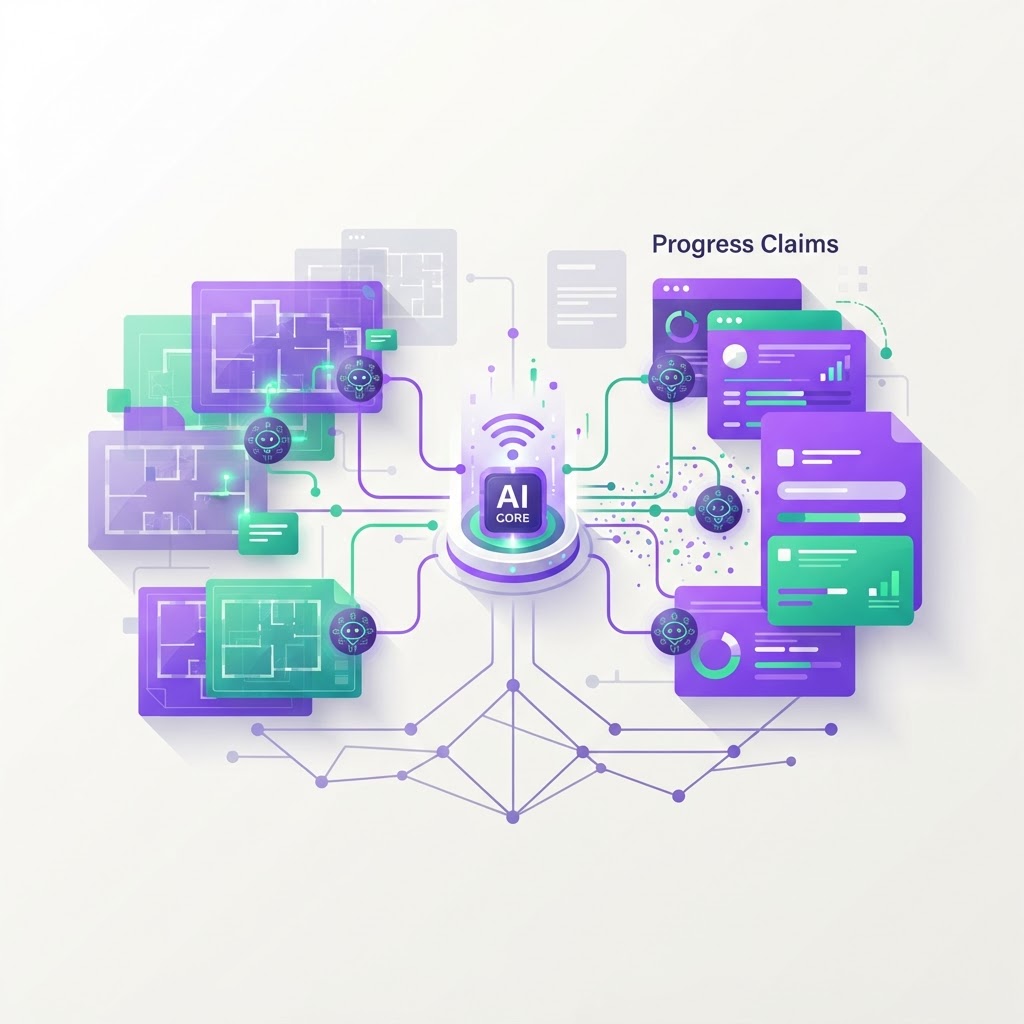
For Australian civil and construction contractors, profitability often dies in the gap between the field and the office. While your site teams are focused on moving dirt and pouring concrete, the administrative reality is that site diaries, variation logs, and progress claims often lag days or weeks behind reality. This delay is the primary driver of cash flow friction and preventable disputes. At Agentic Design, we see these administrative tasks not as necessary evils, but as the core workflow where agentic AI can generate immediate, measurable returns.
Most SMEs have already invested in a stack of fragmented tools: an ERP for accounting, a CRM for client management, and perhaps a dozen spreadsheets for project tracking. The common failure point isn't that these tools are bad, but that they don't talk to each other. An agentic platform acts as an intelligent, standalone layer that sits across your existing systems. It doesn't ask you to rip out your accounting software or force your field staff to learn a complex new interface. Instead, it uses your existing APIs to fetch data, perform tasks, and reconcile information in real-time.
Solving the variation capture problem
Variations are the lifeblood of construction profitability, yet they are notoriously poorly captured. A site supervisor identifies a design clash or a latent condition, mentions it to the client, but forgets to document it formally until the end of the week. By then, the client has often moved on, and the "verbal agreement" becomes a point of contention. An agentic layer can monitor voice-to-text notes from site diaries, correlate them with weather patterns or site photos, and automatically draft a formal variation request in your ERP.
Consider the impact of a simple, automated workflow. If a supervisor logs a delay due to site access, the agentic platform cross-references this with the project schedule. It then drafts a notice of delay and updates the project budget forecast before the supervisor has even left the site. This removes the administrative burden from the field and ensures that the paper trail is established while the details are still fresh. This level of responsiveness is how you convert potential disputes into billable events.
- Automatic cross-referencing of site logs against site constraints.
- Real-time generation of variation documents via ERP integration.
- Immediate notification to project managers for approval.
Accelerating progress claims
Progress claims in the Australian market are frequently held up by a lack of supporting evidence. A subcontractor might submit an invoice, but without the corresponding site sign-off or compliance documentation, the finance team sits on it. This creates a bottleneck that strains relationships with trades and clogs up your cash flow. An agentic platform can proactively chase these missing pieces by pinging subcontractors for documentation the moment a claim is flagged as incomplete.
If you are managing a project with a $500,000 monthly burn, a one-week delay in processing claims can tie up significant capital. By automating the reconciliation of site diaries, delivery dockets, and subcontractor invoices, you can reduce the claim-to-payment cycle by several days. Over a year, this improvement in working capital can be the difference between needing an overdraft facility and having the cash on hand to fund your next project. It turns your finance team from data-entry clerks into project controllers.
Compliance and documentation hygiene
Compliance documentation is another area where manual effort fails under pressure. Safety reports, JSA reviews, and quality inspection forms are often treated as afterthoughts. When a regulatory body requests these documents, the frantic hunt through digital folders and physical binders is a major productivity drain. An agentic layer can audit these files against your project requirements and automatically alert you to missing signatures or expired safety certifications.
This approach to compliance means you are always audit-ready. Because the agentic platform interacts with your existing folder structures and project management tools, it can identify gaps without requiring a massive data migration. It treats compliance as a continuous, background task rather than a quarterly project. For a medium-sized civil contractor, this proactive approach can prevent the massive time sink associated with retrospective compliance hunting, which often costs hundreds of hours annually.
- Automated monitoring of safety certification expiry dates.
- Periodic audits of project folder contents against internal checklists.
- Proactive alerts for missing site induction records.
Bridging the system gap
Many SME owners believe that to get better efficiency, they need to purchase an expensive, all-in-one platform. However, these systems often fail to account for the unique way your business operates. The agentic design philosophy is different. We recognize that your existing systems contain the data, and your existing processes contain the value. The goal is to act as the "connective tissue" that executes the repetitive, high-volume tasks that bridge the office-to-site divide. Because this layer sits on top, deployment can often be achieved in weeks, not months.
When we deploy an agentic layer, we don't change how your site managers work; we change how the information they generate is processed. By allowing the platform to manage the back-and-forth communication, document filing, and reconciliation, your senior staff can focus on high-value activities like relationship management and risk mitigation. This isn't about replacing people; it's about giving them the support of a digital assistant that never forgets a deadline or loses a document. In the competitive landscape of Australian civil contracting, this operational efficiency is a formidable advantage.
Where to start
- Audit your current process bottlenecks to identify which specific document type (e.g., variation requests, site dockets, or subcontractor invoices) creates the most frequent delay in payment cycles.
- Evaluate your existing tech stack connectivity by checking which of your primary software packages (Xero, Procore, Trello, Excel) offer open API access for external integration.
- Identify a single, high-frequency manual task currently handled by administrative staff that could be managed by an agent if it had access to your project data, and design a pilot workflow around it.