Cleaning and facility services: agents for rostering, quality and client reporting
By Agentic Design
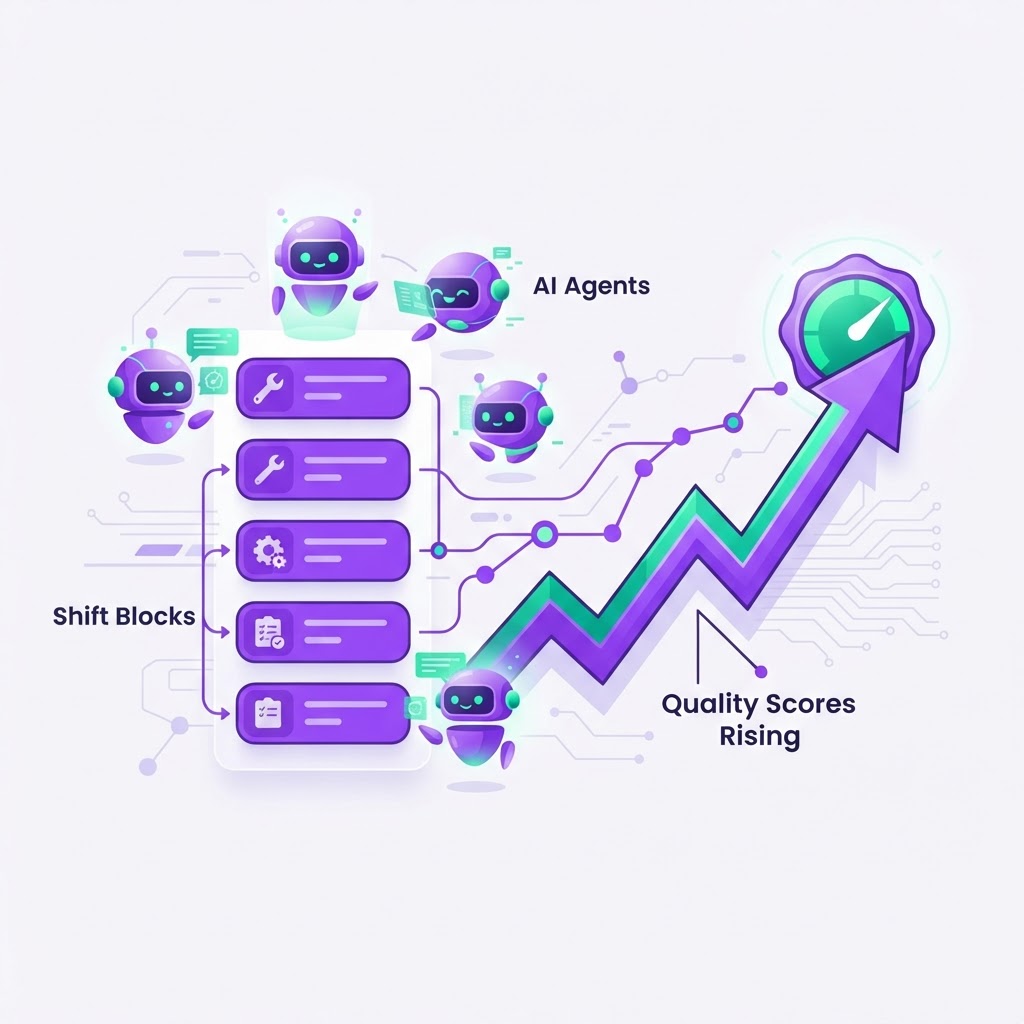
For many Australian commercial cleaning businesses, the daily reality is a fragmented tech stack. You might use a scheduling app for rosters, a separate system for payroll, and a patchwork of spreadsheets for site-specific checklists and client reporting. This fragmentation creates manual bottlenecks, where managers spend more time shifting data between platforms than actually overseeing the quality of service delivery. An agentic platform is designed to sit on top of these existing tools, acting as a connective layer that executes tasks without requiring you to replace your established software ecosystem.
Rather than forcing a migration to a new, monolithic ERP, an agentic layer connects to your current systems via APIs. It functions like a digital operations manager that can 'see' into your rostering software, 'read' your site audits, and 'write' directly to your client portal. By deploying this layer, your business can achieve automated workflows that trigger actions based on real-time data, allowing you to scale operations without necessarily increasing your headcount.
Solving the rostering bottleneck
Shift filling is arguably the most disruptive task for any cleaning business owner. When a cleaner calls in sick at 5 AM, the ripple effect on your operations is immediate. Manual shift filling requires a supervisor to start a chain of phone calls or SMS blasts, hoping to find someone nearby who is both qualified and willing to take the shift.
An agentic AI layer changes this process by monitoring your rosters and communications channels simultaneously. When an absence is reported, the agent can instantly scan your current schedule, identify cleaners who have completed the necessary site inductions, and cross-reference their location and overtime status. It can then reach out to the most suitable candidates via SMS or app notification, waiting for a response before automatically updating the master roster and notifying the relevant site manager once the gap is filled.
- Automates cross-referencing of inductions and qualifications.
- Reduces response time for shift gaps from hours to minutes.
- Eliminates manual data entry errors between platforms.
Elevating site audits and quality control
Maintaining consistent service standards across multiple sites is difficult because audits often languish in paper files or siloed photo galleries. When a client complains, retrieving evidence of a completed task should take seconds, not hours of searching through cloud folders. An agentic platform digitises this process by integrating with your site checklists.
When a supervisor completes a digital audit, the agent can automatically flag any scores below a set threshold. If a cleaning score drops, the agent can trigger an immediate alert to the area manager, automatically schedule a follow-up inspection, or generate a rectification task for the next cleaner on site. This proactive approach turns quality control from a reactive chore into a systematic standard that clients notice immediately.
Streamlining client reporting
Clients today expect transparency and accountability. However, the time required to compile weekly or monthly site reports—summarising cleaning hours, incident logs, and audit results—is a significant drain on administrative resources. This task is often pushed to the end of the month, resulting in reports that are generic and lack specific site intelligence.
- Pulls data from time-tracking apps to verify actual hours against KPIs.
- Aggregates audit results into clear, client-ready summaries.
- Highlights completed ad-hoc tasks or deep-cleaning services delivered.
By leveraging an agentic layer, you can automate the generation of these reports. The agent can pull data from your CRM regarding site notes, your time-tracking tool for hours worked, and your inspection app for quality scores. It can then compile a professional, branded PDF report and email it to the site manager or facility manager automatically, complete with proof of service. This transforms your reporting from a time-consuming duty into a powerful client retention tool.
Handling complaints and quoting
Customer complaints are inevitable in the cleaning industry, but the speed of resolution defines your reputation. When a client emails a complaint, the agent can intercept the message, classify the urgency, and create a ticket in your management system. It can then check the site's recent audit history and communicate with the site supervisor to establish the facts before flagging it for human review.
When quoting for new business or site expansions, speed is critical. An agentic platform can leverage your historical data to calculate margins based on square footage, site type, and average cleaning speeds from your existing similar sites. Instead of a manager manually checking spreadsheets, the agent can draft an accurate quote within minutes, ensuring your pricing remains consistent and profitable across your entire portfolio.
Where to start
- Identify your top three 'data-siloed' tasks, such as copying data between your rostering tool and payroll system, to serve as the initial pilot for agentic automation.
- Verify that your current software providers offer API access, which is the foundational requirement for an agentic layer to communicate across your stack.
- Start with a specific, high-frequency process like shift-filling or monthly report generation to measure the immediate time saved before scaling to more complex quoting workflows.