Claims handling: where agents remove weeks from the process
By Agentic Design
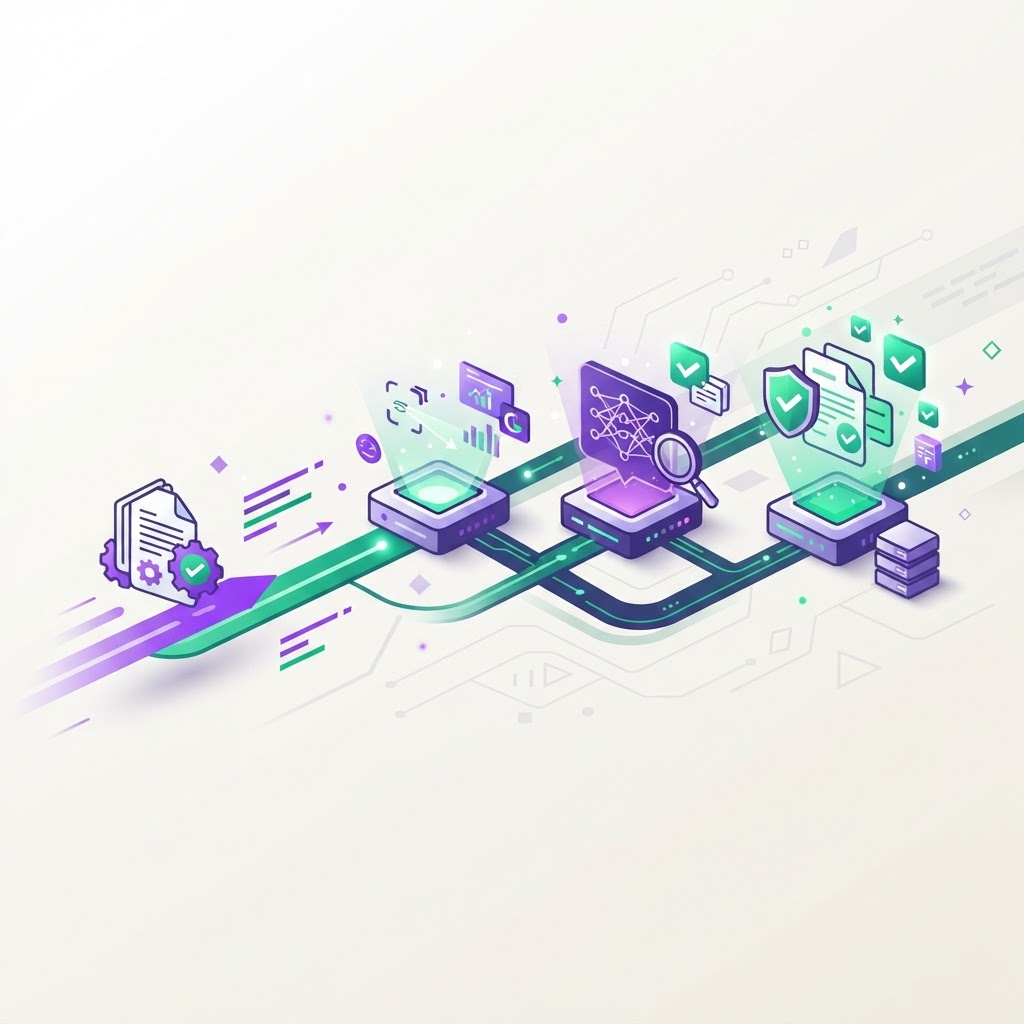
For Australian SME owners, the claims process is often a bottleneck that drains productive hours and delays outcomes for customers. When a claim lands, it frequently triggers a cascade of manual data entry, fragmented emails, and disjointed tasks across CRMs, spreadsheets, and accounting software. The reality is that the time lost isn't usually in the decision-making; it is in the administrative friction between systems. An agentic platform sits as a bridge over these gaps, automating the workflow while keeping your team in control of the final decision.
Rethinking the claims workflow
Modern claims management requires a shift from manual coordination to automated orchestration. Instead of asking a staff member to move data from a lodgement form into an ERP and then into a claims register, an agentic layer performs these movements in real-time. By connecting your existing software via APIs, the agent ensures that information is consistent across your business ecosystem from the moment a claim is lodged.
Lodgement is the first point of failure. If data is captured incorrectly or incompletely, every subsequent step faces delays. An agentic platform can validate information as it is submitted, immediately pinging the customer for missing documentation or clear photos. This simple adjustment often saves two or three days of back-and-forth communication at the very start of the process.
Document collection and triage
Gathering evidence is often where claims stagnate. Your team might spend hours chasing invoices, receipts, or site photos, which effectively pauses the claim until that folder is complete. An agentic system manages these requests automatically, tracking missing items against a checklist and updating the status in your CRM the moment a file hits the inbox.
Once the evidence is collected, the agent performs a preliminary severity assessment. By applying the logic you already use to score claims, it can automatically categorise them into tiers. Low-impact claims might be fast-tracked for approval, while complex cases are flagged for immediate senior review. This triage layer brings order to the chaos, ensuring your most experienced staff focus on the cases that actually require their expertise.
- Real-time validation of claimant data upon lodgement to ensure all required fields are populated.
- Automated reminders for missing documents sent via the customer’s preferred channel.
- Instant synchronisation of status updates across the CRM, finance, and inventory systems.
- Categorisation of claims by severity, routing complex cases to the right human assessor immediately.
Status communications and scheduling
Communication is the largest single source of inbound inquiry volume. When a customer doesn't know where their claim stands, they call your office, which forces your team to stop their work to look up information. An agentic platform provides a persistent, automated feedback loop that keeps stakeholders informed without manual input.
When a human assessor needs to visit a site, the agent manages the schedule. It monitors the assessor's availability, checks the availability of necessary parts or inventory, and sends a confirmed appointment time to both the customer and the team member. This reduces the time spent on "logistical tetris" and ensures that the assessor arrives on-site with a complete digital profile of the claim already in hand.
Keeping humans at the centre
It is vital to understand that an agentic platform does not replace the human assessor or the manager. Instead, it provides them with an environment where they have all the context they need to make an informed decision quickly. In this model, the agent manages the preparation, the organisation, and the administrative follow-up, while your team retains the authority to approve, deny, or negotiate settlements.
Consider an SME handling vehicle or property repairs. By automating the data collection and scheduling phases, you can remove five to ten days of waiting time from the total lifecycle of a claim. This is not about cutting staff; it is about cutting the duration of the claim itself. When your team spends less time on administrative shuffling, they can process higher volumes or simply provide a better service experience.
- Eliminating manual data re-entry between the claims portal and accounting software.
- Reducing the time to first assessor contact by automating the scheduling logic.
- Providing a single source of truth for all claim-related communications, regardless of source.
- Enhancing compliance by ensuring every step of the process follows a defined, auditable workflow.
Why now is the time to bridge the gaps
Many businesses believe that streamlining claims requires a total overhaul of their technology stack, often involving expensive, multi-year software migrations. Agentic design offers a different, faster path. Because these platforms function as a layer on top of your existing tools, they do not require you to rip out your CRM or your finance suite. We can build an agentic bridge that talks to your current systems in a matter of weeks, delivering immediate improvements in efficiency without the risk of a platform migration.
By focusing on integration rather than replacement, you retain the value of your current tools while gaining the speed and precision of agentic automation. This approach is designed for the reality of Australian SMEs, where business continuity is non-negotiable. You can start with a single module, such as the triage process, and expand the agent's responsibilities as your confidence grows and the ROI becomes clear.
Where to start
First, map your current claims lifecycle and identify the specific point where information sits idle for more than 24 hours. Second, audit your internal systems to verify which ones have open APIs that allow for external data communication. Finally, reach out to an agentic specialist to scope a pilot project that focuses on automating that single highest-impact bottleneck rather than the entire workflow at once.