Beyond the 'Helper': Why Your Business Needs an Agentic Layer, Not Just More Software Features
By Agentic Design
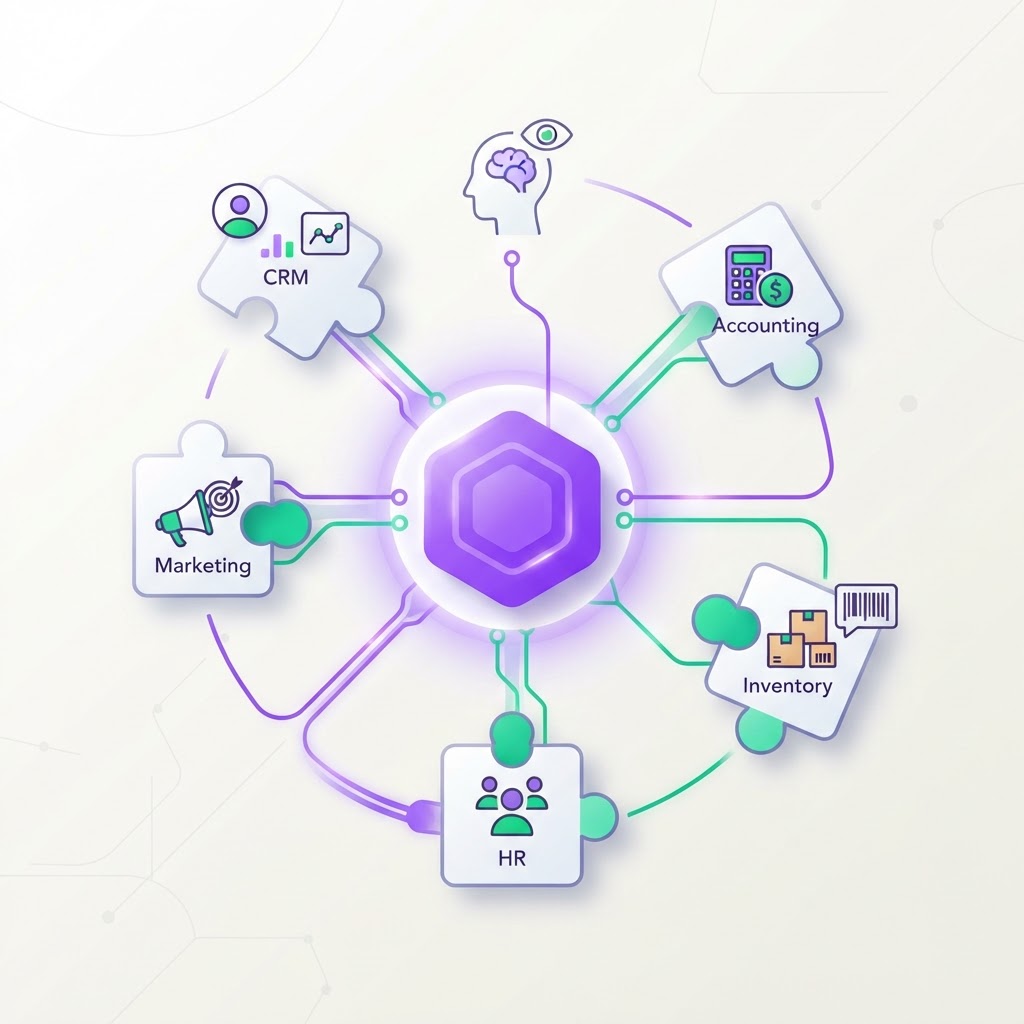
For years, the Australian business landscape has been defined by the pursuit of more software. We have added layers of SaaS tools to manage our projects, our leads, and our communication, believing that a new subscription will finally solve our productivity woes. Yet, despite having a tool for everything, we find ourselves spending more time managing the software than actually getting the job done.
The trap of the passive digital tool
Most current enterprise software is purely passive. It is a digital filing cabinet—sophisticated, cloud-based, and expensive, but ultimately inert. It stores information, tracks progress, and generates charts, but it waits for your input before it takes a single step. You are the one clicking the buttons, copying the data, and bridging the gap between systems.
Moving from helper to agent
An agentic layer changes the dynamic entirely. Instead of acting as a digital helper that provides you with better charts to look at, an agentic system is designed to execute outcomes. It functions more like a high-performing team member who understands your goals, navigates your existing software stack, and takes action to move a task from 'to-do' to 'done'.
Consider the difference in how this looks in practice:
- A helper tool alerts you that a contract is ready for review and waits for you to email it.
- An agentic system drafts the contract based on your lead data, sends it for review, and updates your CRM once signed.
- A helper tool shows you a list of overdue invoices.
- An agentic system cross-references those invoices with your bank feed and triggers friendly follow-up reminders to your clients.
Why business value sits in the execution
In our current economic climate, scaling by simply adding more headcount or buying more software is increasingly inefficient. The true competitive advantage now lies in the speed of execution. When you implement an agentic layer, you are not just automating a task; you are removing the friction that exists between your strategy and its realisation.
For a founder or leader, this means reclaiming your time. You stop acting as the manual switchboard operator between your accounting software, your project management board, and your inbox. You shift your focus from managing the administrative 'how' to defining the strategic 'what'.
Building for the future, not just the features
This is not about chasing the latest shiny object or integrating complex artificial intelligence that requires a data science degree. It is about auditing your current workflow to find where the 'human-in-the-loop' is actually slowing things down. If your team is spending their morning manually updating status fields across three different apps, you do not need more features. You need a system that acts.
Start small by identifying the most repetitive, low-variance task in your business. Ask yourself what it would take for your software to finish that task without you ever opening the application. That is the beginning of your agentic layer. It is a pragmatic shift that trades passive software bloat for active, outcomes-based operations.