Beyond the 'Allowlist': Why Your Agentic Stack Needs Runtime Authorization, Not Just Static Access
By Agentic Design
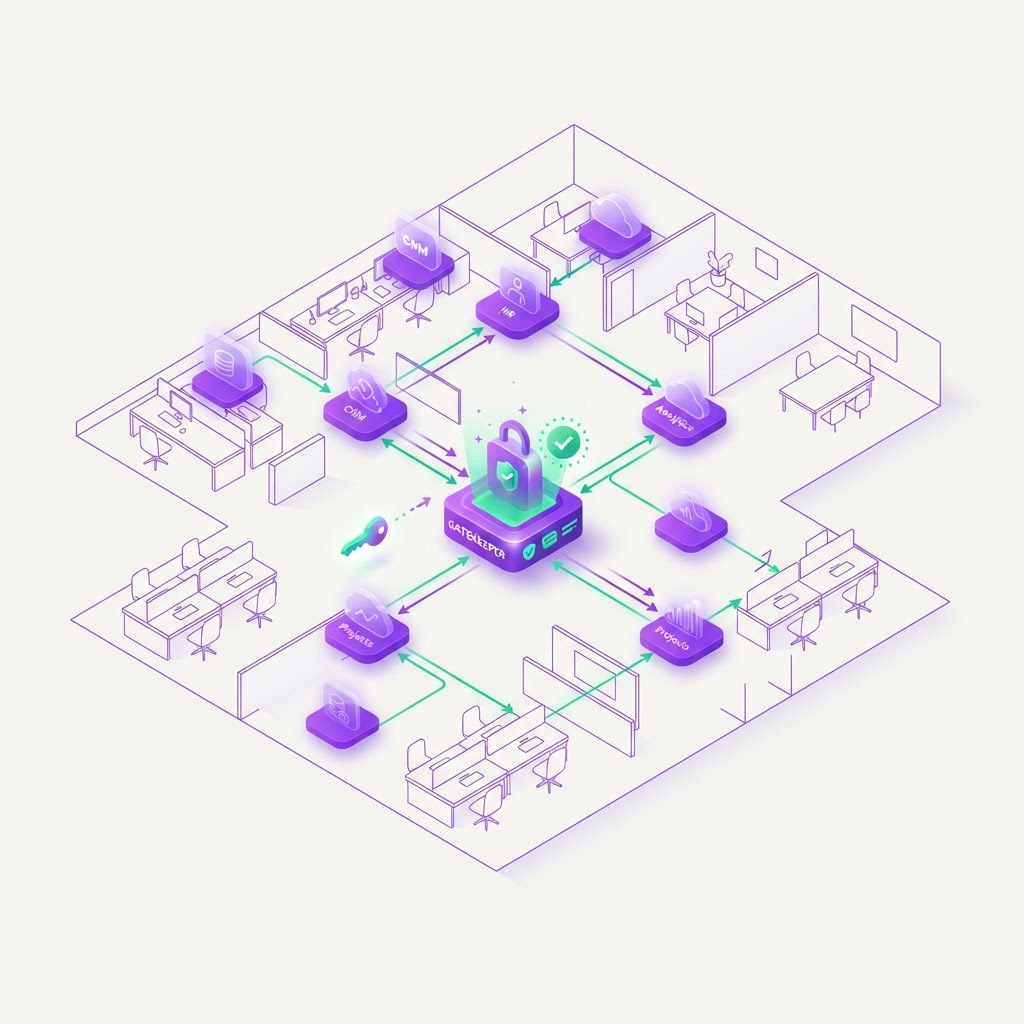
Building with autonomous agents feels like handing over the keys to your digital office. You define the permissions, set the boundaries, and hope the AI behaves while it works through your data. For many Australian founders, this starts with a simple allowlist—a static list of permitted tools or databases. However, as your agents become more capable and handle increasingly sensitive tasks, this 'set and forget' approach starts to look like a significant liability. Relying on static access is like leaving the front door unlocked simply because you trust everyone who happens to walk past.
The limits of static permissioning
Static access lists function on an 'all or nothing' basis. Once an agent is granted access to an email API or a customer database, it generally retains that access for as long as the connection exists. If the agent encounters a prompt injection or a hallucination that leads it off-course, there is no automatic mechanism to say, 'Hold on, this specific request is outside your usual pattern.' The agent has the key, so it gets to unlock the door, regardless of whether it should be entering that room at 3:00 AM.
Why runtime authorisation matters
Runtime authorisation introduces a layer of 'context-aware' security. Instead of just asking, 'Does this agent have access to this tool?', the system asks, 'Should this agent be performing this specific action, with this specific data, right now?' It evaluates the context of the request in real-time. If an agent suddenly tries to bulk-export customer contact details when it usually only performs simple lookup tasks, the runtime system flags the anomaly and halts the process. It is about moving from trust-by-default to verify-at-every-step.
Protecting your business assets
For local businesses dealing with strict privacy regulations, this isn't just about security; it is about compliance and risk management. By implementing runtime checks, you gain granular control over what your agents can and cannot do. Consider these key benefits for your tech stack:
- Real-time monitoring of agent behaviours to identify unusual patterns immediately.
- Ability to revoke access for specific actions without breaking the entire integration.
- Better audit trails that show why an agent was permitted or denied access to a resource.
- Reduced blast radius if a single agent instance is compromised by external threats.
Implementation starts with simplicity
You do not need to overhaul your entire architecture overnight to improve your security posture. Start by identifying your most sensitive API calls or data access points. Implement a simple middleware layer that intercepts these requests and verifies them against a set of dynamic rules. This acts as a 'gatekeeper' that examines the agent's intent before allowing the command to execute. It is a practical, scalable way to ensure that your innovation does not come at the expense of your fundamental security principles.
Building for the future
As AI agents move from experimental side-projects to core operational components, security must evolve alongside them. Static rules were sufficient for the early days, but they lack the agility required for modern, agentic workflows. By shifting toward runtime authorisation, you are not just securing your data—you are building a more resilient, reliable foundation that allows your team to experiment with confidence. Keep your standards high and your guardrails dynamic, and you will be well-positioned to lead in the age of autonomous systems.