Agents and your CRM: turning a record keeper into a revenue engine
By Agentic Design
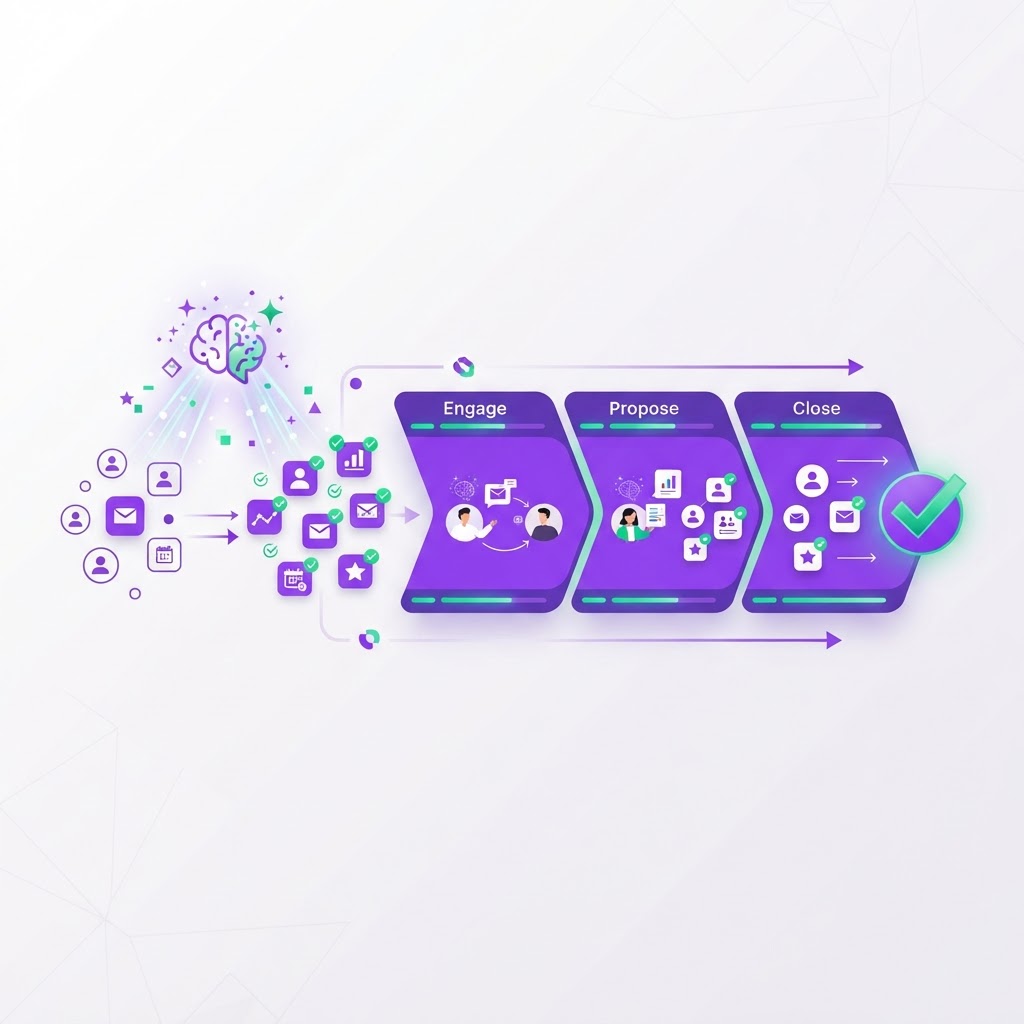
For most Australian SMEs, the Customer Relationship Management (CRM) system is a graveyard of good intentions. You pay the subscription fees, your team dutifully enters contact details after a discovery call, and then the data sits there, gathering digital dust. It is a record keeper, not a revenue engine. The gap between capturing a lead and closing a sale is where most of your potential profit evaporates. This is not a failure of your CRM platform; it is a limitation of the traditional, passive software model.
At Agentic Design, we see a massive opportunity to shift your CRM from a passive database to an active agentic layer. We do not believe in ripping out your existing tech stack. Instead, we build an intelligent agentic layer that sits on top of your current CRM, ERP, and accounting software, communicating strictly through secure APIs. By reading and writing data across these systems without human intervention, you can transform how your business operates in a matter of weeks, not months.
The reality of passive systems
Your CRM is essentially a static repository. It relies on your staff to input data correctly, remember to follow up at the right time, and manually update pipeline statuses. In a busy SME environment, this is where the system breaks down. Salespeople are human, and they will prioritise the urgent "fire" of the day over the disciplined updating of a CRM field.
This is where agentic workflows bridge the gap. By connecting an agent to your CRM API, the system can monitor for specific events—like a new web enquiry or an overdue invoice—and execute tasks instantly. It does not replace your CRM; it makes the CRM work for you. The agent functions as an automated layer that observes, processes, and executes changes back into your CRM in real-time.
Enquiry qualification at scale
When a potential client submits an enquiry through your website, the time to respond is the single greatest predictor of conversion success. If you wait more than ten minutes, the likelihood of a successful conversion drops by 400%. Most SMEs struggle to maintain this velocity while balancing daily operations.
An agentic layer handles this by instantly parsing incoming enquiry data. It validates the contact information, checks if the user already exists in your system, and performs a rapid qualification check against your existing customer profile criteria. If the lead is qualified, the agent can instantly book a meeting into a sales representative's calendar. If not, it can send a polite, personalised request for further information, keeping the lead warm without your team lifting a finger.
- Automated lead scoring based on industry or firm size.
- Instant calendar synchronisation for qualified prospects.
- Real-time routing of urgent enquiries to the correct account manager.
Radical data hygiene
Data rot is an invisible tax on your productivity. Inaccurate emails, missing phone numbers, and duplicated records cause endless friction for your sales and marketing teams. Manual data cleaning is a tedious task that is almost always deferred until it becomes a crisis. An agentic layer automates this hygiene, ensuring your data is always pristine.
By reading your CRM via API, the agent can cross-reference records against public business directories, social media profiles, and even your accounting software. If a contact has changed companies or a phone number has been disconnected, the agent updates the record silently in the background. Your team opens the CRM to find accurate, enriched data every single morning. The result is a system that your staff will actually trust and use.
Pipeline hygiene and follow-ups
Pipeline management is often more guesswork than science. Deals sit in the 'Prospecting' phase for months, bloating your reporting and providing a false sense of security about future cash flow. Agents solve this by applying objective rules to your pipeline hygiene. They can monitor deal age, last contact date, and email sentiment to flag at-risk opportunities.
More importantly, agents manage the follow-up cadence that usually falls through the cracks. If a quote has been sent but no response has been received within three business days, the agent doesn't just remind you; it drafts a follow-up email tailored to the specific context of the quote. It monitors for replies, updates the CRM status, and stops the sequence the moment a prospect engages. This ensures that no lead is ever abandoned due to a human oversight.
- Automated email sequences triggered by specific deal stages.
- Intelligent re-engagement campaigns for stagnant deals.
- Real-time reporting on conversion bottlenecks across the sales cycle.
Integrating across the stack
The true power of an agentic layer is its ability to look across your business. While your CRM holds the sales data, your ERP holds inventory levels and your accounting software holds payment history. A human has to jump between three windows to see the full picture. An agentic platform does this in milliseconds.
For example, when a salesperson is reviewing a lead in the CRM, the agent can fetch the customer's current credit status from your accounting software via API. If the customer has an outstanding balance over 60 days, the agent can flag this within the CRM record. This provides your team with high-value insights at the exact point of interaction, enabling better decision-making without the manual labour of cross-referencing.
Where to start
- Audit your current CRM 'dead zones' by identifying the top three tasks that your staff consistently neglect or delay.
- Map the data flow for one specific process, such as enquiry qualification, to see which systems the agent needs to read from and write to via API.
- Run a four-week pilot program focusing on a single high-impact automation, such as automated follow-up sequences, to measure the direct impact on conversion rates.