Agentic AI for small energy retailers: three opportunities that pay for themselves
By Agentic Design
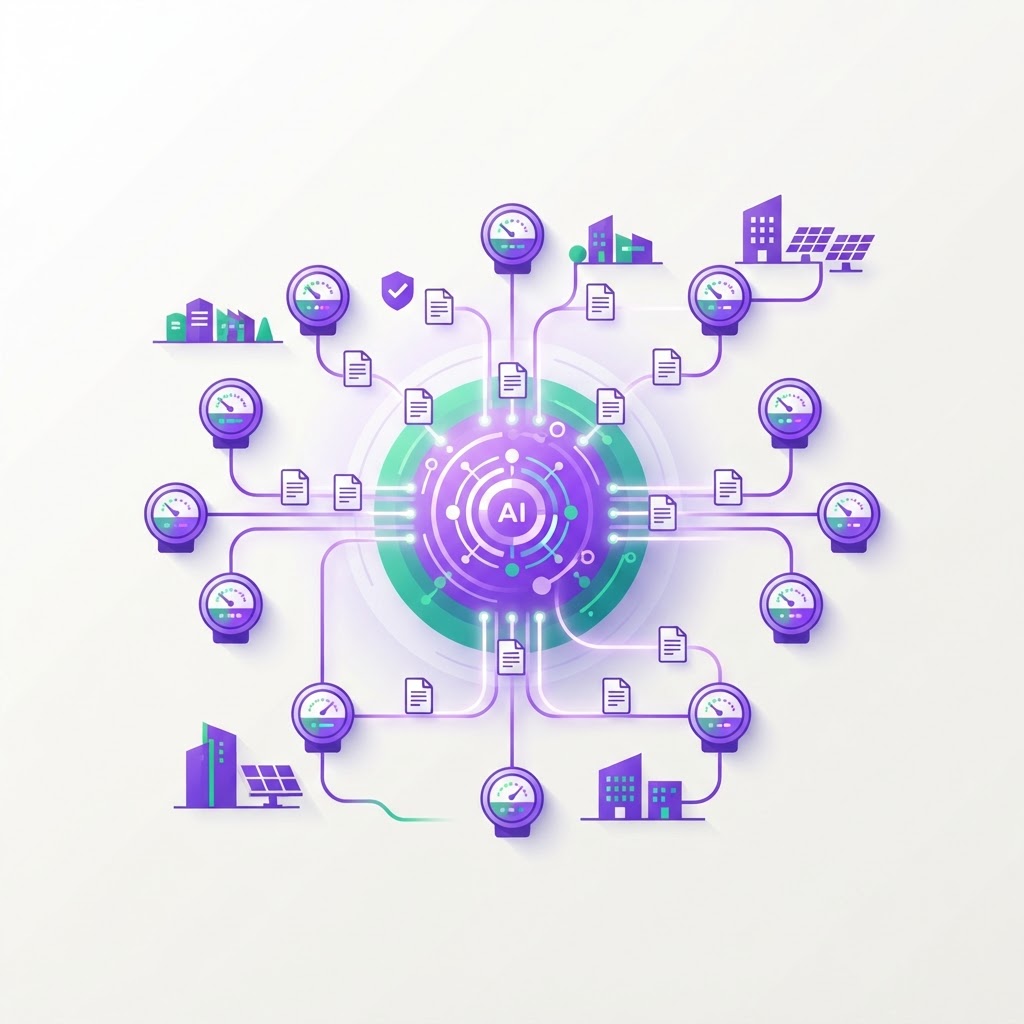
For small energy retailers, the operational burden of managing thousands of customer interactions can quickly outpace internal capacity. While the big three energy retailers spend millions on custom-built proprietary stacks, smaller players often rely on a patchwork of legacy billing systems and CRMs. This creates a bottleneck where staff spend more time navigating data silos than solving customer issues. Agentic AI offers a practical way to bridge these gaps. Rather than replacing your current billing platform or CRM, an agentic layer connects these systems via API to execute tasks autonomously. This approach allows you to deploy intelligent assistants that can read, reason, and act across your existing software ecosystem in a matter of weeks, not years.
24/7 billing query resolution
The most immediate drain on a small retailer’s resources is the high volume of inbound billing queries. Customers often call or email to ask why a bill is higher than expected or to request a breakdown of their usage data. Traditional chatbots struggle here because they lack the ability to pull real-time data from your billing system. An agentic platform changes this by securely accessing your billing API to interpret the data behind a customer account. When a customer reaches out, the agent identifies the core issue—such as a meter read variance or a tariff change—and provides a specific, verified answer. If the inquiry is complex, the agent documents the context and flags it for human review, ensuring your team only spends time on the highest-value interactions. By resolving simple queries instantly, you can reduce call centre volume by 30% or more without hiring additional staff.
Proactive churn management and usage alerts
Customer churn is the silent killer for small energy retailers. Often, customers leave because they feel unrecognised or blindsided by a sudden price hike after a plan expires. A reactive approach is no longer sustainable in a competitive market. Agentic agents can monitor usage patterns and contract end dates across your customer base daily. Instead of waiting for a customer to complain, the agent can trigger a personalised email or SMS when an account is nearing a tariff expiry. This communication can include an offer for a new, competitive plan or an explanation of how to reduce their bill through energy-saving tips. These proactive interventions demonstrate value to the customer at the exact moment they are deciding whether to renew. This shift from reactive firefighting to proactive account management typically results in a 15% increase in retention rates for SME retailers.
Hardship and payment plan triage
Managing payment difficulties requires empathy, accuracy, and strict adherence to Australian energy regulations. When a customer hits financial hardship, the current process often involves long manual back-and-forth exchanges to verify identity and assess capacity to pay. An agentic system can act as a tireless front-line coordinator for these sensitive workflows. It can guide the customer through a digital triage process, collecting necessary information and proposing a payment arrangement that fits within your predefined internal policies. By automating the data collection and verification stage, the agent ensures that when a human staff member takes over, they are equipped with a complete, structured summary of the customer’s situation. This not only streamlines compliance with the AER hardship guidelines but also improves the customer experience during an incredibly stressful period.
How it integrates without replacing your stack
The most common fear for SME operators is the prospect of a year-long, expensive system migration. Agentic design is the antithesis of that risk. We treat your existing billing system, CRM, and finance tools as a unified data lake accessible via standard APIs. The agentic platform sits as a lightweight middleware layer that simply reads and writes data to these systems exactly like a human employee would. This architecture allows you to retain your existing infrastructure while adding the intelligence of an automated workforce on top of it. Because the agent interacts via secure APIs, you retain full control over data access permissions and logging, ensuring security remains a priority throughout the deployment.
- Your billing system remains the single source of truth for financial data.
- The agent acts as an autonomous operator that executes tasks across multiple platforms simultaneously.
- Deployment focuses on specific, high-friction workflows to ensure a return on investment within months.
- System maintenance is simplified because you are updating logic in the agent rather than rebuilding the underlying CRM or ERP.
Real-world impact for SME retailers
For a small energy retailer with 10,000 customers, the cost of manual processing is often hidden in overtime and administrative fatigue. By automating just three key areas—billing inquiries, usage alerts, and hardship triage—you can significantly improve your net promoter score while simultaneously reducing your cost-to-serve. The scalability of agentic AI means that as your customer base grows from 10,000 to 50,000, your overheads do not necessarily scale at the same rate. This decoupling of growth from headcount is essential for scaling a profitable retail business in a tight-margin industry. The goal is to let your human staff focus on complex problem solving and business strategy, while the agents handle the repetitive, high-volume data tasks that previously acted as a ceiling to your growth.
- Identify your top three most repetitive customer requests.
- Map the data points required from your CRM and billing system to answer those requests.
- Test the agentic workflow on a small subset of your data to measure accuracy and response time.
Where to start
- Audit your current inbox and CRM logs to identify the top three workflows that consume the most staff time each week. 2. Verify that your core systems offer API access or can export data in a structured format for your agent to read. 3. Launch a pilot project focusing on one specific, low-risk process, such as automated meter read explanations, to establish a baseline for your return on investment.