Adaptive Process Automation: Why Your Agentic Stack Needs BPMN to Tame Complex Workflows
By Agentic Design
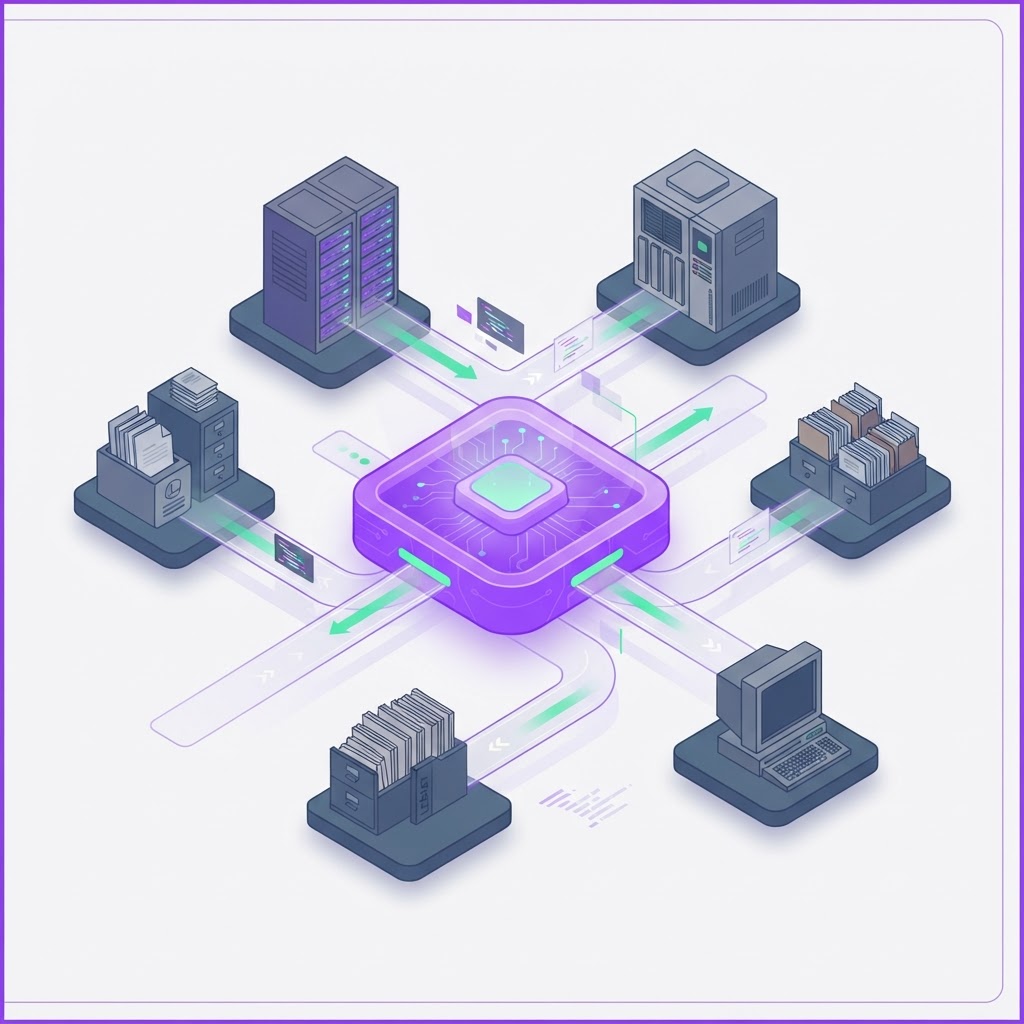
For many Australian founders, the promise of agentic AI feels like a double-edged sword. You deploy intelligent agents to handle tasks, but soon find your operations resemble a digital spaghetti junction. Without a map, these autonomous workers lose context, repeat steps, or drift off-course entirely. This is where Business Process Model and Notation (BPMN) transitions from a dusty corporate requirement into your most vital strategic asset.
Why Intelligence Needs Structure
AI agents excel at specific, narrow tasks. However, when a business process spans weeks, involves multiple stakeholders, and requires strict compliance, sheer artificial intelligence isn't enough. You need an architecture that understands the 'why' and the 'how' behind your decisions.
By layering BPMN over your agentic stack, you are essentially providing a set of guardrails. Think of it as the flight plan for your automated operations. It ensures that while your agents handle the execution, the overall business logic remains transparent, predictable, and fully under your control.
The Power of Visual Clarity
One of the biggest hurdles in scaling a business is the knowledge silo. When your workflows are buried in lines of code or black-box AI prompts, your team can't see where the bottlenecks are. BPMN provides a universal language that bridges the gap between your technical developers and your operational managers.
Using this standard allows you to visually identify where an agent might be failing or where a process needs adjustment. It turns operational feedback loops into a collaborative exercise, rather than a frantic guessing game. Key benefits of this structured approach include:
- Clear accountability for each stage of the workflow.
- Consistent handling of exceptions and edge cases.
- Simplified regulatory reporting for Australian compliance standards.
- Easier onboarding for new staff who need to understand how work flows through your organisation.
Taming the Long-Running Process
Complex workflows rarely happen in a single burst of data. They often involve waiting periods, human approvals, and external data fetches. Agentic systems often struggle to maintain state during these long delays, leading to fragmented results. A BPMN engine acts as a robust 'state machine' that keeps track of exactly where every process sits at any given moment.
If an AI agent hits a snag or is interrupted, the BPMN model ensures the process doesn't simply vanish into the ether. It stays in a wait-state, ready to resume precisely where it left off once the required input arrives. This reliability is what separates a experimental pilot project from a robust, production-ready system.
Building for Resilience
Ultimately, your competitive advantage won't just come from having the smartest agents, but from having the most resilient operations. By decoupling your business logic from the execution layer, you gain the agility to swap out AI models as technology evolves without having to redesign your entire business process from scratch.
Start small by mapping out your most critical, high-friction workflow. Once you see the clarity that a visual model brings to your agentic stack, you will find it difficult to justify building 'invisible' automation again. Keep it simple, keep it transparent, and focus on building systems that actually serve your business growth.